


By Omair Alavi
On the surface, HUM TV’s Aapki Izzat seems like a run-of-the-mill drama with all the trappings of a modern-day project. There is an extramarital affair that threatens to derail a loving family, followed by endless misunderstandings between the couple and screaming matches that will send the TRPs off the charts. However, the drama’s soul sets it apart from other projects, because the story is so well-knitted that it’s enough.
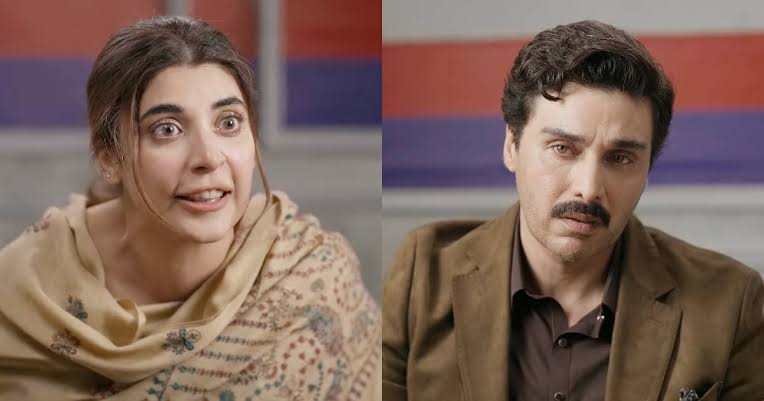
Written by Umera Ahmed and directed by Saife Hasan, the play spans 15 years, from 2011 to 2026. It follows Tabish (Ahsan Khan) and Beena (Urwa Hocane), who marry after Tabish falls in love with Beena. During this time, Tabish stands on his own two feet while his mother (Sania Saeed) arranges her daughters’ marriages with Beena’s support.
Things go awry when Tabish decides to marry his secretary, Naz, with whom he grew close during the election campaign, and hides the decision from Beena. Beena finds out and decides to retaliate, running away from home with a greedy vegetable seller (Saif Ali Khan).
By the time she realizes the vegetable seller is after her husband’s wealth, it’s too late, and the police have them in custody. Tabish doesn’t heed his political friends’ advice to have Beena killed in an encounter, which they say would help his election campaign. Instead, he decides to convince Beena to give him one last chance to mend his ways.
It looks like a modern-day drama: a husband cheating on his wife with a younger woman, a vegetable seller looking to make a quick buck, and a mother-in-law who stands by her son no matter what. But the way it’s presented takes you back to the PTV era, when dramas were built on strong scripts, memorable characters, and performances that made audiences care about what happened next.
These dramas can be entertaining while also saying something meaningful about society, family, and human behavior. That kind of television may seem like a thing of the past, but Aapki Izzat is a welcome reminder that this formula still works without resorting to gimmicks. It puts its faith in its characters, writing, and performances—and that is precisely what makes it stand out.
Here are five reasons why Aapki Izzat takes us back to the golden years of PTV.
1. Nobody Is Perfect—And That’s the Point
Move over, dramas where the good guys are too good to be true and the bad guys are extremely evil. Aapki Izzat introduces you to a lead couple who weren’t financially well-off when they met but built their future together with love. Both lead characters—Ahsan Khan’s Tabish and Urwa Hocane’s Beena—have their own faults and aren’t portrayed as faultless; he doesn’t seem to love her anymore, and she doesn’t have the guts to stand up for her rights until she finds the strength and takes action.
Tabish has flaws. Beena makes mistakes. The two sometimes make decisions that audiences may question, and they must live with the consequences. That’s surprisingly rare on mainstream Pakistani television, where protagonists are often cast as clearly defined heroes and heroines, while everyone else is responsible for creating problems.
Classic PTV dramas understood that compelling characters didn’t have to be perfect. In fact, their imperfections often made them more relatable. Aapki Izzat follows that tradition. Its central characters feel like people, not ideals. Their strengths and weaknesses shape the story, and their personal choices create much of the conflict. That makes it easier for viewers to invest emotionally—even when they don’t necessarily agree with them.
2. The Story Comes Before the Sensation
At the heart of Aapki Izzat is something television sometimes forgets: a good story doesn’t need to shout. The writing gives its characters room to develop and lets relationships evolve, rather than rushing from one dramatic twist to another.
Conflict exists, but it arises from the characters and their circumstances rather than feeling artificially inserted just to keep the audience guessing. That is where the drama recalls the old PTV formula.
The strongest dramas of that era trusted their writers and audiences. They didn’t need a shocking revelation every few episodes because the characters were interesting enough to keep viewers watching. Aapki Izzat benefits from that same confidence.
Its writing is engaging without constantly trying to manipulate the audience, and its themes emerge naturally from the narrative. It reminds us that intelligent writing and entertainment need not be opposites.
3. The Camera Knows When to Step Back
Direction can make or break a drama, especially when the material is emotionally heavy. In Aapki Izzat, the direction largely resists the temptation to overplay every dramatic moment. Instead of telling viewers how they should feel through excessive melodrama, it lets the situations and performances carry the emotional weight.
That restraint works. Unlike films, where the more you go overboard, the better, in classic television, doing less is often the best way to excel. Director Saife Hasan understands that and lets his actors play their characters with restraint, which is why the play looks absolutely realistic.
This approach again brings to mind classic PTV, when directors often relied on the script and performers rather than visual gimmicks. Aapki Izzat has the confidence to let its story breathe, which gives the drama a sense of maturity.
4. The Stars Don’t Have to Do All the Work
A drama can have a strong leading pair and still fall flat if the supporting characters aren’t convincing. Thankfully, that isn’t the case with Aapki Izzat.
From Sania Saeed to Nauman Masood, every actor from the PTV era knows that staying realistic is what sets them apart. They may belong to the same age bracket, but the way Sania Saeed portrays a grandmother and Nauman Masood portrays a politician who believes the old woman’s son has a political future is nothing short of brilliant.
The same goes for the other actors, especially those in major roles. If Naz’s shady friends look the part, so do the policemen who, after hearing Beena’s outbursts, realize they have been unjust to their wives. Aapki Izzat clicks because it understands the value of an ensemble, yielding a richer, more believable drama.
5. It Has a Message—But Doesn’t Forget to Entertain
Let’s be honest: Aapki Izzat can be preachy, but here, being preachy isn’t a bad thing. At a time when Pakistani drama writers and directors forget the message if the drama becomes successful, Aapki Izzat stays on the right side of that line.
The great dramas of the past often had something to say. They could educate, question social norms, or prompt audiences to reconsider their behavior—but they did so through characters and stories people actually wanted to watch. Aapki Izzat carries that tradition into today’s television landscape.
The golden era of PTV may be long gone, but its storytelling principles haven’t disappeared completely. Aapki Izzat is proof that when the writing is strong, the direction is assured, and the actors are given meaningful characters, you don’t need a hundred twists to keep people watching. Sometimes, a good story is still enough.