



A psychologist breaks down six practical, science-backed steps to manage intense emotions before they take over.
Everyone has experienced it. A sharp comment from a colleague, an unexpected piece of bad news, a frustrating argument that comes out of nowhere, and suddenly the emotions are running so high that thinking clearly feels impossible. The urge to react immediately is powerful, and more often than not, acting on it leads to regret. But according to a recent article published in Psychology Today, there are concrete, science-backed steps anyone can take to calm themselves down in the moment before things spiral further.
The piece was written by Dr. Dianne Grande, a licensed clinical psychologist with expertise in emotional intelligence and interpersonal relationships. It focuses on what mental health professionals call emotional regulation, which is the ability to manage intense emotional responses in a way that allows you to return to calm and make clearer, more considered decisions.
The steps outlined are practical, accessible, and rooted in how the brain and nervous system actually work.

Why Emotions Feel So Overwhelming in the First Place
To understand why feelings sometimes take over so completely, it helps to understand what is happening in the brain. When something triggers a strong emotional response, the limbic system, which is the part of the brain responsible for emotions and survival instincts, fires impulses rapidly.
The problem is that it does so faster than the prefrontal cortex, the rational and decision-making part of the brain, can process them. This is the gap where impulsive reactions live. The emotional brain essentially outruns the thinking brain, and that is when people say things they do not mean, make decisions they regret, or shut down entirely. The good news is that specific techniques can interrupt this process and give the rational brain enough time to catch up.
6 Steps to Self-Calm When Your Emotions Are Running High
Step 1. Take slow, deep breaths for two minutes
The first and most immediate step is slow, deep breathing. Dr. Grande recommends box breathing as a starting point: inhale for four seconds, hold for four seconds, then exhale for four seconds. The key is breathing into the belly rather than the chest. This diaphragmatic breathing activates the vagus nerve, which sends calming signals to the cardiovascular and neuromuscular systems, effectively switching the body from fight-or-flight mode into a calmer state where rational thinking can return.
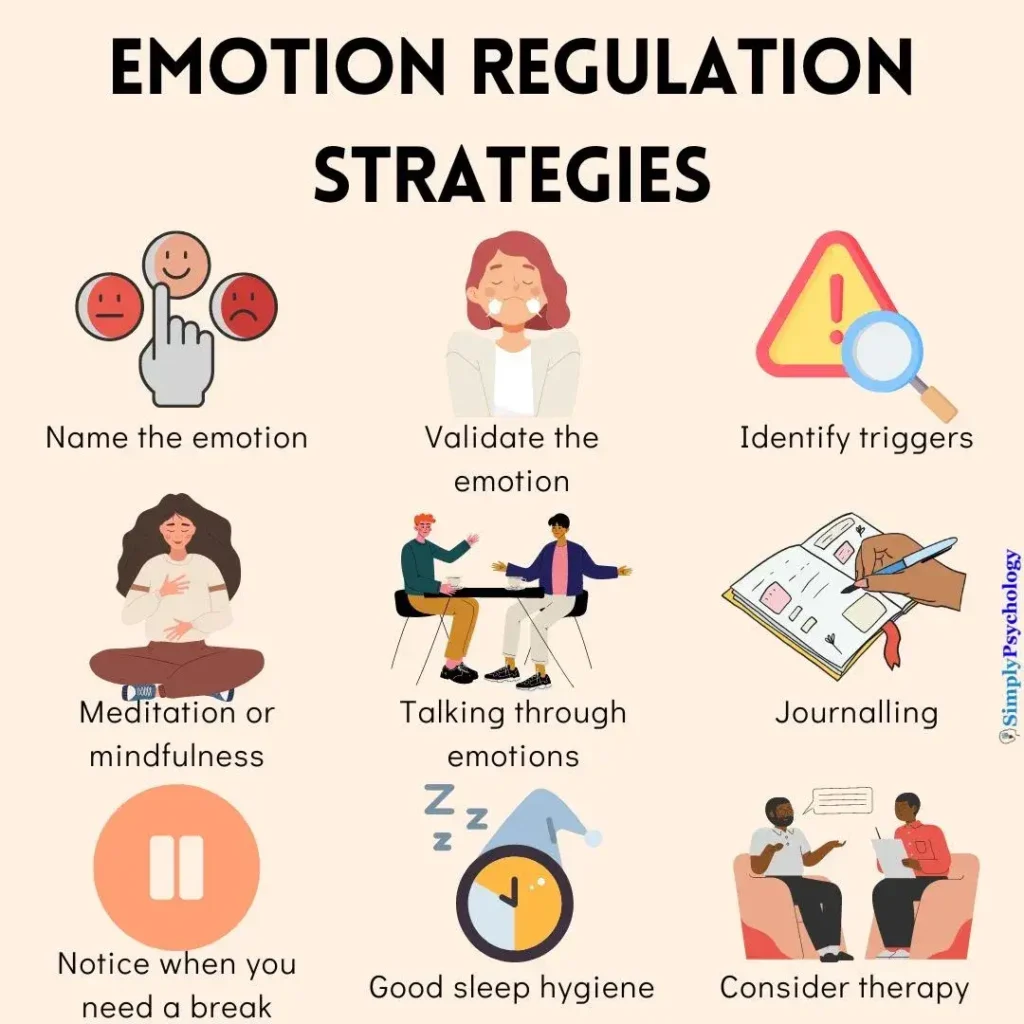
Step 2. Label what you are feeling
Is it anger? Anxiety? Disappointment? Grief? Sometimes it is more than one at once. Naming the emotion may seem simple, but it is neurologically significant. The act of identifying a feeling begins to engage the prefrontal cortex, exactly the rational part of the brain that needs to come back online. For people who struggle to identify their emotions, Dr. Grande suggests watching for physical signals first. A rise in heart rate, muscle tension, or perspiration when you are physically at rest is often a reliable sign that an emotional response is already underway.
Step 3. Splash cold water on your face
This works by stimulating the trigeminal nerve, which then signals the vagus nerve to activate the body’s rest-and-digest mode. It offers quick, short-term relief from intense anxiety and creates a jolt of alertness that gives the rational brain a chance to reassert itself. Those with serious heart conditions or arrhythmias should check with a doctor first, as sudden temperature changes can affect heart rhythm. People with autism spectrum disorder may also find cold water distressing rather than calming and should consider their own sensory sensitivities before trying this.
Step 4. Go for a 10-minute walk
Research has shown that even a brief bout of physical activity prompts the release of GABA, a neurotransmitter with a natural calming effect on the nervous system. Movement also helps the body process the physical tension that builds up during an intense emotional response, making it considerably easier to think clearly once you return.
Step 5. Think about what triggered the emotion
Ask yourself what was happening just before the feeling hit. Were you already tired or stressed? Who else was involved, and what did they say or do? Doing this kind of reflective work regularly makes it progressively easier to identify triggers quickly, sometimes within just a couple of minutes. Once you understand what set off the response, you are in a much stronger position to assess whether there is a genuine threat to your wellbeing, or whether the reaction was bigger than the situation called for. For those managing PTSD, this step may also require grounding techniques and a physically safe space.
Step 6. Reframe the situation
Once the initial intensity passes, there is often a temptation to ruminate, replaying the event on a loop. Reframing means asking whether there is another way to look at what happened. Maybe the other person was dealing with their own stress. Maybe the outcome matters less than it felt like it did in the moment. This is not about dismissing your feelings. It is about loosening the grip of one single interpretation so the emotions become less consuming and easier to move through.
Dr. Grande closes the piece by quoting comedian Lily Tomlin, and the line is as practical as it is funny.
“For fast-acting relief, try slowing down.”
The science, it turns out, fully agrees.
Stay tuned for more updates!