


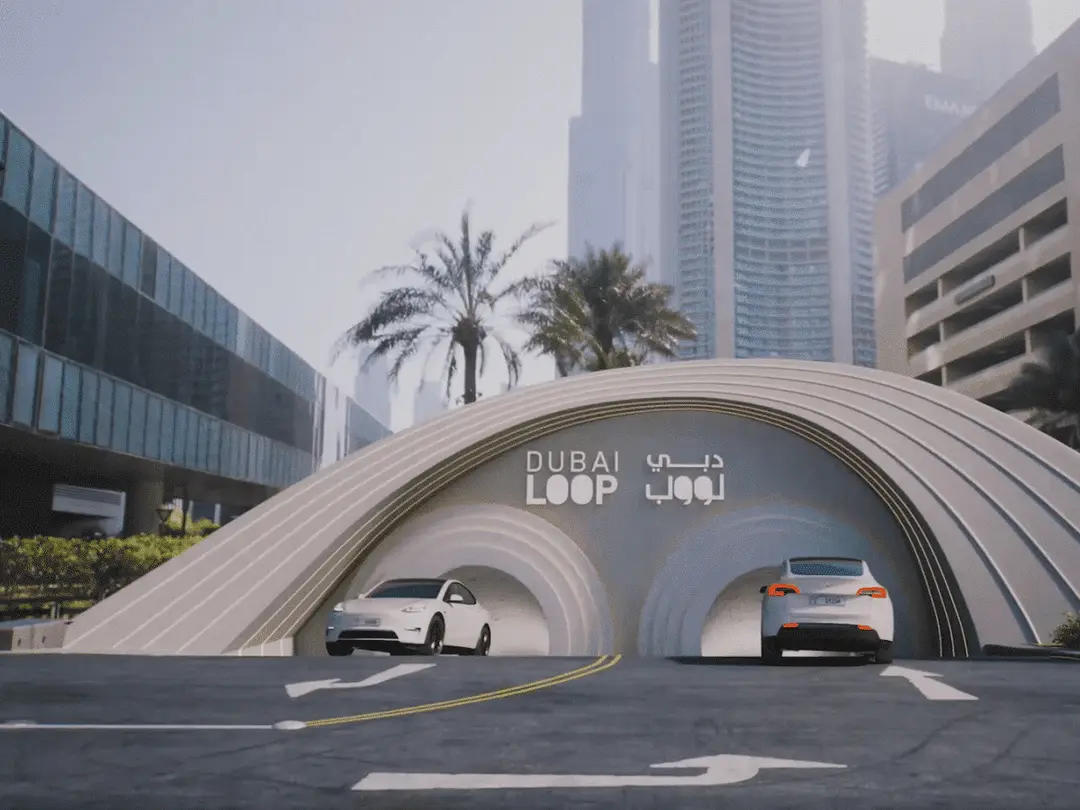
Dubai has begun construction on the futuristic Dubai Loop, an underground transport system designed to cut travel times and ease congestion between key city destinations.
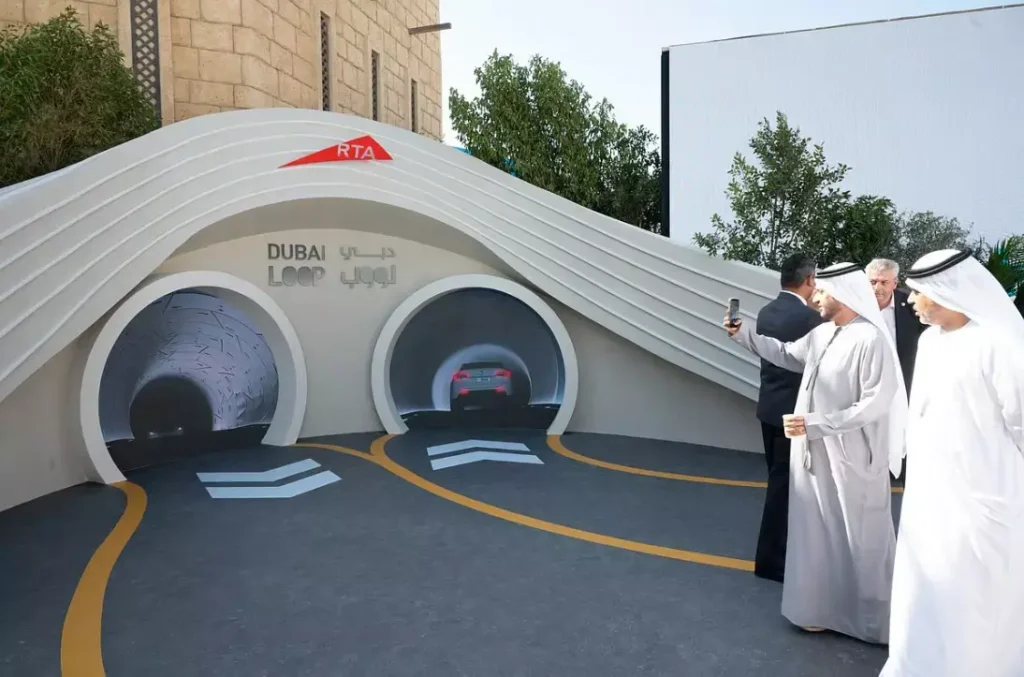
Dubai has just taken a big step toward a transport idea that once sounded like science fiction. The city’s Roads & Transport Authority has signed a partnership to begin building the Dubai Loop, an underground passenger-tunnel network to be built with The Boring Company and associated partners, placing the project into the execution phase after months of studies and planning. Dubai’s aim is simple and ambitious: use narrow, fast tunnels and electric vehicles to cut surface congestion and connect major hubs in minutes. Elon Musk’s The Boring Company, already known for the Las Vegas Loop, will bring its tunnelling methods and vehicle concepts to the pilot phase. The Roads and Transport Authority has provided technical data and agreed to move into construction after feasibility work.
What’s starting now (phase one)
Officials say work on the first phase has begun immediately. The pilot route is roughly 6 – 6.4 kilometers long and will connect two of Dubai’s busiest areas: the Dubai International Financial Centre (DIFC) and Dubai Mall/Burj Khalifa area. That short link is designed as a proving ground, a real-world test of technology, stations and traffic integration before any larger roll-out.
This phase will include four underground stations and is designed to dramatically cut travel time between the two areas, reports suggest the trip could fall from roughly twenty minutes on surface roads to just a few minutes underground. The pilot is expected to serve around 13,000 passengers a day in its initial configuration.
Cost, scale, and timeline
Public statements put the first-phase cost at about AED 565 – 600 million (roughly USD $150 – $165 million), with estimates for the full Loop network ranging from AED 2 billion to AED 2.5 billion (several hundred million dollars) depending on final scope. Authorities have given an implementation window of around one to three years for the initial phase depending on sources, with many reports quoting “about two years” for completion of the pilot and follow-on phases to be rolled out sooner if testing goes well. Those timelines are aggressive but consistent with Dubai’s history of rapid infrastructure delivery when the political will and budget align.

How the system will work (and how it differs from metros)
The Dubai Loop is not a traditional metro. Rather than long passenger trains on rails it uses electric vehicles operating inside dedicated tunnels, in early messaging those vehicles are described as Tesla-style pods or cars adapted for high frequency shuttle service. The tunnels themselves are narrower than typical subway bores (reports cite tunnel diameters around 3.6 meters), and the concept emphasizes direct, point-to-point trips with fewer intermediate stops, more like an underground rapid shuttle network than a conventional commuter rail. Autonomous operation may be phased in later.
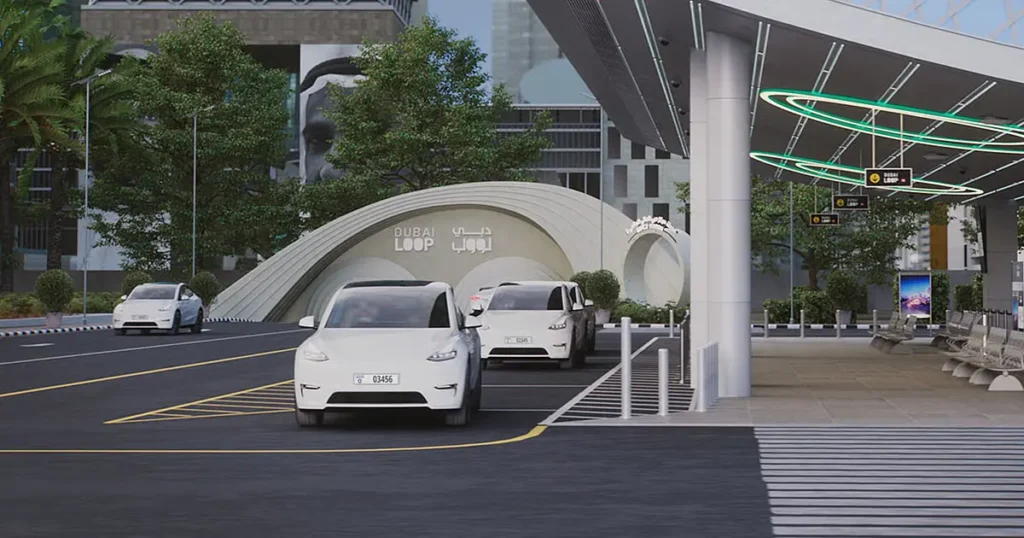
That approach brings pros and cons. On the plus side, builders can put stations very close to major destinations (removing the “last-mile” problem), and the smaller tunnels can be cheaper and faster to dig than full-size rail tunnels. On the downside, capacity per vehicle is lower than a metro train, and integrating many small on-demand trips into a city-wide transport timetable is operationally complex, so planners are treating the pilot as a capacity and integration experiment.
Why Dubai is pushing this now
Dubai sees the Loop as a fit with its “smart city” and tourism goals: faster connections between business districts, shopping, and tourist icons could reduce congestion, speed circulation of visitors, and strengthen the city’s image as a technology-forward hub. The RTA has already provided geotechnical data, utility maps and environmental assessments to The Boring Company during the study phase, which suggests both sides are serious about moving from paper to tunnels. The project also rides a favorable economic tide, Dubai’s 2026 infrastructure budgets continue to prioritize transport projects.
What skeptics and city planners will watch
Construction risks and urban disruption:
Even smaller tunnels require careful coordination with utilities and foundations in dense urban areas. RTA has stated it provided utility and structural data upfront, but tunnels under high-value downtown parcels always carry risks.
Ridership and capacity:
The pilot’s ~13,000 daily passengers is modest compared with Dubai Metro lines; scaling to meet peak demand across the city would require many more tunnels and stations, or different operational models.
Cost vs. benefit:
Narrow tunnels can be cheaper per kilometer than full metro tunnels, but the total program cost will depend on how widely the city adopts the model and how many hubs are connected.
Why this matters
If the Dubai Loop succeeds, it could change how cities think about underground transit: instead of one big rail line serving multiple neighborhoods, you could have a mesh of targeted shuttle tunnels connecting high-value nodes quickly and directly. For Dubai, a tourism-heavy, high-density destination with significant road congestion, even a successful pilot is valuable, it would give planners data on costs, user behaviour, and technical integration that no study can fully replicate.
The Dubai Loop has moved from “interesting proposal” into actionable construction with a well-defined pilot: a 6 – 6.4 km, four-station link between DIFC and Dubai Mall, backed by published cost and timeline estimates and supervised by the RTA. Whether the system becomes a mass-transit game changer or a niche point-to-point system will depend on the pilot’s technical performance, rider uptake, and how Dubai decides to scale the concept. For now, the world will be watching drills, boring machines, and the first concrete rings appear beneath one of the planet’s busiest downtowns.