


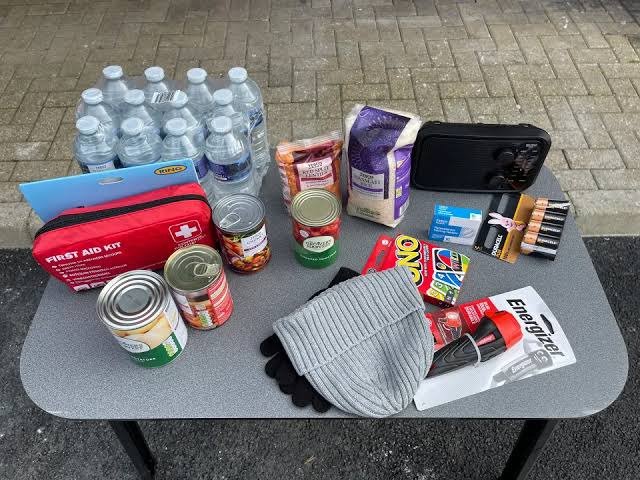
New guidance asks families across the UK to be ready to manage on their own for three days if power, water or phone services are disrupted.
The UK government has advised every household in the country to keep enough water, food and basic supplies to last at least 72 hours in an emergency. The guidance is part of a new national campaign called Be Ready, aimed at improving the country’s resilience to a wider range of risks.
Ministers said the supplies could help families cope with extreme weather, technological failures or deliberate attacks targeting the country’s infrastructure. Any of these could cut off power, water, phone lines or internet access for several days.
The guidance was published on a government website on Thursday, alongside a written ministerial statement to Parliament by Security Minister Dan Jarvis. “The storms last winter and the wildfires this summer have shown how severe weather events can cause disruption,” Jarvis said.
Jarvis added that the move brings the UK into line with many of its European neighbors. France, Ireland and the Netherlands already encourage households to prepare for three days without essential services.
What the Be Ready Campaign Asks Households to Do
The Cabinet Office has described the launch as the first stage of a three-year campaign. More than 500 organizations, including charities and businesses, have agreed to help share the campaign materials, which will be promoted through social media and radio, with a focus on families with young children and older people.
At the center of the advice is water. Households are asked to store 3 liters of drinking water per person per day, or 9 liters per person for three days, along with extra water for cooking and washing. Families are also asked to keep food that does not need cooking or refrigeration, such as canned meat, fish and vegetables, dried fruit and nuts.
The guidance suggests choosing foods people normally eat and keeping individual dietary needs in mind. Families using baby formula are advised to keep ready-to-feed products, since a power cut could make it impossible to boil water for powdered formula.
Speaking at a wildfire resilience summit in Liverpool on Friday, Prime Minister Andy Burnham said the aim is not panic buying but “taking sensible measures” to keep enough supplies at home, Anadolu Agency reported. He also noted that “unexpected events seem to be becoming more and more common.”
The government has encouraged people to build their supplies over time rather than buying everything at once. The advice is to check cupboards first, list what is missing and add items gradually during regular shopping trips to spread the cost. Supplies should be reviewed every six months to replace expired products and reflect any changes in the household.
Neighbors are encouraged to exchange contact details and talk about how they could support one another during an outage. People with spare supplies can also donate them to households that are unable to prepare.
The guidance recognizes that not every household can complete every step. Vulnerable residents can sign up for the free Priority Services Register, which alerts electricity, gas and water providers that a customer may need extra help during interruptions. Households with children under five are among those eligible. Northern Ireland runs a similar system known as Customer Care Registers.
“Those who can follow this advice should follow this advice,” Jarvis said, adding that people who are able to prepare could ease pressure on emergency services, IBTimes UK reported.
The UK Government’s Emergency Checklist
Here is what households are advised to keep at home:
- Three days of bottled drinking water, at 3 liters per person per day
- Non-perishable food that needs no cooking or refrigeration
- Essential medication and medical supplies
- Baby formula, diapers and wipes, if needed
- Pet food and bottled water for pets
- Cash in coins and notes
- Copies of important documents and identification
- Written records of important phone numbers, medicines and doses
- A battery-powered or wind-up radio
- A charged power bank
- A flashlight with spare batteries
- Blankets, sleeping bags and warm clothing
- A first aid kit, hand sanitizer and toiletries