


A genetic study has found that the gentoo penguin is actually four species, including one never described before.
For more than 100 years, scientists thought they had the penguin family all figured out. It turns out one of them had been hiding in plain sight on a windswept island at the edge of the world.
Researchers have identified a new species of penguin, the first to be named in over a century. The bird, called Pygoscelis kerguelensis, lives on the Kerguelen Islands, a remote cluster of islands in the southern Indian Ocean so isolated that they are also known as the Desolation Islands. They sit nearly 2,000 miles from any permanently inhabited land, which helps explain how the population went unrecognized for so long.
The discovery comes from a study published in the journal Communications Biology by an international team led by researchers in Chile and at the University of California, Berkeley. Their findings show that the gentoo penguin, long treated as a single species spread across the Southern Ocean, is actually four genetically distinct species. The last time a new penguin species was named was in 1921, when the northern rockhopper was described.
How Scientists Found the New Gentoo Penguin Species
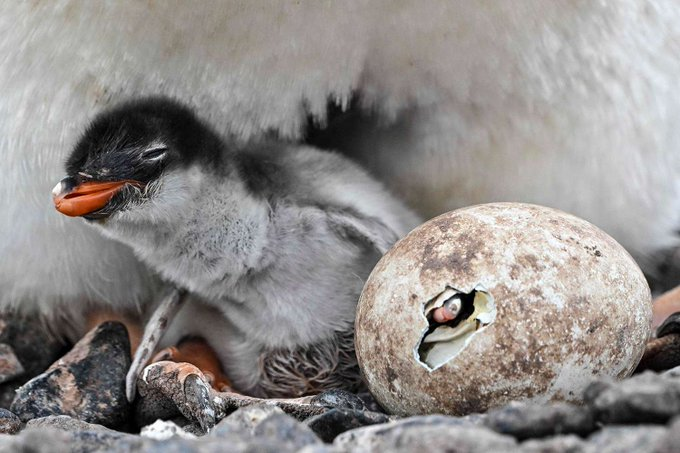
Gentoo penguins are easy to spot, with their bright orange-red bills and white patches above the eyes. But scientists have argued for decades over whether they belong to one species or several.
“There’s probably no species of penguin where the taxonomy has been more debated than the gentoo penguin,” said Rauri Bowie, a professor at UC Berkeley and curator at the university’s Museum of Vertebrate Zoology.
To settle the question, the team sequenced the whole genomes of 64 penguins from 10 breeding colonies. It is the first genetic study of gentoos to cover nearly the entire range of the birds.
The results pointed to four separate evolutionary lines. The northern gentoo lives on the Falkland Islands and nearby islands off South America, the southern gentoo on the Antarctic Peninsula and surrounding islands, and the eastern gentoo on islands including Crozet, Marion and Macquarie. The Kerguelen population, previously unrecognized, became the fourth.
The researchers estimate that the four species split from one another between 300,000 and 500,000 years ago. The genetic data also showed how each species adapted to its own environment over that time, and the team suggests that the gentoo’s flexible diet may have played a part in the separation.
Climate Change Threatens the New Penguin Species
The discovery comes with a warning. The researchers say the three gentoo species that live on sub-Antarctic islands, including the newly named Kerguelen species, face serious pressure from warming oceans.
Under a moderate warming scenario, climate models suggest these three species could lose suitable habitat on all of the islands they currently occupy by 2050. There are few or no nearby islands where the birds could move instead.
“In Antarctica, of course, other species, not the gentoo, are threatened by climate change,” said Juliana Vianna, one of the study’s senior authors and a professor at Andrés Bello National University in Santiago, Chile. “But the gentoo is of most concern in the sub-Antarctic region.”
Vianna said it is important for conservation bodies in the countries involved to recognize the three species and take action to protect them. Because island penguins are found only in these isolated places, they cannot easily move to new regions if their environment changes.
The study builds on earlier work by Bowie and Vianna, who in 2019 published findings suggesting that penguins first appeared near Australia and New Zealand around 22 million years ago before spreading across the Southern Hemisphere.