In many Pakistani households, the dining table is more than a place where food is served. It can become a space where family members catch up, discuss daily events, make decisions, teach children social expectations and maintain connections across generations. This role is closely connected to the importance of family and shared household life in Pakistani society.
Pakistan has relatively large households. According to the Pakistan Bureau of Statistics, the average household consists of around six to seven people living and eating together. The bureau also notes that a household can include more than one family sharing meals and a joint kitchen. When several generations or related families live together, mealtimes naturally create regular opportunities for interaction.
Family structures in Pakistan have changed over time, particularly with urbanisation and economic changes. Research has documented a shift from traditional joint-family arrangements toward nuclear families, although extended and multigenerational living remains significant. In households where grandparents, parents and children live together, a shared meal can bring people with different routines and responsibilities into the same physical space.
Food itself also carries social meaning. Research on Pakistani and South Asian families has found that food preferences can be influenced by family expectations, cultural practices, taste, health concerns and financial considerations. In Karachi, for example, research has identified family preferences and household economic factors as important influences on food choices and dietary diversity.
This helps explain why asking someone what they want for dinner can sometimes involve more than simply choosing a dish. Different generations may have different preferences, while the person responsible for preparing food may have to accommodate several members of the household. Research involving multigenerational Pakistani families has found that women can carry significant responsibility for food-related work and may have to consider the preferences of husbands, children and in-laws when making food decisions.
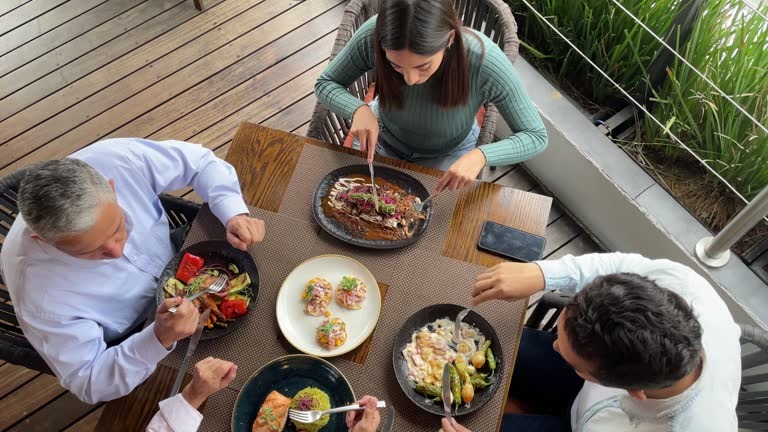
The dining table can therefore become a setting where family roles are visible. Younger members may learn expectations about manners, hospitality and appropriate behaviour by observing older relatives. Older family members, meanwhile, may use mealtimes to remain involved in the everyday lives of younger generations.
This is not unique to Pakistan. Research on family meals internationally describes shared eating as a form of “domestic commensality,” meaning the practice of eating together as part of everyday family life. Studies have found that family meals are more common when households actively prioritise them and when family members have positive attitudes toward eating together. Busy schedules and employment outside the home can make shared meals more difficult.
Research also cautions against viewing every family meal as automatically harmonious. Studies of ordinary family meals have found that eating together can involve disagreements, different preferences and unequal responsibilities surrounding cooking and food preparation. The experience of the meal can vary according to gender, class and cultural circumstances.
In Pakistan, the dining table can consequently function as a small reflection of family life itself. It brings together food, conversation, responsibility, hierarchy and affection in one routine activity. For families living across generations, it may be one of the few predictable moments when everyone has an opportunity to sit in the same place.
That is why the dining table can feel less like furniture and more like an institution. Its importance does not come from the table itself, but from what repeatedly happens around it: people eat together, exchange information, negotiate preferences and participate in the everyday relationships that hold a household together.