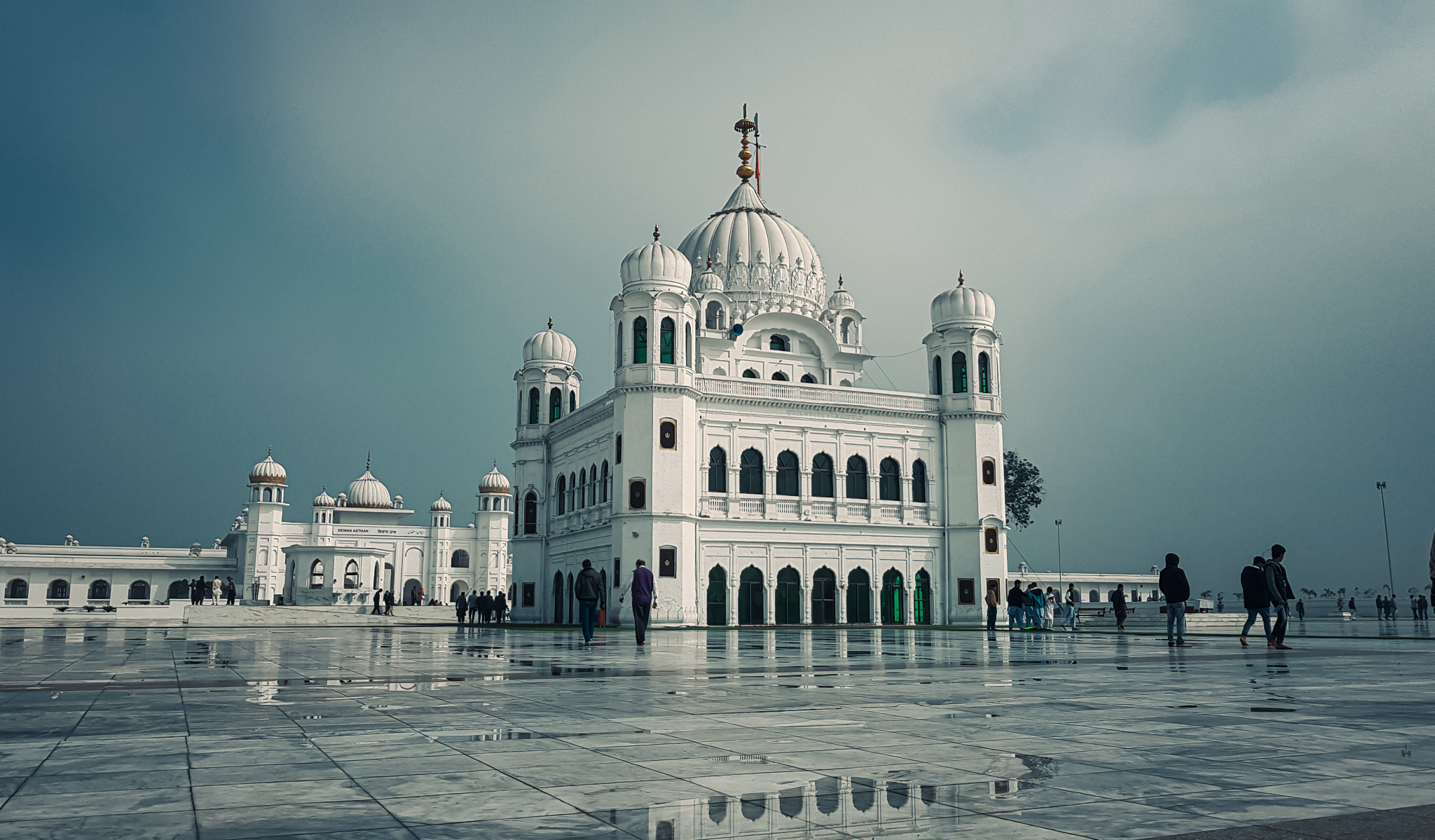
Centuries-old places of worship that remain sacred to Pakistan’s Hindu and Sikh communities and draw pilgrims from across the globe.
Pakistan is home to some of the most significant Hindu temples and Sikh gurdwaras in the world, many of them centuries old and deeply woven into the country’s history. These are living places of worship, sacred to Pakistan’s Hindu and Sikh communities and cherished by pilgrims who travel from across the globe to visit them.
In recent years, many of these sites have been restored and reopened, welcoming worshippers and visitors alike. They stand as a reminder of the rich religious heritage that has long been part of this land, and of the communities of many faiths who continue to call Pakistan home.
Here are five of the most famous.
Gurdwara Janam Asthan, Nankana Sahib
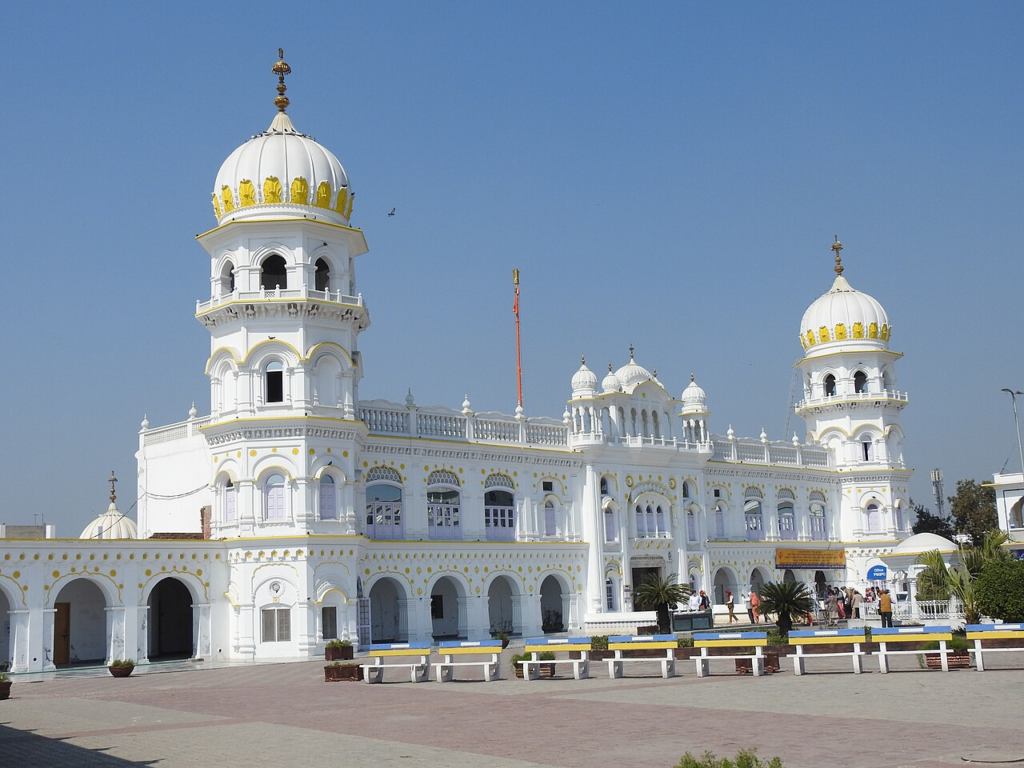
Perhaps the most revered Sikh site in the country, Gurdwara Janam Asthan sits in the city of Nankana Sahib, roughly 75 to 80 kilometres southwest of Lahore in Pakistan’s Punjab province. It was built at the spot believed to be the birthplace of Guru Nanak, the founder of Sikhism, which makes it a cornerstone of Sikh history and one of the holiest places in the faith.
The complex is striking. Laid out in a rectangular plan, it centres on a main square and a sacred water pool, and the walled grounds hold around 500 rooms for pilgrims, along with a vast kitchen and dining hall for the community meal known as langar. The exterior glows in soft yellow, and a grand golden entrance door is carved with holy scripture and depictions of the Sikh gurus. Each year the site draws thousands of devotees, especially around Guru Nanak’s birth anniversary.
Gurdwara Darbar Sahib, Kartarpur
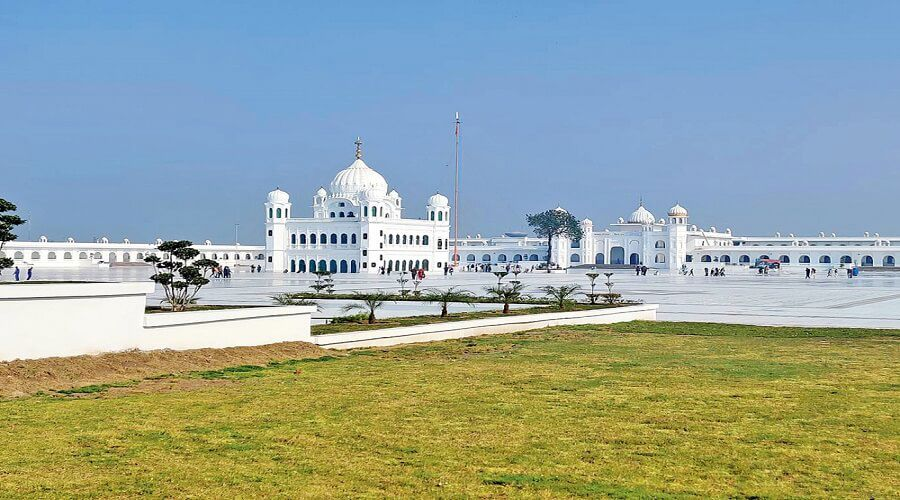
Kartarpur holds a place of immense sanctity for Sikhs, as it marks where Guru Nanak spent the final years of his life and established the first Sikh community. Located in Narowal district on the bank of the Ravi River, Gurdwara Darbar Sahib is regarded as one of the most important pilgrimage destinations in the Sikh world.
The site became far more accessible in recent years with the opening of a dedicated pilgrimage route, allowing visitors to reach it with far greater ease than before. That access has helped turn Kartarpur into one of the most visited gurdwaras in the country, welcoming pilgrims who come to pay their respects at the place where the faith’s founder settled and taught.
Gurdwara Panja Sahib, Hasan Abdal
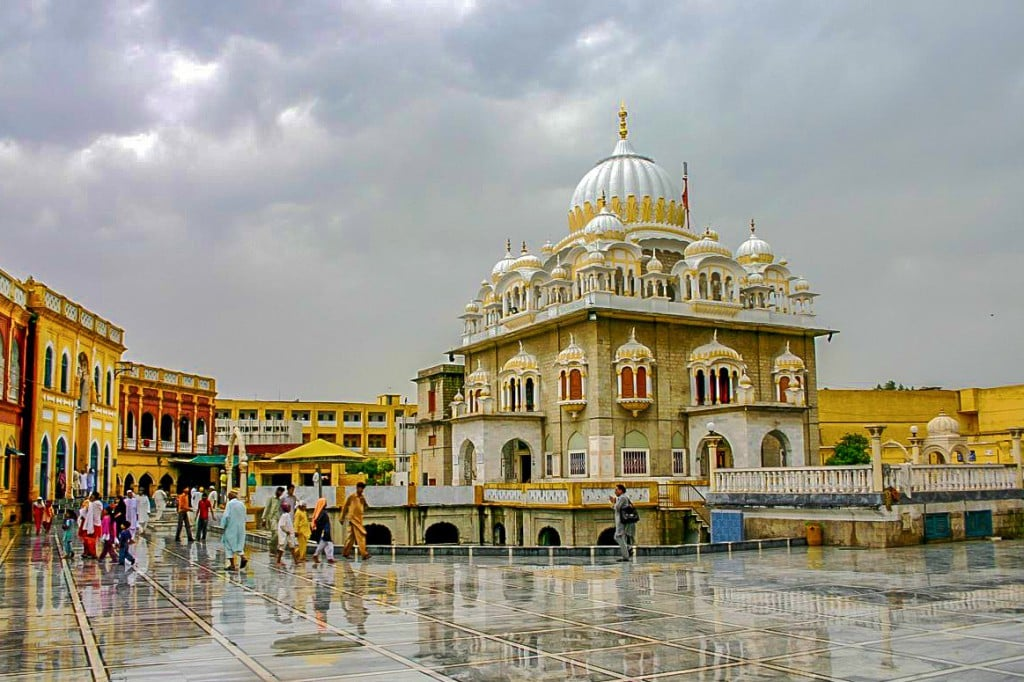
Near the town of Hasan Abdal, about 48 kilometres from Rawalpindi, stands Gurdwara Panja Sahib, one of Pakistan’s most cherished Sikh shrines. It was built during the reign of Maharaja Ranjit Singh, between roughly 1780 and 1839, and is often described as a symbol of peace and harmony.
Its name comes from the Punjabi word panja, meaning palm, a reference to the site’s central relic: a rock said to bear the handprint of Guru Nanak. According to tradition, Guru Nanak stopped a boulder rolling toward him with his open hand, leaving the imprint behind. The shrine draws both Sikh and Hindu pilgrims, and its blend of legend, history and devotion makes it a landmark of the region.
Katas Raj Temples, Chakwal
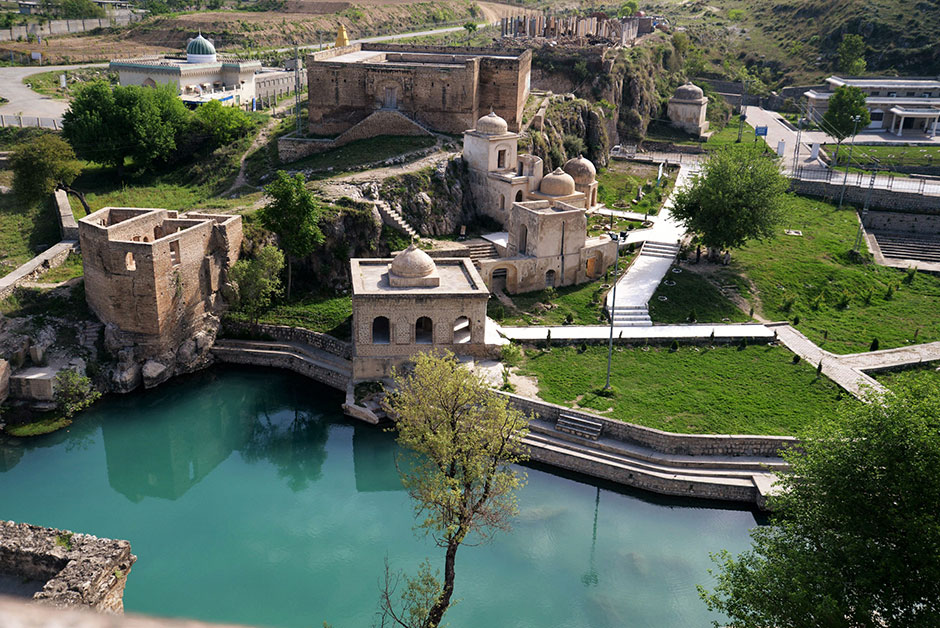
In the Chakwal district of Pakistan’s Punjab province lies the Katas Raj complex, one of the most significant Hindu sites in the country. The temples are clustered around a sacred pond, and according to Hindu belief the pool was formed from the tears of Lord Shiva, giving the site profound religious meaning.
Katas Raj is among the most visited Hindu sites in the country, particularly during the festival of Maha Shivratri, when devotees gather to perform rituals at the ancient temples. The complex dates back many centuries and represents an important thread in Pakistan’s Hindu heritage, drawing worshippers and history enthusiasts alike to its shrines and still waters.
Hinglaj Mata Mandir, Balochistan
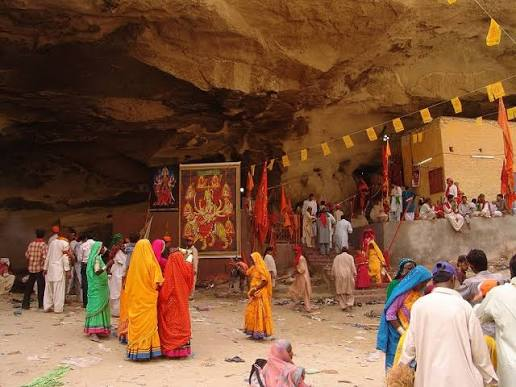
Deep in the wilderness of Pakistan’s Balochistan province, within the Hingol National Park, sits Hinglaj Mata Mandir, one of the most sacred Hindu temples in the country. It is counted among the 51 Shakti Peethas, the holiest shrines in the tradition dedicated to the goddess, which gives it extraordinary spiritual importance.
The temple is the centre of a major annual pilgrimage, held in spring, that draws close to 200,000 devotees who make the journey across rugged desert terrain to reach the cave shrine. That scale makes Hinglaj one of the largest Hindu gatherings in the country, and its remote, dramatic setting only adds to the sense of devotion and wonder that surrounds it.
Together these five sites reflect the depth of Pakistan’s religious heritage and the faiths that remain part of the country today. Many more temples and gurdwaras stand across Pakistan, a number of them recently restored and reopened, each with its own history and its own community of worshippers. They are a reminder that the country’s story has long been shared by people of many faiths, whose places of worship continue to hold meaning for pilgrims and visitors from every corner of the world.