

From the modest mansion where he was born to the white marble mausoleum where he rests, Karachi holds the beginning and the end of Muhammad Ali Jinnah’s remarkable life.
Some cities are simply where a person lives. Karachi was something more to Muhammad Ali Jinnah. It was where his story began and where it came to rest, the place that cradled the founder of Pakistan at both ends of an extraordinary life. For a city that has grown into a sprawling metropolis of millions, that connection remains one of its deepest sources of pride, woven quietly into its streets and monuments.
Every August, as the country marks its independence, attention turns naturally to the man whose vision and determination brought Pakistan into being. And for anyone in Karachi, the traces of that man are never far away. You can stand in the narrow lane where he was born, and you can visit the gleaming tomb where he lies. Between those two points sits an entire nation’s origin story.
Wazir Mansion: The Birthplace in Karachi’s Old Town
Tucked away on a narrow street in the historic Kharadar area of Karachi’s old town stands a modest three-storey building called Wazir Mansion. It is easy to miss, surrounded now by shops and residential apartments, yet this unassuming structure carries an enormous weight of history. It was here, on 25 December 1876, that Muhammad Ali Jinnah was born.
The building itself tells a story of old Karachi. It was constructed in the 1860s using stone masonry set in a mortar of lime and jute, a technique chosen to withstand the city’s warm, humid climate. Jinnah’s father, a merchant, had set up his business in the area, then a bustling trade hub, and rented an apartment in the mansion. Several of Jinnah’s siblings were born in the same building, making it the family home through his earliest years.
Officially recognised as Jinnah’s birthplace in 1953, Wazir Mansion is now preserved as a national monument and museum, sometimes known as the Quaid-e-Azam Birthplace Museum. It draws a steady stream of visitors each month, many of them students, who come to see where the founder of the nation first entered the world. For all its modest size, it is a place that, as those who care for it like to say, helped change the map of the world.
Mazar-e-Quaid: The Landmark Where He Rests
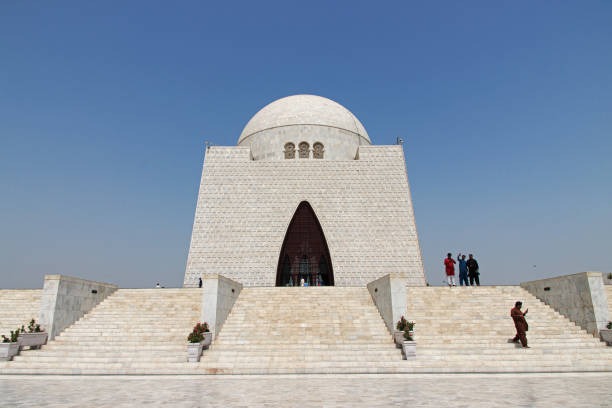
If Wazir Mansion marks the quiet beginning, Mazar-e-Quaid marks the monumental end. Rising in gleaming white marble in the heart of the city, the National Mausoleum is Karachi’s most recognisable landmark and the final resting place of Muhammad Ali Jinnah.
Jinnah spent his final months away from Karachi and passed away in 1948, but the city was the natural choice for his tomb, the place where he had been born and where he had spent so much of his life. The mausoleum that now honours him was designed in the clean, modernist style popular in the 1960s, its construction beginning in 1960 and completed in 1971. Set within a large landscaped park, the square white structure rises on a raised platform and can be seen from a great distance, especially at night, when powerful lights bathe the marble in a soft glow visible across the city skyline.
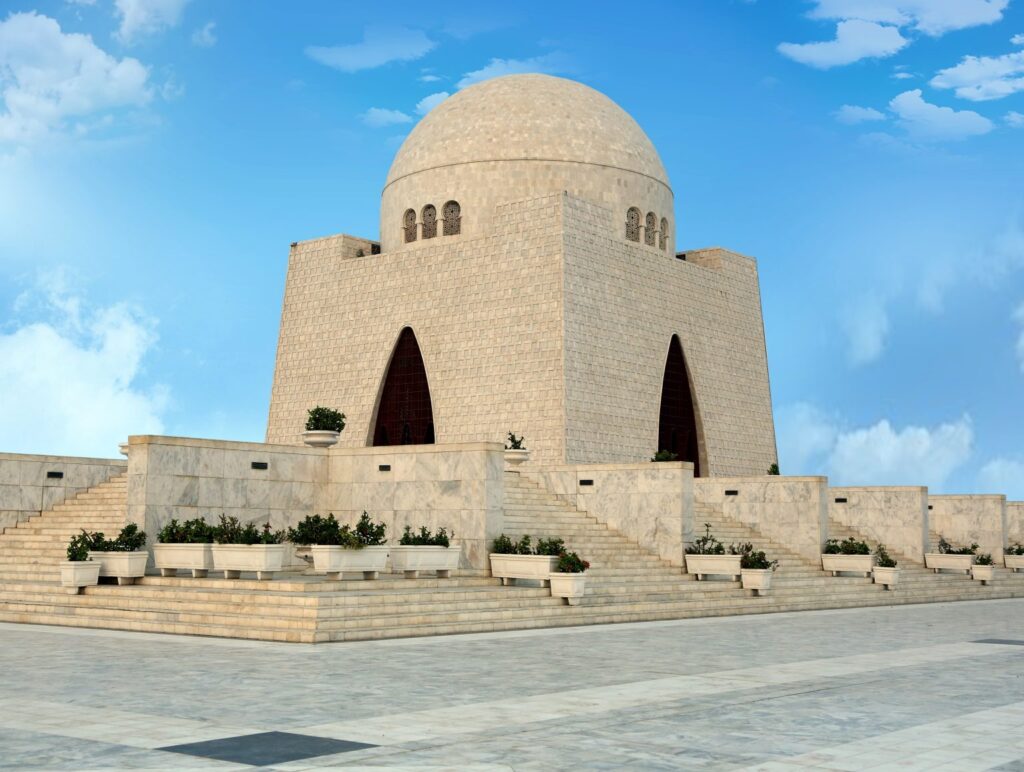
The site is more than a tomb. It is also the resting place of his sister Fatima Jinnah, revered as Madar-e-Millat or Mother of the Nation, and of Pakistan’s first prime minister, Liaquat Ali Khan. Thousands of visitors come every day to pay their respects, to walk the green gardens that surround it, and to stand before the belongings and mementos of the leader preserved on the grounds. On national occasions, including Independence Day, official ceremonies are held here, and visiting dignitaries are brought to honour the founder.
A City That Carries His Legacy
What makes Karachi’s connection to Jinnah so poignant is its completeness. Most cities can claim a chapter of a great life. Karachi holds the first page and the last. From the cramped, humble room in Kharadar to the vast marble monument in Jamshed Quarters, the arc of a single remarkable life plays out across a few kilometres of the same city.
That is why, for the people of Karachi, these are not merely tourist sites. They are touchstones, places to feel close to the man who imagined a homeland and then willed it into existence. Efforts have long been made to protect and preserve both, from safeguarding the old neighbourhood around Wazir Mansion to maintaining the grandeur of the mausoleum, so that future generations can walk the same ground.
As another Independence Day arrives, Karachi’s quiet custodianship of its most famous son feels especially meaningful. The city that welcomed him into the world, and the city that keeps watch over his rest, carries his legacy not in grand speeches but in stone, marble and memory.
Follow us for more updates and news!