


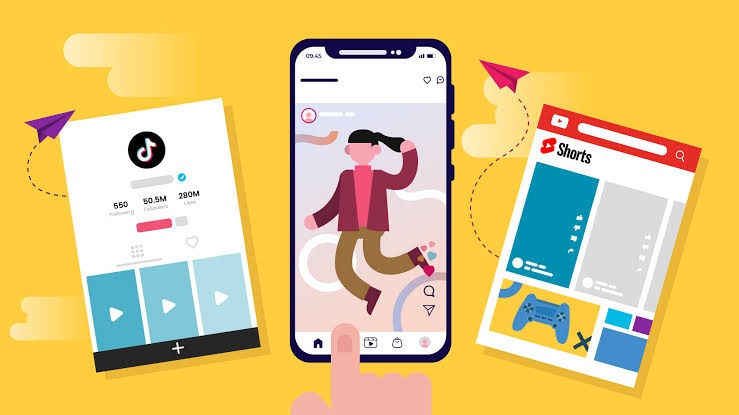
You open Instagram for “just five minutes.” One Reel becomes another, then another. A cooking hack appears, followed by a comedy clip, a celebrity update and a 20-second news story. Before you realize it, half an hour has passed. The experience feels effortless because short-form video platforms are designed to remove the waiting time between pieces of content. The moment one video ends, another begins.
TikTok, Instagram Reels and YouTube Shorts have changed not only what people watch, but also how they consume information. Instead of sitting through a 20-minute video or reading a long article, users can receive dozens of pieces of content within the same amount of time. Researchers are now investigating whether repeated exposure to this rapid-fire format is also influencing how people pay attention.
The evidence does not support the simple idea that watching Reels automatically “destroys” a person’s attention span. However, research increasingly finds an association between heavier short-form video use and difficulties with certain aspects of attention and cognitive control. A 2025 systematic review and meta-analysis published in Psychological Bulletin examined 71 studies involving 98,299 participants. It found that greater short-form video use was associated with poorer cognitive performance, with attention and inhibitory control showing some of the strongest associations.
One reason may be the speed at which short-form content changes. A typical feed requires users to constantly decide whether to stay with a video or swipe to something new. Every swipe creates a new visual, topic, sound and set of information. This means the brain is repeatedly shifting its focus rather than maintaining attention on one continuous subject.
Research has found evidence that this rapid switching can have consequences beyond simply getting bored with long videos. In a 2023 experiment involving 60 participants, researchers compared people’s performance after exposure to TikTok, Twitter, YouTube and no social-media activity. Participants in the TikTok condition performed worse on a task requiring them to remember and carry out previously planned intentions. The researchers attributed this result to the combination of short videos and rapid context switching, although the study was relatively small and does not prove that TikTok causes long-term changes in memory.
Another study published in Frontiers in Human Neuroscience examined 48 participants and used electroencephalography (EEG) alongside attention tests. The researchers found that participants with stronger tendencies toward short-video addiction showed differences in measures related to attention and executive control. Again, the sample was small, so the findings should not be interpreted as proof that short videos permanently alter the brain.
There is also an important distinction between attention span and attention preference. People may still be capable of concentrating for long periods but become less willing to tolerate content that takes longer to become interesting. Short-form platforms provide immediate stimulation, while activities such as reading a book, studying a difficult subject or watching a slow-paced documentary require sustained attention before the reward arrives.
The endless-scroll design may further reinforce this pattern. Research examining TikTok recommendation feeds has shown how users can receive a continuous stream of personalized videos without having to actively search for the next piece of content. In one study, researchers analyzed 9.2 million TikTok recommendations from 347 users, illustrating the enormous volume of content delivered through recommendation systems.
Yet short-form video is not inherently harmful. The format can make educational information easier to access, help creators communicate complex ideas quickly and introduce audiences to subjects they might otherwise never encounter. The issue appears to be more closely connected to how much, how frequently and how compulsively people consume this type of content.
The bigger change may therefore be cultural rather than biological. We are becoming accustomed to information that is fast, visually stimulating and constantly changing. That does not necessarily mean humans can no longer concentrate. It may mean that our digital environments increasingly train us to expect stimulation on demand.
The next time a 15-second video feels impossible to resist, the interesting question may not be, “Has my attention span disappeared?” It may be, “What has my brain learned to expect when I am not being entertained?”