


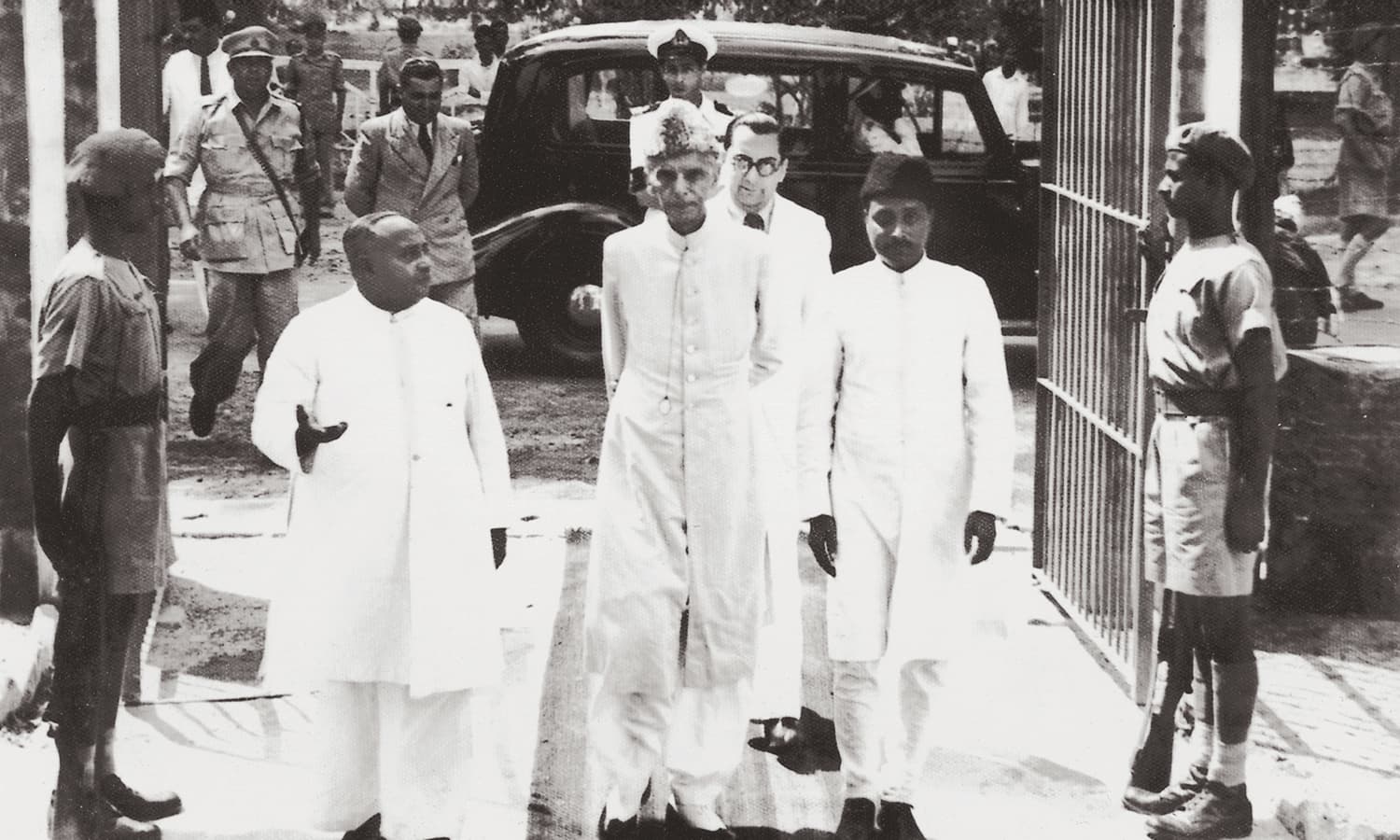
Pakistan’s creation is often remembered as an act of faith and aspiration. But it was also, in its essence, an act of law — a principled demand for self-determination made by a people who saw themselves, rightly, as a distinct nation deserving of a homeland of their own.
At the heart of this vision stood Quaid-i-Azam Muhammad Ali Jinnah. In his address on the eve of the Lahore Resolution’s passage on March 23, 1940, he framed the future of India’s Muslims not as a matter of communal friction but as a question of nationhood itself. Muslims, he argued, were not merely a minority to be accommodated, but a nation in the fullest sense — entitled, like any nation, to their own homeland, territory, and state. The Lahore Resolution that followed called for the Muslim-majority regions of India’s northwest and east to be constituted into independent, self-governing states. Remarkably, this demand for national self-determination preceded by five years the very principle’s formal enshrinement in the United Nations Charter of 1945 — a testament to the foresight of Pakistan’s founders.
This vision had deep roots. A decade earlier, in his celebrated 1930 Allahabad address, the philosopher-poet Allama Iqbal had already articulated the idea of India’s Muslims as a unified nation, bound by a shared faith and civilizational identity. Iqbal’s thought gave the movement its intellectual and spiritual foundation, which Jinnah would later carry into concrete political reality. Iqbal’s legacy endures well beyond Pakistan’s borders — his ideas continue to inspire thinkers and leaders across the Muslim world today.
By 1946, the Delhi Resolution carried this founding vision forward with even greater clarity and resolve. It named Pakistan explicitly and called for the Muslim-majority zones of the subcontinent to be constituted into a single sovereign, independent state — an unequivocal and undelayed pledge to the Pakistan movement’s ultimate goal. Together, the Lahore and Delhi Resolutions reflect a consistent and principled commitment: the right of a people to shape their own political, social, economic, and cultural destiny.
That founding spirit found its fullest expression in the Constitution of 1973, which remains the nation’s guiding social contract. Article 2 affirms Islam as the religion of the state, while institutions such as the Council of Islamic Ideology and the Federal Shariat Court help ensure that the nation’s laws remain in harmony with Islamic values. At the same time, the Constitution guarantees fundamental rights, democracy, equality, and freedom of religion — offering a thoughtful balance between faith and modern governance that reflects the shared vision of Iqbal and Jinnah for a moderate, tolerant Islamic state.
Like many young nations, Pakistan’s constitutional journey has included periods of adjustment and renewal, from the early constitutions of 1956 and 1962 to the enduring framework of 1973 and its subsequent amendments, including the 26th and 27th. Each chapter reflects a maturing democracy finding its footing. As Pakistan looks ahead in a changing regional and global landscape, its greatest strength remains the same principle that inspired its founders: broad consultation, or Shura, among its people and their representatives — the very spirit of collective will that gave birth to the nation in 1947, and that continues to sustain it today.
In this sense, the journey from Lahore to the Constitution is really one continuous story: an idea declared in 1940, sharpened in 1946, realized in 1947, and finally given lasting legal form in 1973 — a single unbroken thread connecting a nation’s founding vision to the framework that governs it still.