

Entire dynastic-era towns are being constructed new across China, and tens of millions of visitors are arriving anyway.
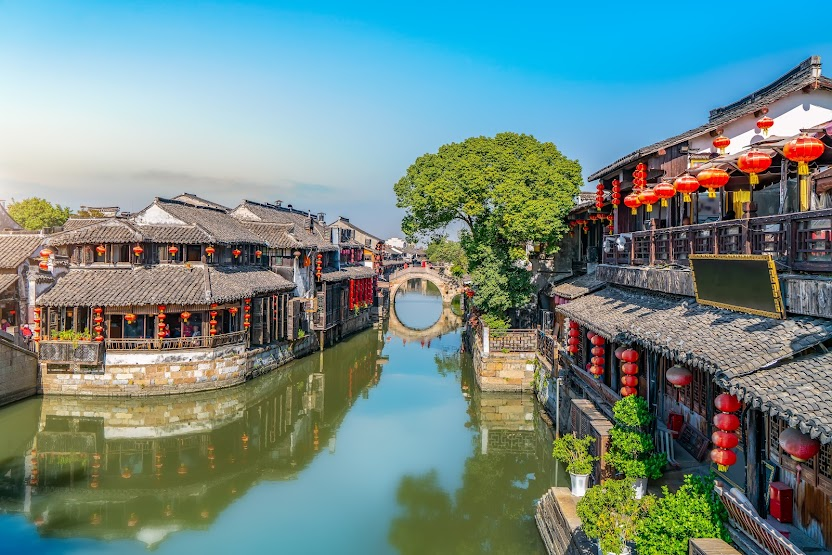
There is a Chinese word for it. Fanggu, meaning historical imitation, describes a category of attraction that has spread across the country over the past decade. These are not restored heritage sites. They are ancient villages, palaces and boulevards built from nothing, designed to look centuries old.
The attention to detail is industrial. Vines are brought in and planted in bulk. Roof tiles are broken up by machine so they read as weathered. The finished result mixes dynastic architecture, regional styles and periods that never coexisted, into something that is convincing at a glance and openly artificial on inspection.
Visitors are not deterred. One of the largest sites draws close to 75 million people a year, and the format has become a fixture of Chinese domestic travel.
What Are Fanggu Villages and Why They Are Booming
The economics help explain the appetite. With domestic growth slow and international travel expensive, a weekend inside a constructed Tang dynasty street is an affordable escape.
Yang Jinsong, who directs the International Institute at the China Tourism Academy, told the state newspaper People’s Daily in June that consumers are now prepared to pay for emotional value, and are looking for immersive experiences that carry some cultural meaning rather than simple sightseeing.
The flagship example is Datang Everbright City in Xi’an, built as a revival of the Tang golden age. A pedestrian street running 2,100 metres is lined with red pagodas and lit through the night, with electronic music playing and choreographed parades running on a schedule. Ancient China operated curfews. This version does not.
Hanfu Rentals and Time-Travelling Weddings
The business model sits in what visitors do once they arrive.
For around fifteen dollars, a visitor can pick from hundreds of ready-made Hanfu, the traditional robes associated with dynastic China. Ten dollars more covers makeup, accessories, a professional photographer and edited images. The look people are buying is specific, pale skin and a red lip, and the resulting photo sets circulate widely on Xiaohongshu, the platform known internationally as RedNote.
The newest expansion of this is the time-travelling wedding. Couples book a shoot that moves through three eras in a single day, changing from ruby-red Tang robes into a Republican-era qipao and then into a white Western gown, with videographers following them through lantern-lit courtyards. Studios in Xi’an now sell it as a full production, beginning with a consultation with a scriptwriter and taking in a director, stylists, makeup artists and a cast of extras.
It is not cheap. Users on Xiaohongshu have described spending a month’s salary on the package and being criticised by their parents for it. For a generation raised on Chinese historical dramas, the calculation apparently holds.
Foreign visitors have started joining in. A social media movement loosely labelled Chinamaxxing, which popularises Chinese aesthetics and daily practices, has pushed a number of young travellers to plan trips to China specifically for this kind of experience.
Kashgar Old City and the Question of Authenticity
The line between imitation and restoration is not always clean.
Kashgar, in the far northwest, is an oasis city with roughly two thousand years of history as a Silk Road crossroads. Its Old City is now the main attraction. It is also, in large part, a rebuild. The original was demolished and reconstructed more than a decade ago. The maze of alleyways survives, but what stands there today is a modernised version of what was lost.
Reactions are split. One American student described a visit as surreal, and said that despite the theme-park quality of the setting, Kashgar still offered him a sense of history he had not encountered anywhere else. Others find the experience frustrating precisely because it has been curated.
That split is the honest verdict on fanggu as a whole. Some visitors want the escape and do not much care whether the bricks are old. Others feel the fantasy gets in the way of the place.
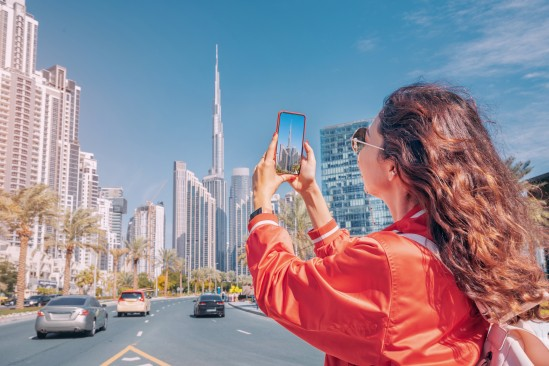
The debate is not confined to China. Dubai’s Al Seef district was purpose-built in a heritage style alongside the genuinely historic Al Fahidi neighbourhood, and Global Village has been selling a curated version of world architecture for three decades. Pakistan has run its own version of the argument through the restoration of Lahore’s Walled City, where the question of how much to rebuild and how much to conserve has never been fully settled.
What China has done is scale it. The country has turned historical imitation into a functioning tourism sector, complete with costume rental, photography services and wedding packages, and 75 million annual visitors to a single street suggest the market has already answered the authenticity question in its own way.