
The City Where Poetry Flourished
Few cities have shaped the literary imagination of South Asia quite like Lahore. Long before it became famous for its magnificent Mughal monuments and vibrant food culture, Lahore was a city of ideas. Its colleges educated generations of scholars, its publishing houses spread literature across the subcontinent, and its cafés echoed with passionate debates about poetry, philosophy and politics.
From Urdu and Punjabi to Persian, Lahore became a crossroads of languages and creativity. Institutions such as Government College Lahore and the University of the Punjab nurtured brilliant minds, while the city’s legendary Pak Tea House became a second home for poets and writers. Together, they helped establish Lahore as one of South Asia’s great literary capitals.
Allama Iqbal: The Philosopher-Poet
No poet is more closely associated with Lahore than Allama Muhammad Iqbal. Although born in Sialkot, he chose Lahore as his intellectual home, where he studied, practised law and wrote many of his greatest works. His poetry urged people to recognise their inner strength and strive for greatness.
One of his most celebrated verses reads:
خودی کو کر بلند اتنا کہ ہر تقدیر سے پہلے
خدا بندے سے خود پوچھے، بتا تیری رضا کیا ہے
“Raise yourself to such heights that before every destiny is written, God Himself asks you: ‘Tell Me, what is it that you desire?'”
Iqbal’s mausoleum beside the Badshahi Mosque remains one of Lahore’s most cherished landmarks, symbolising the city’s enduring connection to its greatest philosopher-poet.
Faiz Ahmed Faiz: The Voice of Hope and Resistance
If Iqbal inspired self-belief, Faiz Ahmed Faiz inspired hope. Living and working in Lahore, Faiz became one of the leading voices of the Progressive Writers’ Movement. His poetry blended love with the pursuit of justice, making him one of the most widely read Urdu poets in the world.
Perhaps his most famous lines are:
بول کہ لب آزاد ہیں تیرے
بول زباں اب تک تیری ہے
“Speak, for your lips are free. Speak, for your voice is still your own.”
These words have echoed across generations, symbolising courage and freedom while cementing Lahore’s reputation as a city where powerful ideas found expression.
Ahmad Nadeem Qasmi: A Mentor to Generations
Poet, editor and short story writer, Ahmad Nadeem Qasmi played a pivotal role in nurturing Pakistan’s literary scene. Through influential literary journals published from Lahore, he introduced and encouraged countless young writers.
Among his memorable lines are:
خدا کرے کہ میری ارضِ پاک پر اترے
وہ فصلِ گل جسے اندیشۂ زوال نہ ہو
“May a spring descend upon my homeland that never knows the fear of fading.”
His work reflected optimism, humanity and a deep love for his country, helping keep Lahore at the centre of literary life.
Nasir Kazmi: The Poet of Longing
After migrating from Ambala during Independence, Nasir Kazmi made Lahore his home. The city became both his refuge and his muse. His poetry beautifully captured memories, loneliness and the pain of displacement.
One of his best-known couplets says:
دل دھڑکنے کا سبب یاد آیا
وہ تری یاد تھی اب یاد آیا
“I remembered why my heart still beats—it was your memory that returned to me.”
His delicate, melancholic style made him one of the finest modern Urdu ghazal poets.
Munir Niazi: A Voice Unlike Any Other
Known for his unique style and haunting imagery, Munir Niazi spent much of his literary career in Lahore. His poetry explored regret, mystery and the passage of time.
His most quoted verse remains:
ہمیشہ دیر کر دیتا ہوں میں
ہر کام کرنے میں
“I am always too late—in everything I set out to do.”
With remarkable simplicity, Munir captured emotions that almost everyone has experienced, making his poetry timeless.
Ustad Daman: The People’s Poet
Unlike many poets who wrote primarily for literary circles, Ustad Daman spoke directly to ordinary people. Writing in Punjabi, he addressed social issues with humour, honesty and simplicity.
One of his well-known lines is:
دماں سب دنیا داراں دی
اساں یار منایا رب نوں
“The world chased wealth and status; I chose friendship with the Almighty.”
His verses became part of Lahore’s everyday culture, recited in gatherings and remembered long after they were first written.
Why Lahore Became a Literary Capital
Lahore’s literary greatness was built not only by extraordinary poets but also by the institutions that supported them. Government College Lahore and the University of the Punjab educated generations of writers. Urdu Bazaar became one of South Asia’s most important publishing centres, while mushairas attracted audiences eager to hear the latest poetry.
Perhaps nowhere symbolised Lahore’s literary spirit more than the historic Pak Tea House. Here, poets, journalists and intellectuals debated literature late into the night, exchanging ideas that would shape generations of readers.
A Legacy That Lives On
Today, Lahore continues to celebrate its literary heritage through bookstores, publishers, universities and events such as the Lahore Literary Festival. While many South Asian cities have rich literary traditions, Lahore remains a place where poetry has never been confined to books—it lives in its streets, cafés and conversations.
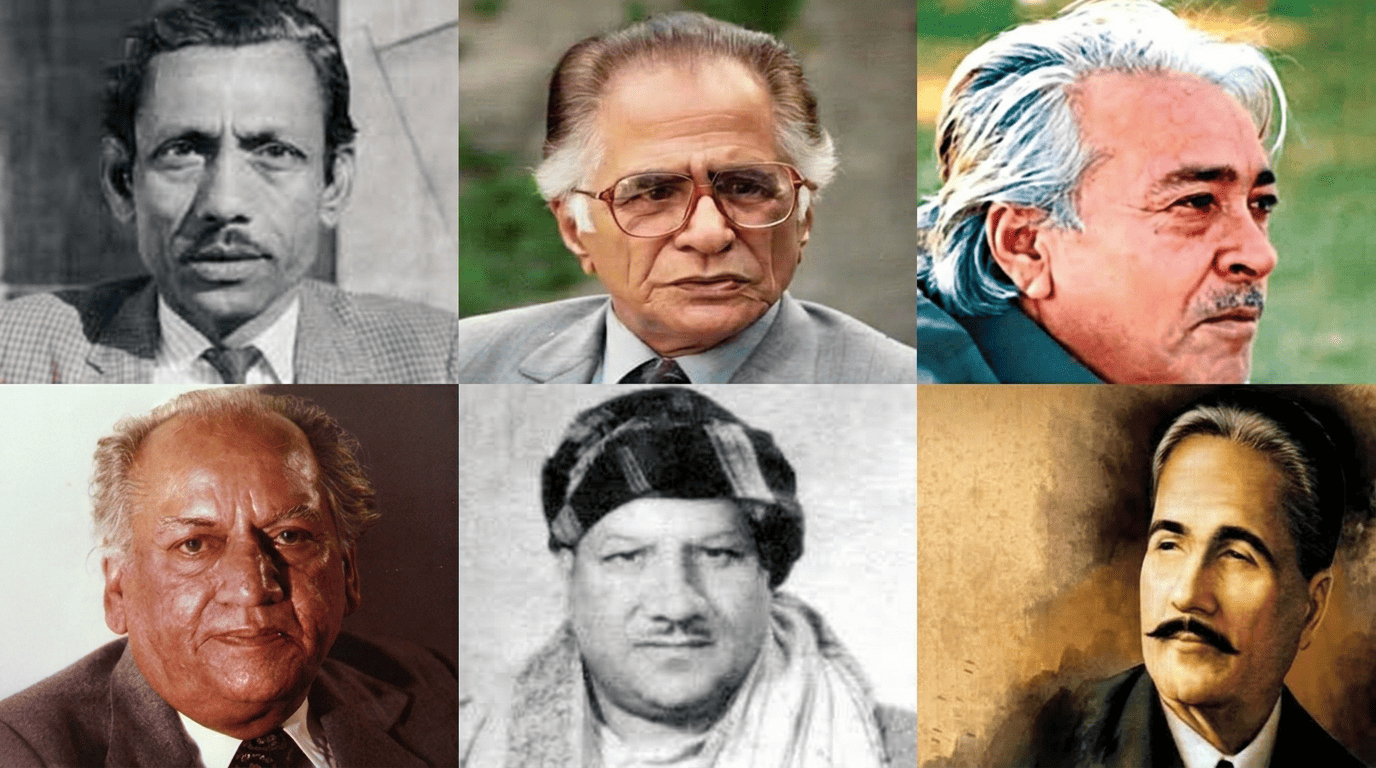
The words of Iqbal, Faiz, Qasmi, Kazmi, Munir Niazi, Amrita Pritam and Ustad Daman continue to inspire millions. Together, they transformed Lahore into more than a city; they made it a symbol of South Asia’s enduring love affair with poetry.