


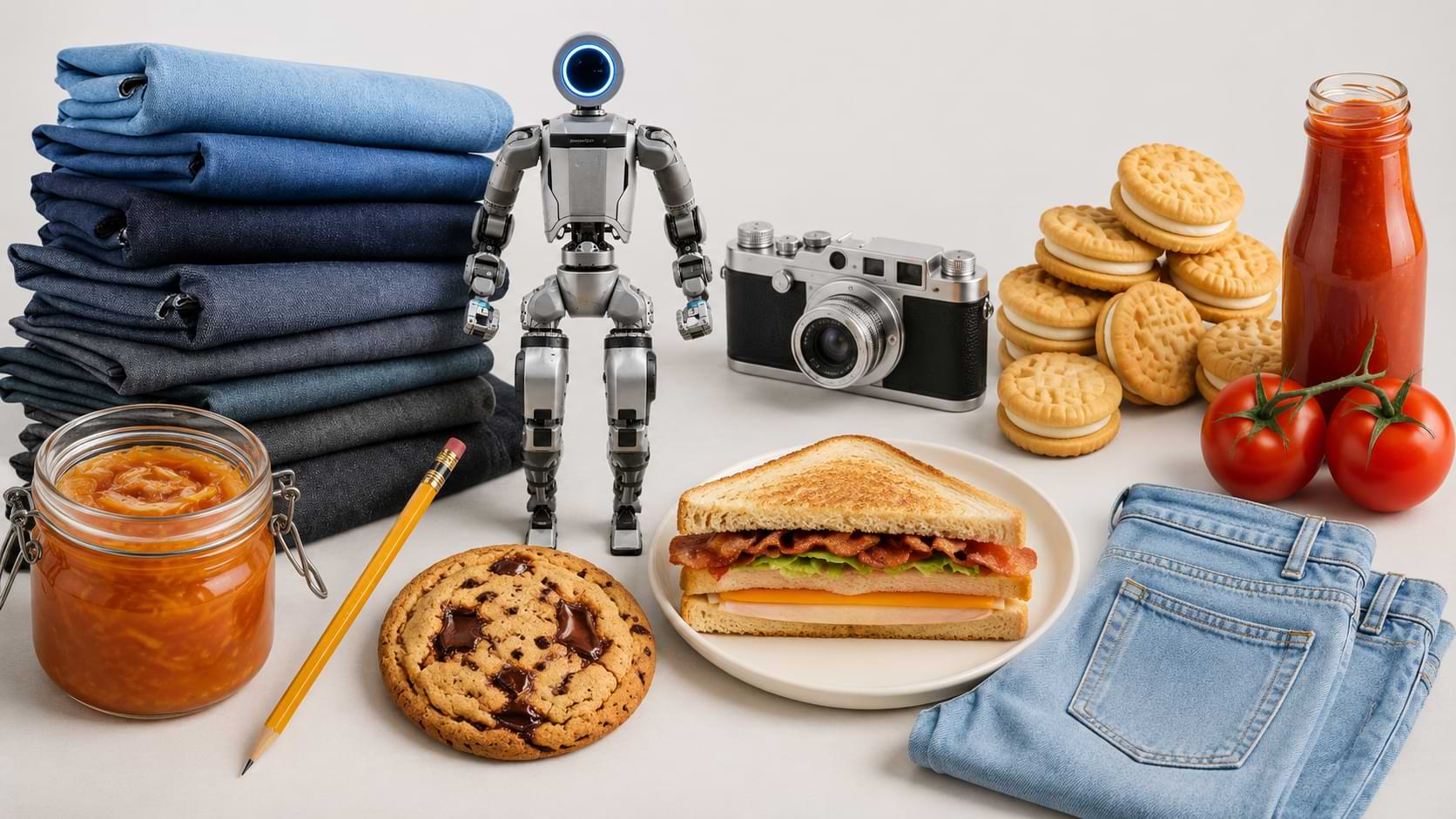
The names of everyday objects are so familiar that we rarely stop to wonder where they came from. Yet many of them carry fascinating stories of noblemen, ancient cities, forgotten languages, and historical trade routes. From the sandwich on your lunch plate to the jeans in your wardrobe, these ordinary words have extraordinary origins.
Here are some of the surprising stories behind the names of everyday objects we use all the time.
Sandwich
One of the most famous examples is the humble sandwich. It owes its name to John Montagu, the 4th Earl of Sandwich, an 18th-century English nobleman. According to popular legend, Montagu was so engrossed in gambling that he asked for slices of meat tucked between two pieces of bread, allowing him to eat without interrupting his game. Historians note this specific story is more folklore than documented fact — Montagu’s contemporaries were just as likely referring to his long hours at his desk — but either way, others began ordering “the same as Sandwich,” and the name stuck. Today, nearly every culture has its own version of the sandwich, but the name still honors one man.
Jeans
Your favorite pair of jeans traces its name back to the Italian port city of Genoa. During the Middle Ages, Genoa was a major hub for a durable cotton and blend fabric exported across Europe, sometimes dyed a distinctive indigo blue and sold under the French term bleu de Gênes (“blue of Genoa”). French traders referred to the cloth and the sailors who wore it as Gênes, the French name for Genoa, which gradually anglicized into “jean” and eventually “jeans.” Although modern jeans are closely associated with Levi Strauss and the American West, their name has European roots.
Denim
Closely related to jeans is the word “denim,” but its origin is a separate story. It’s widely believed to come from the French phrase serge de Nîmes, meaning “cloth from Nîmes,” a city in southern France known for its textile production. Over time, de Nîmes was shortened to “denim.” The two fabrics — jean and denim — were historically distinct materials that only later merged in popular use. Together, jeans and denim tell the story of two European textile traditions that eventually became global fashion staples.
Pencil
The word “pencil” comes from the Latin penicillus, meaning “little tail.” In medieval Europe, the term referred to small paintbrushes made from fine animal hairs that resembled tiny tails. As writing instruments evolved from brushes to graphite, the name remained. Today, every pencil carries a name that began with an artist’s brush rather than a writing tool.
Robot
Unlike most words on this list, “robot” is surprisingly modern. It was introduced in 1920 by Czech playwright Karel Čapek in his science fiction play R.U.R. (Rossum’s Universal Robots). The term comes from the Czech word robota, meaning “forced labor” or “servitude.” Although Čapek popularized the word, he credited his brother Josef with suggesting it. A century later, “robot” has become one of the defining words of the technological age.
Ketchup
Few condiments have travelled as far as ketchup. The word is believed to originate from the Hokkien Chinese term kê-tsiap, which referred to a fermented fish sauce. As traders carried the sauce through Southeast Asia, European merchants adapted both the recipe and the name. British cooks later experimented with mushroom and walnut versions before tomatoes became the dominant ingredient in the 19th century. The ketchup we know today is very different from its original form, but its name still reflects centuries of global trade.
Cookie
The word “cookie” comes from the Dutch koekje, meaning “little cake.” Dutch bakers would bake small portions of cake batter to test whether an oven was hot enough before baking a full cake. These miniature test batches eventually became snacks in their own right. Dutch settlers carried both the recipe and the word to North America, where “cookie” became the standard term, while much of the rest of the English-speaking world continued to use “biscuit.”
Marmalade
Today, marmalade is most closely associated with oranges, but its name tells a different story. It comes from the Portuguese word marmelo, meaning “quince.” The earliest marmalades were preserves made from quince rather than citrus fruit. As recipes evolved over the centuries, oranges became the preferred ingredient, but the original name remained unchanged.
Biscuit
The word “biscuit” comes from the Latin bis coctus, meaning “twice baked.” Early biscuits were baked once, dried out, and then baked again to remove moisture, making them ideal for long sea voyages and military campaigns because they could last for months without spoiling. Although modern biscuits are much softer, their name preserves this ancient baking technique.
Camera
The word “camera” originates from the Latin phrase camera obscura, meaning “dark chamber.” Long before photography existed, scholars discovered that light passing through a small hole into a dark room could project an inverted image of the outside world onto a wall. Early photographers adapted this principle into portable devices, eventually giving us the modern camera. From noblemen and playwrights to ancient ports and forgotten languages, the names of everyday objects are miniature history lessons hidden in plain sight. They remind us that language evolves alongside trade, exploration, invention, and culture. The next time you pick up a pencil, put on your jeans, or order a sandwich, you’ll be using words that have travelled across centuries — and, in many cases, across continents — before becoming part of everyday life.


