



The technology that helped end a pandemic is now being turned against cancer, with early results raising hope.
The mRNA vaccines that changed the course of the COVID-19 pandemic are being adapted to fight cancer, and early trials are producing results that have caught the attention of doctors and researchers worldwide. These vaccines do not prevent cancer the way a flu shot prevents flu. Instead, they train the immune system to hunt down and destroy tumor cells already in the body. With more than 120 clinical trials underway and the first approvals potentially arriving within a couple of years, the field is moving from theory toward real treatment.
Unlike traditional vaccines, mRNA cancer vaccines are often personalized, built for a single patient based on the specific mutations in their tumor. That tailoring is what makes the approach both powerful and complex, and it is a large part of why scientists are so interested in how far it can go.
How mRNA cancer vaccines work
The basic idea builds on the same technology used against COVID-19. An mRNA vaccine delivers genetic instructions that tell certain immune cells to produce small pieces of protein. In a cancer vaccine, those protein pieces are designed to match markers found on a patient’s tumor, known as neoantigens.
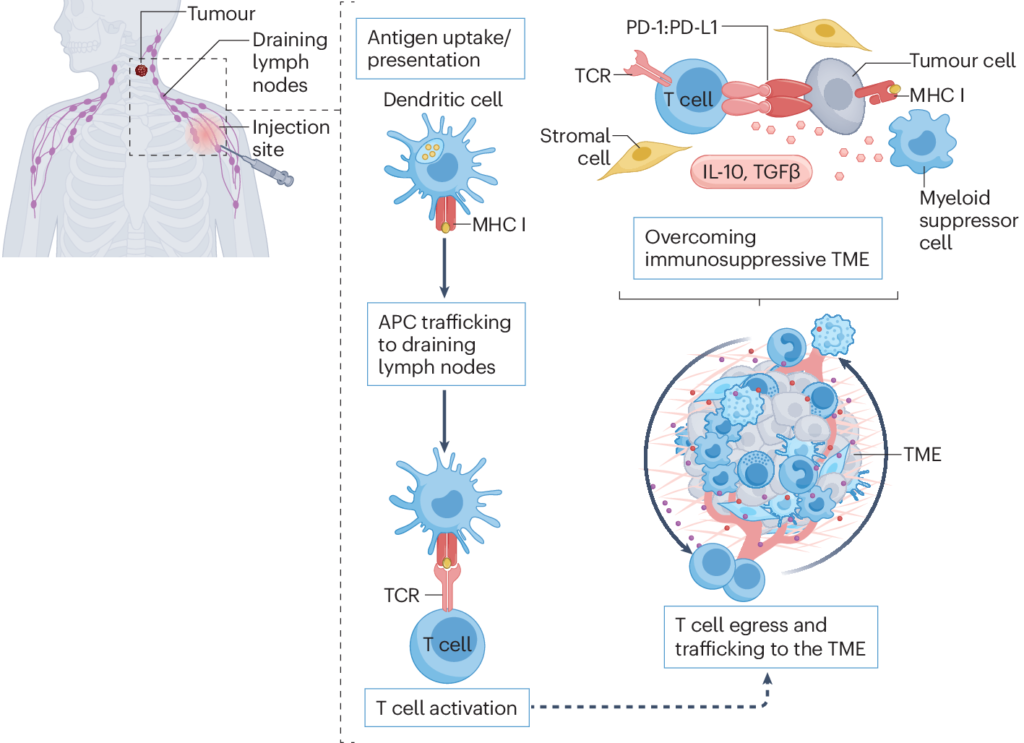
Specialized immune cells called dendritic cells read the mRNA instructions and produce these protein fragments. They then present the fragments to T cells, the immune system’s search-and-destroy units. Once trained, the T cells circulate through the body seeking out and killing cancer cells that carry the matching markers. Because a tumor’s mutations are unique to each person, many of these vaccines are made individually, using up to 20 tumor-specific targets in some trials.
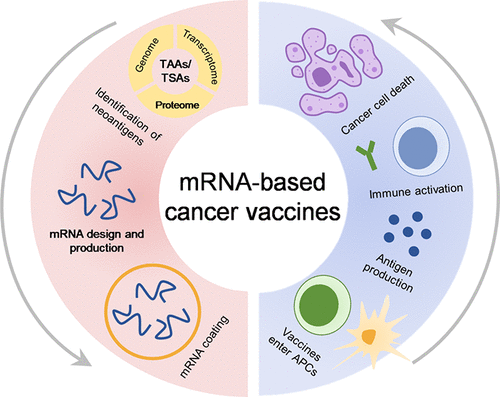
New research is refining how this process works. In a study published in Nature in April 2026, scientists at Washington University School of Medicine in St. Louis found that mRNA vaccines engage the immune system through more pathways than previously thought. According to senior author Kenneth Murphy, the vaccines can activate cancer-killing responses even without the one dendritic cell subtype long assumed to be essential, because a related cell type can do the job too. Co-author William Gillanders said the discovery could improve vaccine formulation and dosing, and may help explain why some patients respond better than others.
What the early trial results show
The most striking results so far have come in cancers that are notoriously hard to treat. At Memorial Sloan Kettering Cancer Center, a personalized mRNA vaccine developed with BioNTech was tested in pancreatic cancer, one of the deadliest forms of the disease. In the phase 1 trial of 16 patients, half responded to the vaccine, and among those responders, the cancer-killing T cells lasted up to six years. Nearly 90 percent of the patients who responded were still alive up to six years after their last treatment. For context, the five-year survival rate for pancreatic cancer is around 13 percent, according to the American Cancer Society.
Melanoma has shown promise too. Moderna’s personalized vaccine, known as mRNA-4157 or V940, was tested alongside the immunotherapy drug pembrolizumab. Combining the two reduced the risk of cancer recurrence by 44 percent compared with the drug alone, and follow-up data showed the benefit held up at three years. That result has driven the vaccine into larger phase 3 trials, with regulatory submissions anticipated in 2026.
Trials are also underway for lung, breast, bladder, and brain cancers, often pairing the vaccine with checkpoint inhibitors that release the brakes on the immune system. The approach appears to work best after surgery, when little cancer remains, which is when the immune system has the best chance of clearing stray tumor cells.
What mRNA cancer vaccines could change
If the results hold up in larger trials, the impact could be significant. The first regulatory approvals for mRNA cancer vaccines are anticipated between late 2026 and 2027, contingent on the outcomes of pivotal phase 3 studies. That would mark a shift in how some cancers are treated, adding a personalized immune-based option alongside surgery, chemotherapy, and radiation.
Challenges remain. Making a unique vaccine for each patient is time-consuming and expensive, with personalized vaccines potentially costing between 100,000 and 300,000 dollars per patient. Manufacturing needs to become faster and more scalable, and regulators are still working out how to approve a drug made individually for every person. Some tumors, such as glioblastoma and pancreatic cancer, also suppress the immune system, which can blunt the vaccine’s effect unless combined with other therapies.
Still, the direction of travel is clear. Researchers describe mRNA cancer vaccines as having crossed from theoretical innovation into genuine clinical momentum. Advances in artificial intelligence are speeding up the design of personalized vaccines, which could lower costs and widen access over time. For patients facing cancers with few good options, a technology proven during a global pandemic is now offering a new and increasingly credible line of hope.


