

By using this site, you agree to the Privacy Policy and Terms of Use.
Accept
The Expat StoryThe Expat StoryThe Expat Story
Font ResizerAa
  • HOME
    • ENTERTAINMENT
      • Celebrity
      • HUMAN INTEREST
    • LIFESTYLE
      • CULTURE
      • HUMAN INTEREST
    • NEWS
      • PAKISTAN
      • CULTURE
      • AUTOMOTIVE
      • HEALTH
    • REVIEWS
      • TOURISM
      • SPORTS
      • ENTERTAINMENT
      • VIRAL TRENDS
    • Contact us
      • About Us
      • Privacy Policy
  • NEWS
  • PODCASTS
  • REVIEWS
Reading: Ant Behavior Discovery Rewrites a Century of Scientific Understanding
Share
Font ResizerAa
The Expat StoryThe Expat Story
  • HOME
  • NEWS
  • PODCASTS
  • REVIEWS
Search
  • ENTERTAINMENT
    • HUMAN INTEREST
    • CELEBRITY
  • LIFESTYLE
    • CULTURE
    • HUMAN INTEREST
  • NEWS
    • PAKISTAN
    • AUTOMOTIVE
    • CULTURE
    • HEALTH
  • REVIEWS
    • TOURISM
    • SPORTS
    • ENTERTAINMENT
    • VIRAL TRENDS
  • Contact us
    • About Us
    • Privacy Policy
Follow US
© 2026 The Expat Story. All Rights Reserved.
The Expat Story > Blog > The Escapist > Discover > Ant Behavior Discovery Rewrites a Century of Scientific Understanding
BlogDiscoverScience

Ant Behavior Discovery Rewrites a Century of Scientific Understanding

Written by:
Kayenat Kalam
Last updated: May 8, 2026
Share

An 8-year-old boy’s observation in his backyard has contributed to a scientific finding that challenges over a century of assumptions about ant behavior.

Hugo Deans noticed a cluster of small rounded objects near an ant nest at his home. His father, Andrew Deans, a Penn State University entomology professor, identified them as oak galls, not seeds, and took note of how close they were to the nest.

That observation prompted a research collaboration between Penn State and SUNY. The team documented a three-way interaction among ants, oak trees, and gall-forming wasps that had not previously been recorded in scientific literature, according to their published findings.

While playing in his backyard, 8-year-old Hugo Deans noticed tiny, BB-sized spheres near an ant nest. He assumed they were seeds — but they were actually oak galls, protective growths created by tiny wasps that lay eggs inside oak leaves.

What happened next stunned scientists.… pic.twitter.com/bawWb3Gpeq

— Massimo (@Rainmaker1973) May 5, 2026

Oak galls are small plant growths caused by insects. They act as enclosed chambers and serve as a microhabitat for developing larvae. The galls Hugo found were produced by gall wasps.

Ant Seed Dispersal Behavior Found to Extend Beyond Seeds

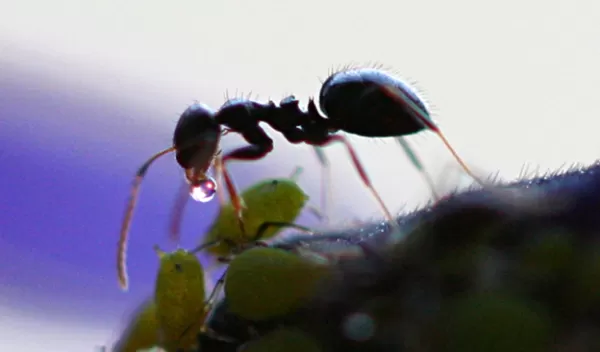
The study focused on galls from two cynipid wasp species, Kokkocynips rileyi and Kokkocynips decidua, which form on red oak leaves. The galls have a pale cap the researchers called the “kapéllo,” from the Greek word for “cap.” In late summer and autumn, when leaves fall, ants were observed collecting the capped galls and carrying them away.

Researchers ran field experiments in a New York forest, placing dishes containing bloodroot seeds alongside K. rileyi galls. Ants, particularly Aphaenogaster picea, a species already known for seed dispersal, removed the galls at roughly the same rate as the seeds over about 90 minutes.

In lab observations, ants grasped the galls by the kapéllo the same way they handle elaiosomes, the fatty attachments on certain seeds that ants eat for nutrients. When the kapéllo was removed from the galls, ants largely ignored them. With the cap intact, interest was strong.

Chemical analysis found the kapéllo contains free fatty acids also present in elaiosomes. Those compounds are known to trigger ants’ carrying behavior, explaining why the galls drew the same response as seeds.

“Ants get a little bit of nutrition when they eat the elaiosomes, and the plants get their seeds dispersed to an enemy-free space,” Andrew Deans said.

Forest Ecosystem Interactions More Complex Than Previously Understood

The researchers say the findings suggest that small chemical cues can influence how insects, nutrients, microbes, and predators move through ecosystems, and that overlooked species interactions may play a larger role in biodiversity than currently understood.

Stay tuned for more interesting news and updates!

Share This Article
Facebook Email Print
Previous Article NASA’s Curiosity Rover Gets a Mars Rock Stuck to Its Drill
Next Article UAE AI Adoption Tops Global Rankings for Third Consecutive Time
Leave a Comment

Leave a Reply Cancel reply

Your email address will not be published. Required fields are marked *

Stay Connected

FacebookLike
XFollow
InstagramFollow
YoutubeSubscribe
TiktokFollow

You Might Also Like

People Fear Mental Illness More Than Cancer, Surveys Show
Blog

People Fear Mental Illness More Than Cancer, Surveys Show

You wake up feeling fine physically, but your mind…

Writen by
TheExpatStory
May 5, 2026
From a landmark Picasso exhibition to drop-in ceramics studios, Abu Dhabi has a full calendar for World Art Day and beyond.
DiscoverUAE EXPATS

World Art Day in Abu Dhabi: Where to Go and What to See This Week

World Art Day falls on April 15 every year,…

Writen by
Kayenat Kalam
April 15, 2026
BlogNEWS

Pakistan Calls UAE Deportation Claims ‘Fake News’

Excerpt: Pakistan's interior ministry has dismissed social media reports…

Writen by
Kayenat Kalam
May 8, 2026
ScienceTechnology

UAE AI Adoption Tops Global Rankings for Third Consecutive Time

Excerpt: The UAE has become the first country in…

Writen by
Kayenat Kalam
May 8, 2026

The Expat Story — Your window to global news, trends, and stories that matter.

  • HOME
  • NEWS
  • PODCASTS
  • REVIEWS
  • Contact us
  • About Us
  • Privacy Policy
Welcome Back!

Sign in to your account

Username or Email Address
Password

Lost your password?