


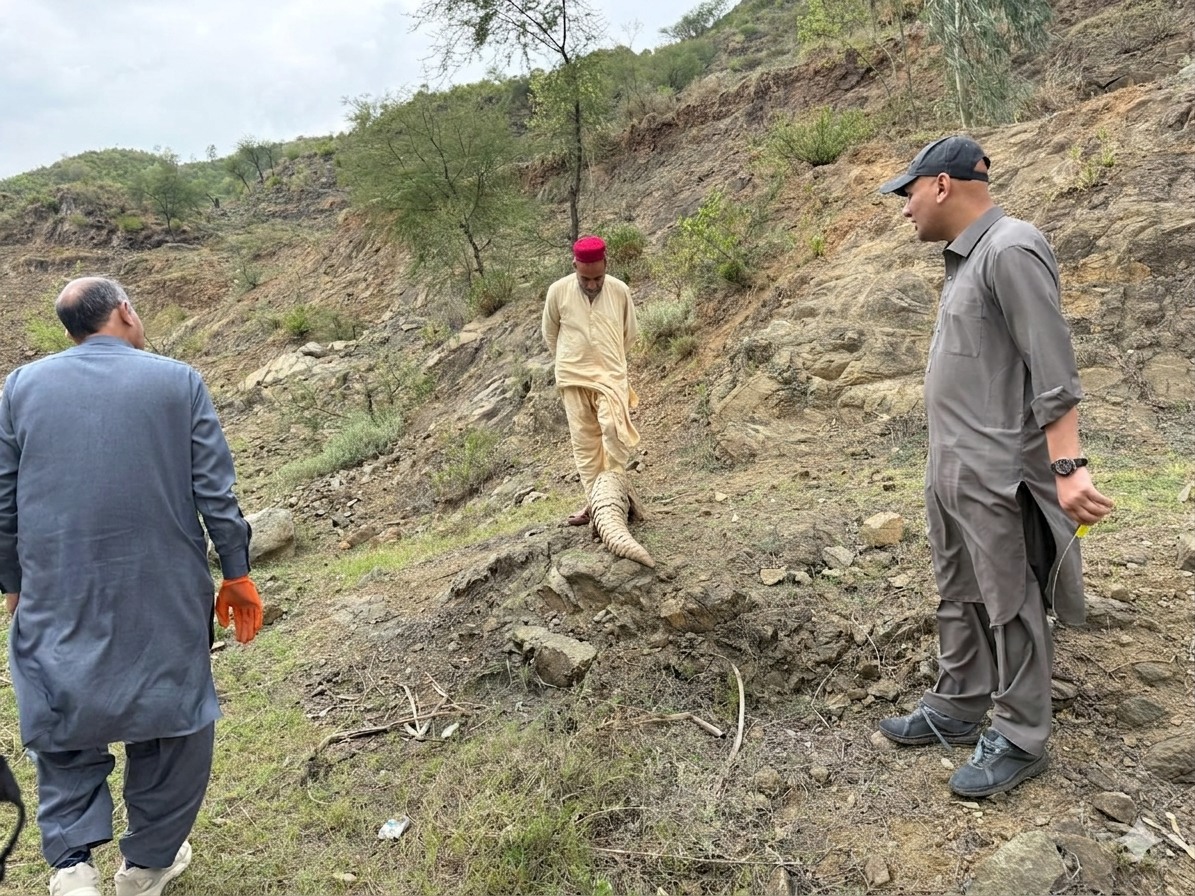
A pangolin rescued from illegal poaching has been successfully rehabilitated and returned to the wild in Khyber Pakhtunkhwa, WWF-Pakistan announced. The animal was recovered by the Mardan Wildlife Division of the Khyber Pakhtunkhwa Wildlife Department in coordination with WWF-Pakistan and released into a designated Pangolin Protection Zone in Swabi, within the Mardan district.
Following its recovery, the pangolin was placed under close observation and received veterinary care during a quarantine and rehabilitation period to ensure full recovery before release. With in-kind support from Lincoln University, the animal was successfully tagged prior to being returned to its natural habitat. The tagging allows researchers to monitor the pangolin’s movements and health after release.
Pangolin Protected Under Pakistani and International Law
According to WWF-Pakistan, the species is protected under both federal and Sindh wildlife laws in Pakistan. Since 2016, it has also been listed under Appendix I of the Convention on International Trade in Endangered Species, or CITES, which provides the highest level of international protection available and prohibits all commercial trade in pangolins and their parts globally.
The pangolin’s population has declined significantly in Pakistan due to poaching, illegal trade, habitat loss, and climate change, according to WWF-Pakistan.
World’s Most Trafficked Mammal
Pangolins hold the distinction of being the most trafficked mammal on earth. According to the International Union for Conservation of Nature, more than one million pangolins were poached in the decade leading up to 2014. Estimates from the United States Fish and Wildlife Service indicate that between 2000 and 2019, the equivalent of more than 895,000 pangolins were trafficked globally based on seizure data alone.
Pangolins are hunted primarily for their scales, which are composed of keratin and are in high demand for use in traditional medicine across parts of East Asia, and for their meat, considered a delicacy in some markets. Despite the 2016 CITES Appendix I listing, which extended the highest level of international protection to all eight pangolin species, illegal trade has continued.
Pakistan’s pangolins face particular pressure due to their proximity to established trafficking networks. The Khyber Pakhtunkhwa Wildlife Department has been working alongside conservation organisations to intercept poaching and establish protected zones for the species within the province.
Coordinated Conservation Effort
WWF-Pakistan described the release as a reflection of what coordinated conservation action between government agencies and civil society organisations can achieve. The Mardan Wildlife Division’s role in the initial recovery, combined with veterinary rehabilitation support and academic partnership with Lincoln University for tagging, brought together multiple institutions around a single animal’s survival.
The pangolin has now been returned to its habitat within the Pangolin Protection Zone in Swabi, where its movements will be tracked as part of ongoing monitoring efforts in the region.