


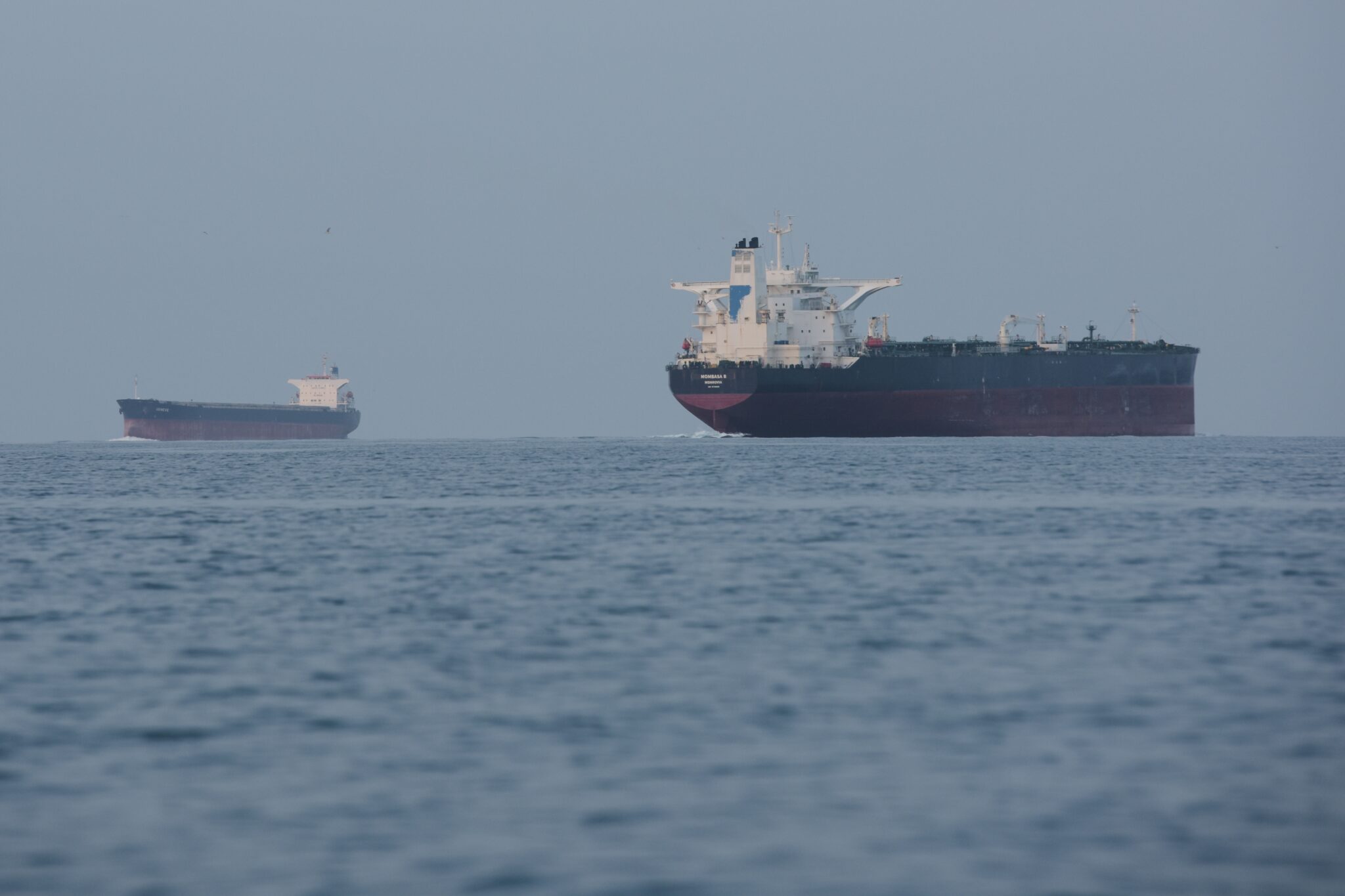
Brent crude jumped nearly 8% on Monday after the US Navy seized an Iranian ship and Tehran closed the Strait of Hormuz again, deepening the worst oil supply disruption in recorded history.
Oil markets opened the week sharply higher after a chaotic weekend in the Gulf of Oman. Brent crude surged to $95.42 on Sunday night and climbed further into Monday, up nearly 8% by early trading. WTI, the US benchmark, rose around 6% to $89.77. The gains reversed most of Friday’s steep selloff, when both benchmarks had dropped more than 10% on brief hopes of a ceasefire.
The immediate trigger was a naval confrontation. The US Navy fired on an Iranian container ship in the Gulf of Oman on Sunday and seized it after the vessel attempted to bypass a US naval blockade of Iranian ports. It was the first ship fired upon and taken since the blockade came into effect the previous Monday. Iran struck back the same weekend, with Revolutionary Guard gunboats firing on a tanker in the Strait of Hormuz and an unknown projectile hitting a container ship. Tehran then announced the strait would remain closed until the US lifted its blockade.
Strait of Hormuz Closure Triggers Largest Oil Supply Disruption in History
The Strait of Hormuz has been effectively blocked since February 28, when the US and Israel launched air strikes against Iran. Before the conflict, more than 100 vessels transited the waterway daily, carrying roughly 20% of global seaborne oil trade. In the week ending April 17, just 24 ships made the passage. On the Friday of that week, only two crossed, and neither carried oil or gas.
The scale of the disruption is without precedent. The International Energy Agency reported that global oil supply fell 10.1 million barrels per day in March, dropping to 97 million barrels per day. Physical crude prices briefly surged near $150 per barrel, far above futures market levels. Middle distillate prices in Singapore hit all-time highs above $290 per barrel. In April, refineries across the Middle East and Asia cut output by around 6 million barrels per day due to feedstock shortages and infrastructure damage. Global oil demand is now projected to contract in 2026, compared to growth of 730,000 barrels per day forecast just a month earlier.
The ripple effects are spreading. Asian petrochemical producers have curtailed operations as feedstock supply dried up. Flight cancellations across the Middle East, parts of Asia, and Europe have cut into jet fuel consumption. A growing number of countries have implemented policies to limit domestic fuel use or shield consumers from rising pump prices.
US-Iran Nuclear Talks Collapse, Leaving Markets Uncertain
Peace talks in Islamabad over the weekend failed to produce a deal. Vice President JD Vance led the US delegation alongside special envoy Steve Witkoff and Jared Kushner. Vance said Iran would not provide an affirmative commitment to halt its nuclear weapons program. Iran’s parliamentary speaker Mohammad-Bagher Ghalibaf said the US had failed to gain the trust of the Iranian delegation during the talks.
A brief window of optimism had emerged on Friday, when Iran’s Foreign Minister Abbas Araghchi announced the strait was fully open to commercial traffic during a ceasefire period. Reports also surfaced that the US and Iran were negotiating a deal under which the US would release $20 billion in frozen Iranian assets in exchange for Iran surrendering its enriched uranium stockpile. Crude prices fell sharply on the news. That optimism collapsed by Saturday, when Tehran reversed course after Washington refused to lift the naval blockade.
Iran’s oil exports averaged around 1.85 million barrels per day through March, with revenues worth approximately $45 billion in 2025, equal to about 13% of the country’s GDP. US Central Command confirmed that the blockade covers all maritime traffic entering or exiting Iranian ports, while vessels heading to non-Iranian destinations through the strait would not be stopped.
JPMorgan Chase commodities analysts said reopening the strait has become the market’s most time-sensitive priority. US national average pump prices for unleaded gasoline sat at $4.12 on Monday, up more than $1.20 per gallon since the war began, according to AAA data.