

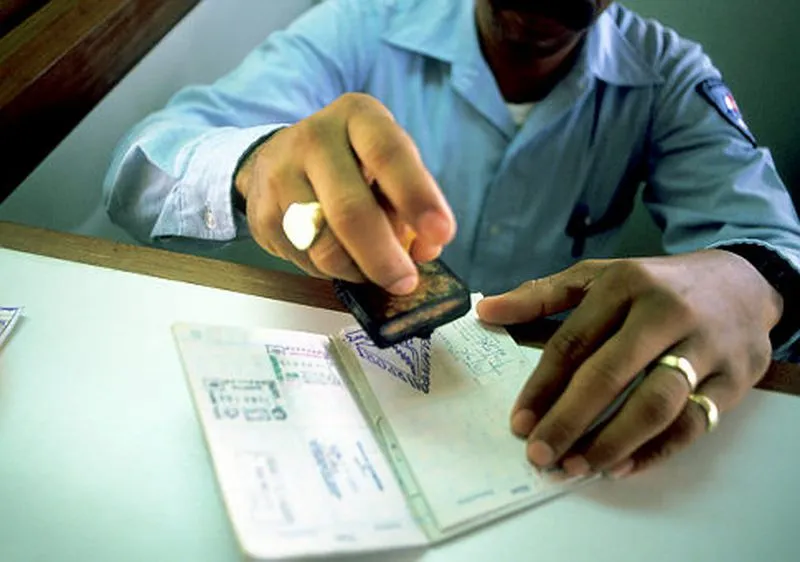
Pakistan has thrown open its doors for what may be the most consequential diplomatic event of the decade. On Friday morning, Deputy Prime Minister and Foreign Minister Ishaq Dar announced that all individuals traveling in connection with the Islamabad Talks 2026 will be granted visa on arrival. The policy covers delegates and journalists from all participating nations.
Dar shared the announcement on X, stating that all airlines have been requested to permit boarding to travelers linked to the talks without requiring a visa. Pakistan’s immigration authorities will handle documentation upon landing. The Ministry of Interior and Narcotics Control issued a formal notification on the same day, signed by Section Officer (Visa) Agha Hashim Mehmood Khan and marked “Most Immediate.” Facilitation desks have been set up at relevant airports to process arrivals.
The move is particularly notable because Pakistan suspended its Visa Prior to Arrival facility at the start of 2026. Under the current system, travelers are expected to wait 7 to 10 business days for online visa processing. By waiving these requirements entirely for the Islamabad Talks, the government is sending a clear signal about the urgency and importance it places on these US-Iran peace negotiations.
US-Iran Ceasefire Talks: Who Is Attending the Islamabad Negotiations
The Islamabad Talks stem from a two-week ceasefire between the United States and Iran, brokered through Pakistani mediation and announced on April 8. Prime Minister Shehbaz Sharif formally invited both delegations to the capital to negotiate what he called a “conclusive agreement to settle all disputes.”
The White House confirmed that US Vice President JD Vance will lead the American delegation, joined by special envoy Steve Witkoff and Jared Kushner. On the Iranian side, Parliament Speaker Mohammad Bagher Ghalibaf and Foreign Minister Abbas Araghchi are expected to head the team, though Tehran has not formally confirmed its full lineup.
White House Press Secretary Karoline Leavitt said the first round of talks would begin Saturday morning local time. The negotiations carry a hard deadline, with the temporary ceasefire set to expire on April 22.
Iran’s 10-point peace proposal, which it says must form the basis for talks, includes demands for oversight of the Strait of Hormuz, the withdrawal of US combat forces from the Middle East, full war reparations and the lifting of all sanctions. The US has reportedly put forward a 15-point counter-proposal focused on Iran’s enriched uranium stockpile, its ballistic missile program, sanctions relief and reopening the strait.
More than three dozen visa applications from international media were submitted ahead of the announcement, with at least 20 journalists already approved, according to Pakistani officials. A 30-member US security advance team has also arrived in Islamabad.
Islamabad Security Lockdown and Serena Hotel Preparations for Peace Talks
The Pakistani capital is under a heavy security blanket. Authorities declared April 9 and 10 public holidays in Islamabad, and the city’s Red Zone, home to government buildings and embassies, has been completely sealed. Key entry points into the city have been shut down.
Islamabad’s Serena Hotel has been requisitioned as the venue for the talks. The government asked existing guests to vacate from Wednesday evening, and the property is being used exclusively for the delegations.
The ceasefire itself remains fragile. Reports of Israeli strikes in Lebanon, combined with accusations of violations from both sides, have cast a shadow over whether the talks will proceed as planned. Iran’s ambassador to Pakistan briefly posted on X that the Iranian delegation would arrive Thursday night, only to delete the message shortly after. An Iranian embassy official later said the post was shared prematurely.
Pakistan’s role as mediator has drawn significant international attention. Analysts point to Islamabad’s relationships with both Washington and Tehran, its shared border with Iran and its large Shia Muslim population as factors that position it uniquely for this role. Army Chief Asim Munir has been in direct contact with US and Iranian leaders throughout the mediation process.
The proposed face-to-face between Vance and Ghalibaf would represent the highest-level direct engagement between American and Iranian officials since 1979.
Stay tuned for more updates!