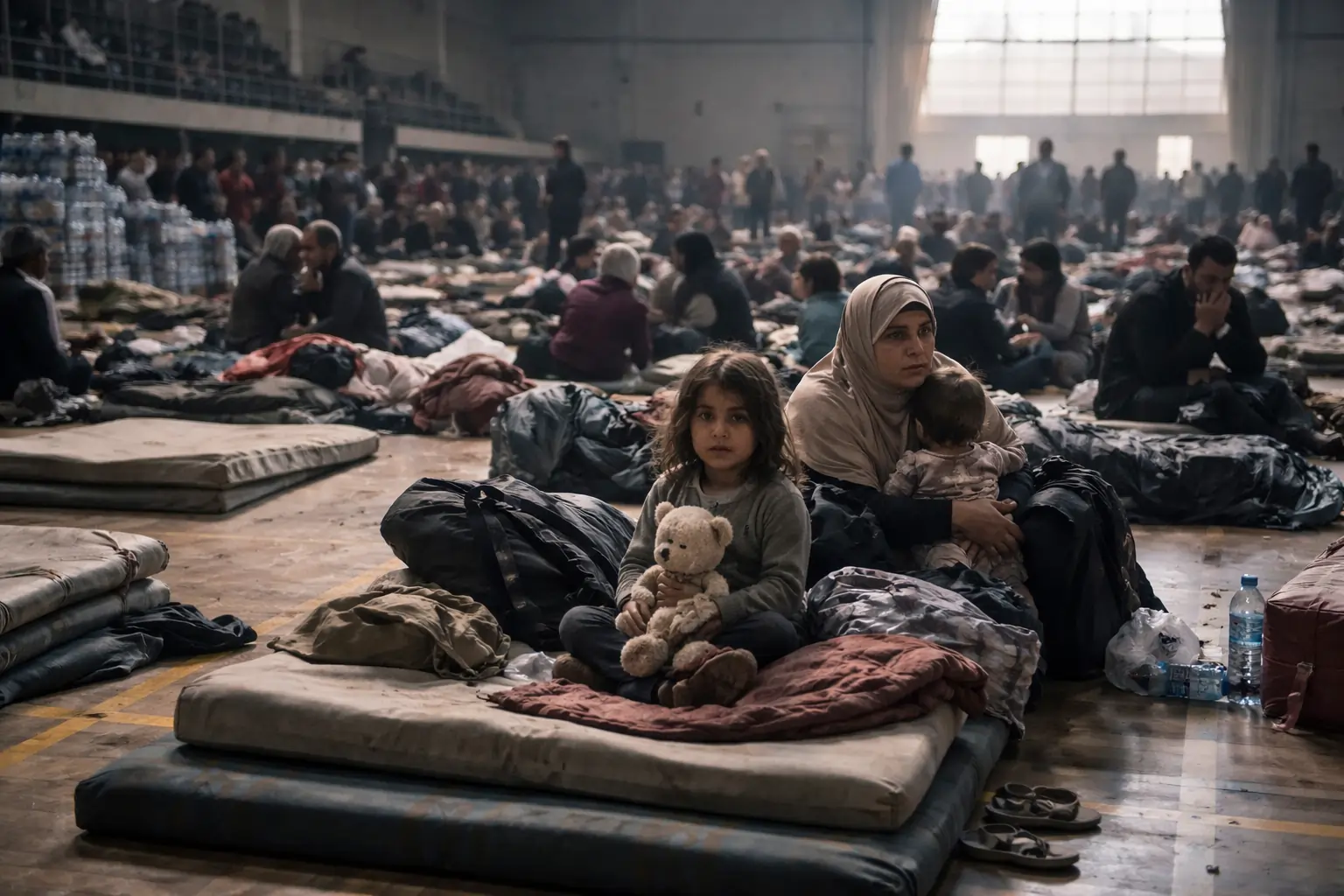
Beirut has seen a significant influx of displaced residents since Israeli military operations intensified in early March 2026. Schools, sports stadiums, and public spaces across the capital have been converted into emergency shelters. The Lebanese government confirmed that more than one million people have formally registered as displaced. The UN refugee agency noted the figure is likely an undercount, as it excludes those who have not registered with the Ministry of Social Affairs. One million represents approximately 20% of Lebanon’s total population.
Lebanon Displacement Figures Reach Record Levels in 2026
The current conflict began on March 2, 2026, when Hezbollah launched rockets into Israel following a US-Israeli strike on Iran that resulted in the death of Iranian Supreme Leader Ali Khamenei. Israel subsequently launched airstrikes across Lebanon, including Beirut, and announced a ground operation in the south.
Israeli evacuation orders have covered an area humanitarian agencies estimate at 15% to 20% of Lebanon’s territory, primarily in southern Lebanon and Beirut’s southern suburbs. The orders have prompted large-scale movement of civilians northward into Beirut and other cities.
Lebanon’s government has converted hundreds of public schools into emergency shelters and pitched tents at the country’s main sports stadium. Aid organizations have been distributing food, medicine, and basic supplies to displaced families, many of whom left their homes with little or no advance notice.
The UN’s sexual and reproductive health agency said the scale and speed of displacement in 2026 exceeds that seen during the 2024 conflict. A report from Lebanon’s National Mental Health Programme, published before the current escalation, found that three in five people in the country were already screening positive for depression, anxiety, or PTSD.
Israel-Hezbollah War Triggers Lebanon Humanitarian Emergency
Lebanon’s Health Ministry reported that Israeli attacks have killed at least 886 people, including 67 women and 111 children, since hostilities resumed on March 2. The combined death toll of militants and civilians surpassed 1,000 by mid-March, with over 1,700 wounded.
Israel’s Defense Minister stated that displaced Lebanese residents will not be permitted to return to areas south of the Litani River until the security of northern Israeli communities is ensured. The Israeli military said its operations are targeting Hezbollah infrastructure and personnel. Hezbollah has continued rocket fire into northern Israel and reported engagements with Israeli forces along the border.
A joint statement from Canada, France, Germany, Italy, and the United Kingdom called for a significant ground offensive to be averted, citing the potential for further humanitarian harm.
Aid organizations on the ground reported particular difficulty reaching migrant workers, Syrian nationals, and people with chronic medical conditions including dialysis patients and insulin-dependent individuals without access to refrigeration. The International Rescue Committee said many families have been sleeping in their cars at night or gathering in open areas during airstrikes.
UN tracking data recorded over 125,000 border crossings from Lebanon into Syria by mid-March, the majority of them Syrian nationals returning to their country of origin.
The UN refugee agency said displacement figures and humanitarian needs are expected to increase as military operations continue. International agencies have called for ceasefire conditions that would allow humanitarian access across affected areas of Lebanon.