
Shanghai Lantern Festival at Yuyuan Garden: A Complete Visitor Guide
Shanghai’s Yuyuan Lantern Festival transforms historic gardens into a glowing celebration of light, tradition, and Lunar New Year culture.
Jan 28, 2026
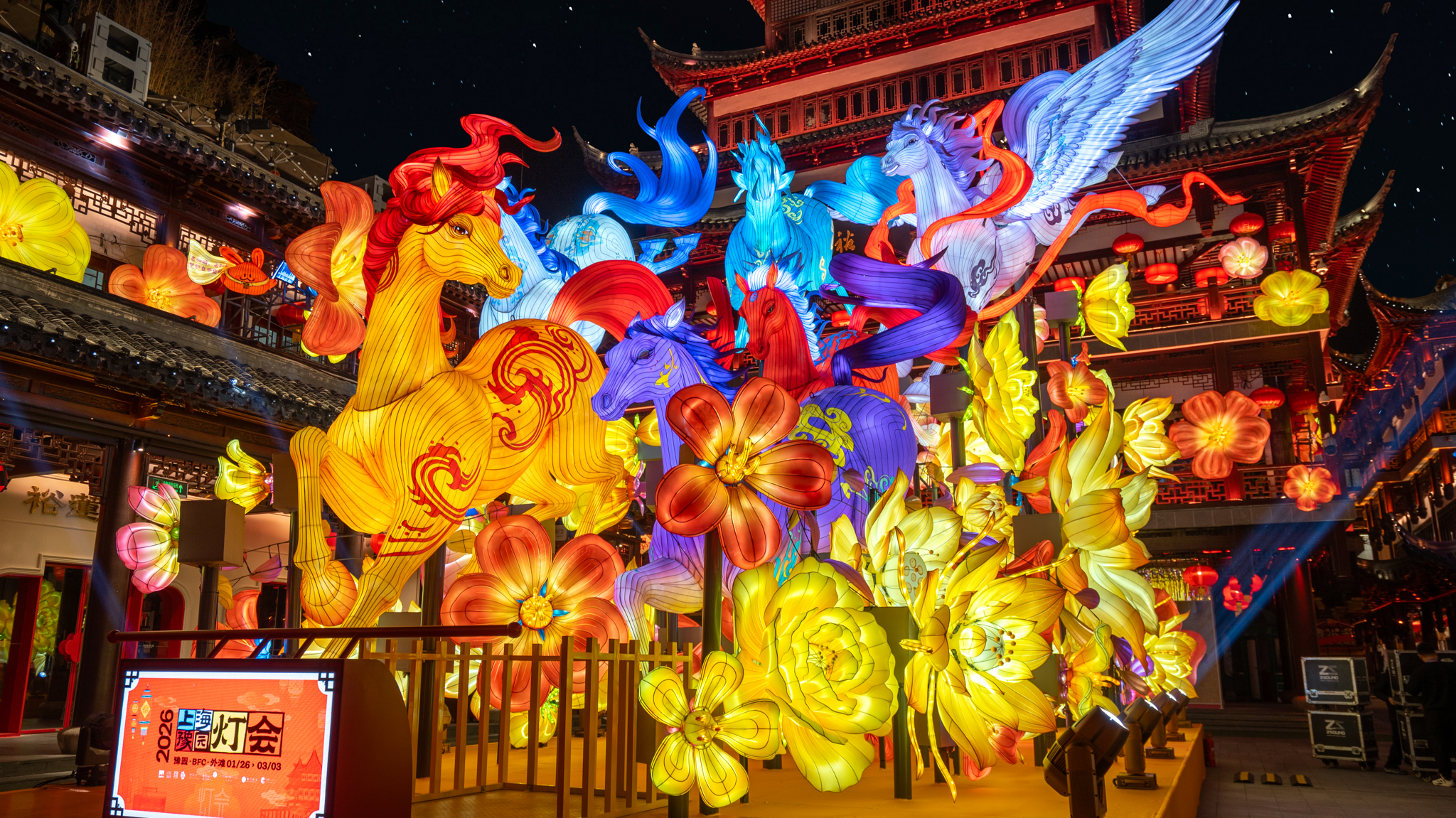
Every winter, when the moon hangs fullest on the fifteenth day of the lunar calendar, Shanghai trades its skyscraper glare for a softer, centuries-old glow: lanterns. The city’s best-known celebration centers on Yuyuan Garden, where the narrow lanes, arched bridges, and Ming-era pavilions transform into a luminous wonderland of oversized animals, mythical creatures, zodiac symbols, and modern light sculptures. Music floats through the air, steam rises from bowls of tangyuan (sweet glutinous rice balls), and crowds drift slowly through the glowing maze, drawn by spectacle, tradition, and a shared wish for good fortune in the year ahead.
A festival with ancient roots (but a very modern show)
The Lantern Festival, Yuanxiao Jie, is one of China’s oldest traditional celebrations, with origins that can be traced back more than 2,000 years to the Han dynasty. Historical records link the festival to imperial rituals, Buddhist traditions of lighting lamps, and folk customs welcoming the first full moon of the lunar new year. Over time, what began as religious and court ceremonies evolved into a lively public festival filled with light, performance, and symbolic food.
The festival marks the official end of the Spring Festival (Chinese New Year) period, closing two weeks of family gatherings and celebrations. Lanterns symbolize hope, renewal, and the guiding of light into the coming year, while the full moon represents unity and togetherness. Traditions such as dragon dances, lion dances, and lantern riddles developed over centuries, turning the holiday into both a visual spectacle and an intellectual game.
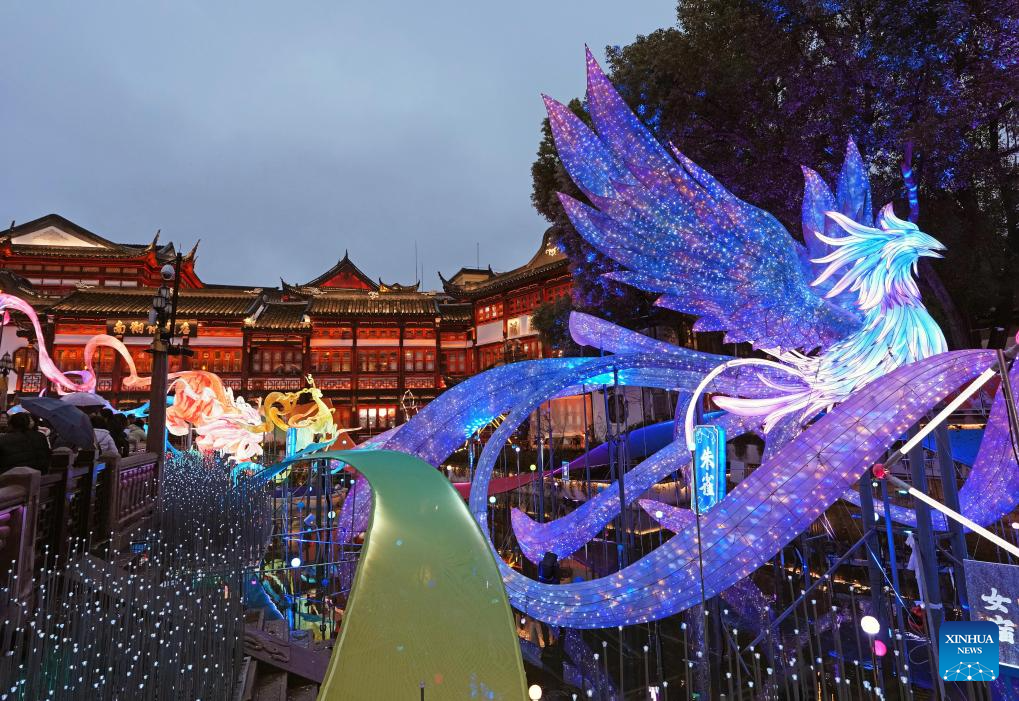
But don’t imagine dim oil lamps and quiet courtyards, Shanghai’s Yuyuan lantern displays are grand, theatrical, and artistically innovative. In recent years, organizers have fused traditional lantern craftsmanship with LED lighting, digital projection, and large-scale mechanical structures. The result is a blend of heritage and innovation: illuminated lotus ponds, glowing pagodas, zodiac animals towering above the crowd, and dragons that appear to ripple through the night sky. The festival feels like a living museum where folklore meets futuristic art.
Why Yuyuan Garden is the perfect stage
Yuyuan Garden, built in the 16th century during the Ming dynasty, is one of Shanghai’s most famous classical gardens. With its curved roofs, koi ponds, rockeries, and winding corridors, it already feels like a place pulled from a painting. During the Lantern Festival, the architecture becomes part of the display, lanterns hang from eaves, reflections shimmer in the water, and bridges glow with soft color.
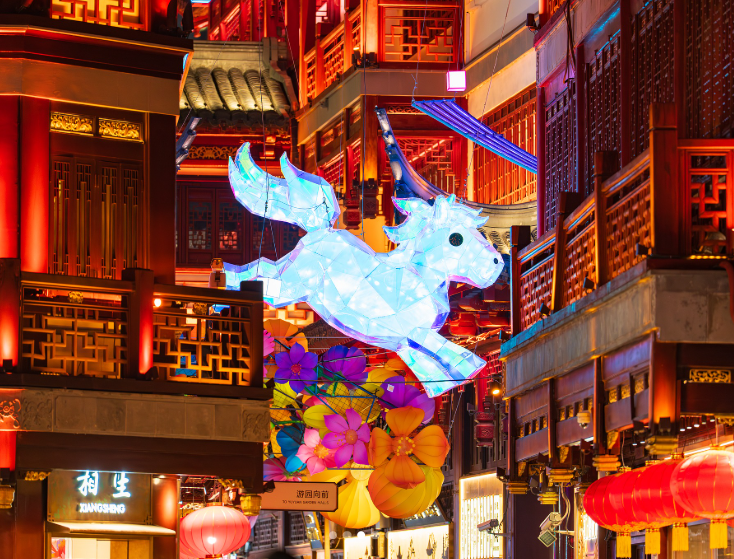
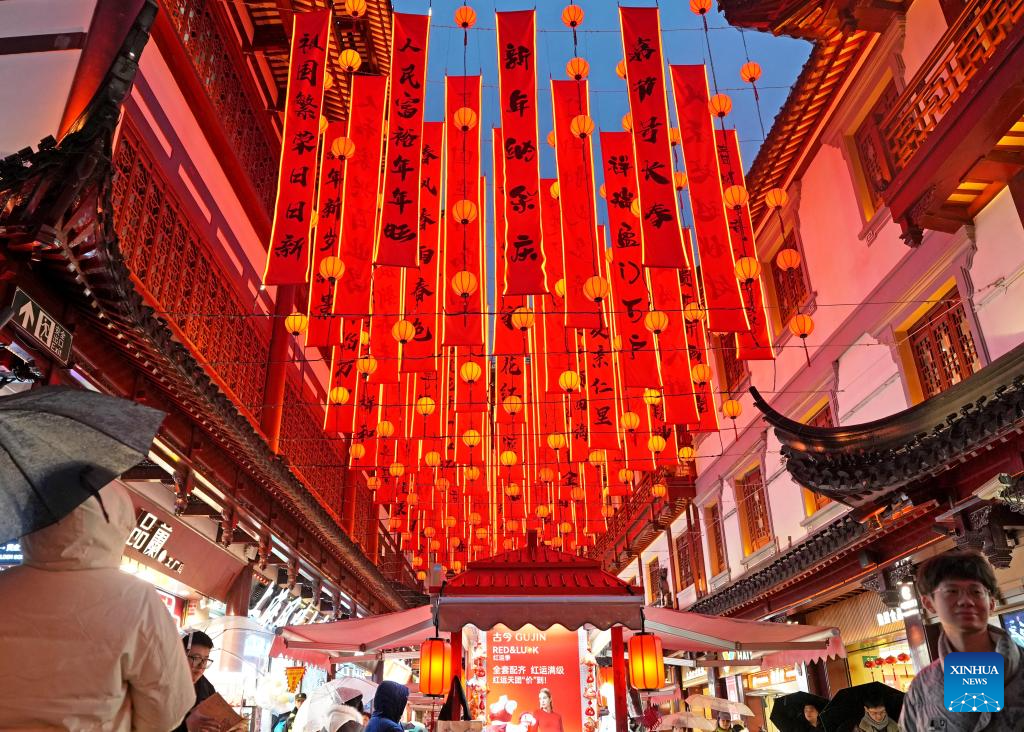
The surrounding Yuyuan Bazaar area joins the celebration too, turning nearby streets into extensions of the festival. Red lanterns sway overhead, shopfronts are decorated with zodiac imagery, and the entire district feels like an open-air theater. The mix of historical setting and vibrant light art is what makes Shanghai’s version of the Lantern Festival especially photogenic and memorable.
Because of its popularity, the area can get extremely crowded, especially on weekends and around the official Lantern Festival date. Crowd control measures are often in place, and entry to certain zones may be temporarily limited during peak hours. Still, for many visitors, the atmosphere, buzzing, colorful, and full of anticipation, is part of the charm.
Food, fun and riddles: what people actually do
The Lantern Festival is not just about looking at lights, it’s about participating in tradition.
The most iconic food is tangyuan (also called yuanxiao in northern China): soft, chewy rice balls usually filled with black sesame paste, red bean paste, or crushed peanuts mixed with sugar. Served in warm syrup, they are eaten with family as a symbol of unity and completeness, their round shape echoing the full moon overhead.
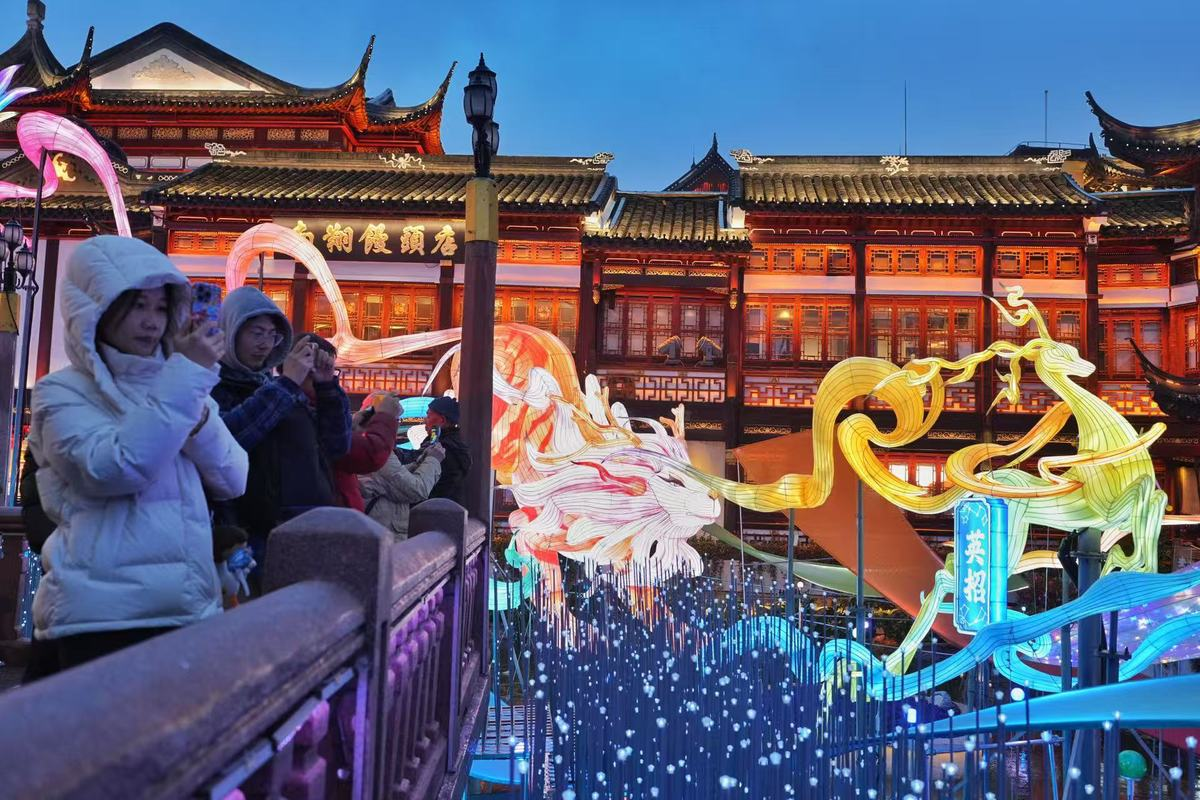
Another beloved custom is solving lantern riddles, known as cai deng mi. Riddles are written on slips of paper and hung from lanterns. Visitors try to guess the answers, which often involve clever wordplay, idioms, or references to classical literature. It is a playful tradition that mixes learning with celebration and has been part of the festival for centuries.
You may also encounter lion dances, dragon dances, folk music, and traditional performances staged in open squares or along the streets. These performances add movement and sound to the glowing scenery, turning the night into a full sensory experience rather than just a visual one.
The artistry behind the glow
Behind every giant illuminated phoenix or glowing palace facade is a team of skilled artisans. Lantern-making is a traditional craft involving bamboo or metal frames covered in fabric or paper, then painted and lit from within. Modern displays add wiring, LED systems, and structural engineering, but the foundation remains rooted in traditional techniques.
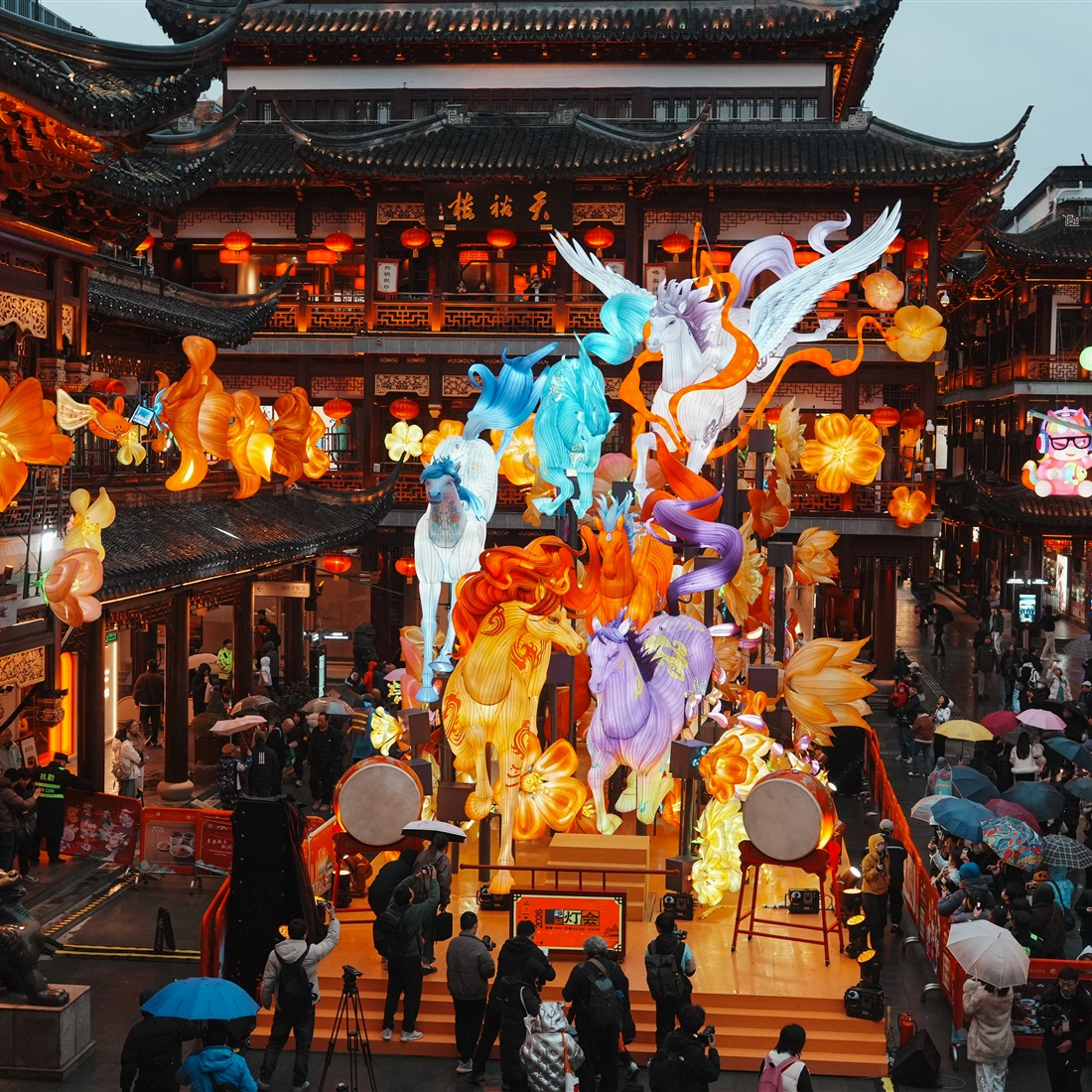
Large-scale lantern festivals across China are known to employ hundreds of designers, craftsmen, and technicians who spend weeks, sometimes months, building and installing the displays. Each lantern is both an artwork and an engineering project, designed to withstand weather, crowds, and long hours of illumination.
Shanghai Lantern Festival travel tips and cultural meaning
To make the most of the experience, timing helps. Arriving just before sunset lets you see the garden in natural light before watching it slowly transform as the lanterns come alive. Weekdays tend to be less crowded than weekends. Shanghai evenings in late winter can be cold, so warm clothing is a must.
Keep your phone or camera ready, reflections in the ponds and glowing bridges make for stunning photos, but remember to pause and take it in without a screen, too. Part of the magic lies in simply wandering, turning corners, and discovering new bursts of color.
And of course, don’t leave without trying tangyuan from a local vendor. Eating a warm bowl while surrounded by lantern light is about as festive as it gets.
In a city known for finance, fashion, and futuristic skylines, the Lantern Festival is a reminder that tradition still pulses beneath the modern surface. Families come to pass down customs, children see ancient legends brought to life in glowing form, and visitors from around the world witness a festival that has survived dynasties, revolutions, and rapid urban change.
The lights may now be powered by advanced technology, but their meaning remains timeless: hope, reunion, and the promise of brighter days ahead. For a few winter nights each year, Shanghai slows down just enough to let history shine, one lantern at a time.