This 70-Year-Old Ras Malai Place Will Leave You Craving for More
A simple video of ras malai being made in Sialkot has sparked a debate among dessert lovers. Two long-running shops, rooted in tradition and friendly rivalry, are drawing food vloggers and locals alike, all eager to decide who makes the city’s most satisfying ras malai.
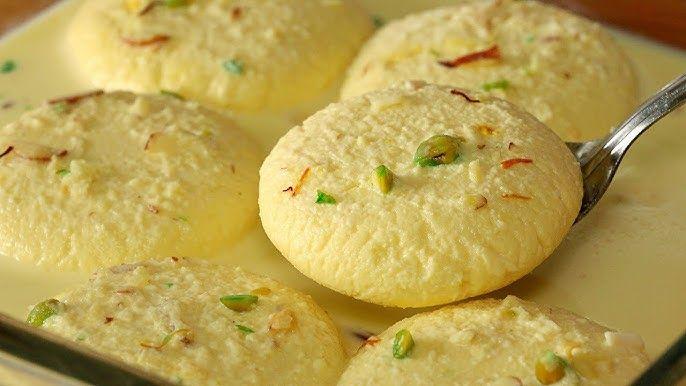
There are days when only ras malai will do.
Soft enough to break with a spoon, yet it still hits the right spot. If that description feels a little too close to home, don’t worry, we’re still talking about dessert.
Soaked in cold milk and sweet without being heavy, ras malai is what people turn to when they want comfort, familiarity, or simply a gentle ending to a meal. For many, one bite is enough to bring back memories of family dinners, watching cricket matches together, and making loved ones feel special even on not so special days. It has a way of showing up at just the right moment, quietly doing its job without making it seem like a big deal.
That feeling is exactly why a simple video showing ras malai being prepared the old-fashioned way is circulating online and drawing so much attention. Shot inside a modest sweet shop locals know as Baba Inayat, the clip has no filters, no background music, and no attempt to dress things up. Just hands shaping chhena, dipping it into milk, and serving it the way it has been done for generations.
Watch the video below:
People are watching closely, replaying the clips, zooming in on textures, and reading the comments with a growing sense of hunger. The reactions are immediate. Friends are tagged. Travel plans are joked about. Someone inevitably says what everyone else is thinking.
“Take me to Sialkot.”
That response makes sense. Sialkot has long been known for holding on to tradition, especially when it comes to craft and food. Locals often speak with pride about businesses that have survived decades without changing their core. Desserts are a big part of that pride. Sweet shops are not just places to buy food, they are places tied to memory and routine. One comment under the video captures this perfectly. The shop has no name and no signboard. It is known only by the family that runs it.
The taste, the user writes, is something you rarely find elsewhere. For many people reading along, that description alone is enough.
The man seen in the video is Abdul Rasheed, the grandson of Baba Inayat, who opened the shop in 1947. Rasheed speaks about the recipe without exaggeration or drama. He explains that it reflects his grandfather’s life, shaped by years of work, the people he met, and the lessons he picked up along the way. Nothing about it was rushed, and nothing about it was designed to impress an audience. It was made to be eaten, enjoyed, and remembered.
Rasheed describes himself as someone simply carrying forward that legacy. He credits the shop’s survival to Allah’s blessing and talks openly about the importance of giving zakat and sharing what one earns. For him, success is not measured by expansion or recognition but by consistency. His day begins shortly after Fajr. Even when the work is slow and he spends much of the morning sitting, being present brings him peace. He says the real reward comes when customers leave happy. Seeing that satisfaction on their faces, he explains, makes him feel content in a way few things do.
Baba Inayat vs Salu Gujar: The friendly rivalry over who makes the best ras malai
Just a short walk from Rasheed’s shop, another name comes up whenever ras malai is mentioned. Salu Gujjar has his own loyal following, and his ras malai is defended with equal passion. Ask locals where to find the best version, and opinions quickly split. Some swear by one shop, others by the second, and most admit they regularly eat from both.
The rivalry between the two is not new. People in the area say it has existed for decades, going back to the years after Partition when families were rebuilding lives and livelihoods. Over time, both shops found their rhythm and their audience. The competition remained friendly, rooted more in pride than conflict. What has changed now is visibility.
With food vloggers and casual visitors heading to Sialkot, the debate has moved online. Videos show people tasting ras malai from both shops, comparing softness, sweetness, and the richness of the milk. Comment sections turn into lively discussions, with users confidently declaring their favorite and challenging others to try again. There is no final verdict, and that is part of the fun. For customers, the rivalry only means more options and more excuses to indulge.
Why ras malai still hits the spot
There is something timeless about ras malai. No matter how stressful the day has been or how long the week feels, those soft, milky pieces have a way of making things lighter. It is not flashy and it does not try to surprise you. It simply delivers comfort, exactly as promised. For many people, it is tied to moments of joy, family gatherings, and small celebrations that matter more than they seem at the time.
That may be why these videos resonate so deeply. In a world full of overdone food trends and constant reinvention, watching something stay the same feels grounding. There is reassurance in seeing a recipe repeated day after day, without shortcuts or performance. As the internet continues to debate who makes the best ras malai in Sialkot, the shops themselves remain unchanged. They open early, follow their routines, and focus on the people standing in front of them. One plate at a time, they keep doing what they have always done. And for dessert lovers, that is more than enough.