From Newsroom to Spotlight: Pakistanis Who Found a Second Act in Entertainment
Moving from the newsroom to the big screen is a time-honored tradition in Pakistan. From pioneers like Tariq Aziz to modern stars like Saba Faisal and Adnan Jaffar, many anchors have successfully transitioned into acting. This article explores the fascinating journeys of these versatile media personalities who conquered both worlds.
Jan 24, 2026
Newscasting, hosting, anchoring, or news reading is often considered one of the most demanding jobs in media, and acting in the entertainment industry is no less challenging. In both professions, the person in front of the camera must leave their personal self outside the studio, perform with conviction, and persuade audiences that what they are saying is authentic. This shared demand for emotional control and credibility is precisely why a newscaster, host, or TV anchor transitioning into acting is often described as a “second calling.”
Pakistan is no exception to this global phenomenon. Over the decades, several successful newscasters, hosts, and TV anchors have found a second act in entertainment, continuing to captivate audiences with their greatest shared strength: believability. If you think renowned journalist and TV host Shahzeb Khanzada was the first to play himself in Case No. 9, think again. Long before him, many news professionals honed their craft in the newsroom before slipping effortlessly into acting roles. Let’s take a closer look at these credible, authoritative, and composed individuals for whom the newsroom was merely net practice—not the final destination.
Pioneers Who Bridged News and Performance
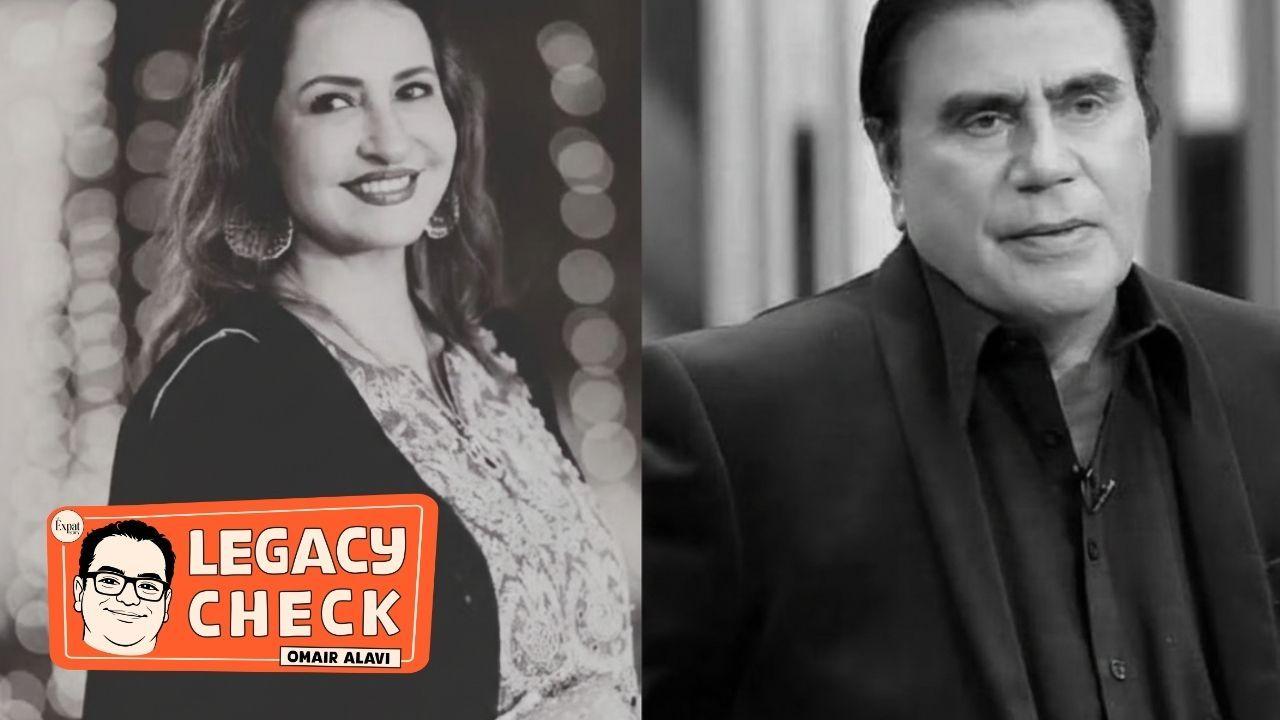
Television was introduced in Pakistan in November 1964, and almost simultaneously, the phenomenon of newscasters-turned-actors emerged. The man who announced the arrival of television to Pakistanis later became a celebrated actor himself. His name was Tariq Aziz—one of the earliest television icons to move seamlessly between serious broadcasting and entertainment. Although he had acted before becoming the face of PTV, it was his post-broadcast performances that left a lasting impact on viewers.
He appeared in several blockbuster films of the 1960s and 1970s, including Insaniyat, Salgirah, Qasam Us Waqt Ki, Miss Hong Kong, and Zindagi. However, after his quiz show, Neelam Ghar became immensely popular; he bade farewell to acting and devoted himself entirely to hosting. In doing so, he set a template for future generations on how to become a successful and enduring TV personality.
English newsreader Rizwan Wasti and Urdu newsreader Qurban Jeelani also transitioned from authoritative newsroom roles to dramatic performances, underscoring the versatility of early PTV talent. Both possessed dignified voices and expressive delivery—qualities essential for good acting—which is why they appeared in both films and television dramas.
While both became familiar faces on TV, Rizwan Wasti continued acting in films from the 1970s through the 1980s, with Khawahish (1993) marking his final film appearance. Qurban Jeelani, on the other hand, made television his primary domain, despite appearing in over a dozen films, including Doraha (1967) and Mera Insaf (1987).
During research, it also came as a surprise to discover that veteran actor Rahat Kazmi read news on PTV before becoming a full-time thespian. The same was true of his brother-in-law, Shakir Ansari, who later appeared in several TV dramas.
News Faces Who Embraced Acting and Performance
As television expanded, more anchors explored creative expression beyond the news desk. Some found lasting success, while others eventually returned to their familiar professional spaces. Among those who succeeded spectacularly was Bindiya, born Rubina Ahmed, who later adopted a stage name for acting. She made her film debut in Jhok Sayal after impressing producers as an English newscaster and went on to carve out a highly successful acting career.
What else would you call it when you share the screen with Waheed Murad, Mohammad Ali, Nadeem, Shahid, and Ghulam Mohiuddin—alongside leading ladies such as Shabnam, Babra Sharif, and Rani? Although she stepped away from films in the 1980s as major roles dwindled, Bindiya continued acting on television and later appeared in the popular Baraat series.
Another English newsreader, Tauseeq Haider, also transitioned from informing audiences to convincing them. After failing to secure leading roles in the late 1990s and early 2000s, he returned to hosting and anchoring before reinventing himself with strong supporting roles. Today, he is regarded as one of the most dependable senior actors on television. His presence in hit TV shows is a testament to his craft—a clear case of “newscasting’s loss being acting’s gain.”
Not everyone enjoyed the same success. Renowned newscaster Meraj Uddin Khan, remembered by older audiences for his impeccable pronunciation, is known to younger viewers for playing Shafi Mohammad’s friend in the popular 1990s drama Aanch. His sons, Misbah Khan and Salah Khan, however, surpassed their father’s fame in entertainment by forming the band Sequencers, which became one of Pakistan’s most popular music groups in the 1990s.
The multitalented Dildar Pervez Bhatti was a success in almost every arena he entered—but acting was not among his greatest triumphs. Despite appearing in a dozen films and several TV dramas, he is best remembered for his sharp wit, crowd control, and command over English, Urdu, and Punjabi, which allowed him to entertain audiences around the world.
And then there is Noor ul Hassan, the versatile TV actor who continues to impress audiences with his versatility in TV dramas. For a long time, he balanced hosting TV shows and acting before bowing out as a host and taking over acting as a full-time profession.
Women Who Redefined Their On-Screen Identity
Like their male counterparts, several female anchors also reinvented themselves as actors and performers, though the trend gained momentum after Nadia Khan paved the way. She began her career as a co-host on Daak Time with Farooq Qaiser, where Uncle Sargam was the main attraction, and later transitioned into acting with Bandhan in the mid-1990s.
While she continued both hosting and acting, she became best known for pioneering the morning show format in Pakistan and now appears on television as a drama critic. Although her acting career may not have reached the heights she envisioned, she worked with legendary names such as Haseena Moin, Mohsin Ali, and Rauf Khalid.
Saba Faisal, on the other hand, was among the first to leave her position as a PTV Lahore newscaster and emerge as one of Pakistan’s most graceful and consistent television actresses. With an extensive body of work, she remains a prominent name in the industry. Notably, when a 1990s-era newscaster was required for Humayun Saeed’s Main Hoon Shahid Afridi, Saba Faisal was the first choice—and she delivered effortlessly.
Hina Khwaja Bayat also began her career as a talk show host before switching permanently to acting. Today, she is regarded as one of the most versatile actresses in the country and a vocal advocate for social justice. Her performance in Case No. 9 stands as proof that her decision to leave hosting for acting was thoughtful and rewarding.
Dr. Shaista Lodhi transitioned from news and morning shows into acting, building a multifaceted media career. She continues to balance hosting morning shows with acting roles—an impressive feat, considering she is also a full-time medical practitioner managing her own clinic.
Newscaster-turned-host Sana Bucha followed her sister, Nimra Bucha, into acting, but after playing Shaan Shahid’s love interest in Yalghaar, she bid acting farewell and returned to television as a political analyst. Interestingly, her role in the film was also that of a news reporter who falls in love with a hero involved in a military operation against terrorists.
Maria Memon, while primarily remaining a journalist, lent her voice to the animated film Tick Tock, sharing the recording booth with legendary actors Ghulam Mohiuddin, Ahsan Khan, and Alyy Khan. The renowned anchor began her career as a newsreader before launching her own highly watched show on ARY Digital.
A Continuing Tradition
Last but not least, popular TV and film actor Adnan Jaffar also began his career as an English newsreader. His success stems from his ability to adapt to challenging environments—a practical demonstration of strong diction, emotional restraint, and audience trust, all hallmarks of a skilled news anchor. He was most recently seen in Pamaal as Raza’s elder brother, while his performances in Neeli Kothi and Meri Zindagi Hai Tu have earned widespread praise. He is also the first and only Pakistani newscaster to appear in an American TV series, Homeland, where he played a Pakistani Army General perfectly.
From black-and-white PTV studios to today’s high-definition broadcasts, Pakistani newscasters and TV hosts have repeatedly shown that storytelling does not end with the news bulletin or a talk show. For many, it simply evolves into drama, performance, and a lasting cultural imprint.