
Zohran Mamdani as New York’s Mayor: The Power of Representation
Zohran Mamdani’s rise as New York City’s mayor marks a milestone in representation, reflecting the city’s diversity and a new vision for inclusive leadership.
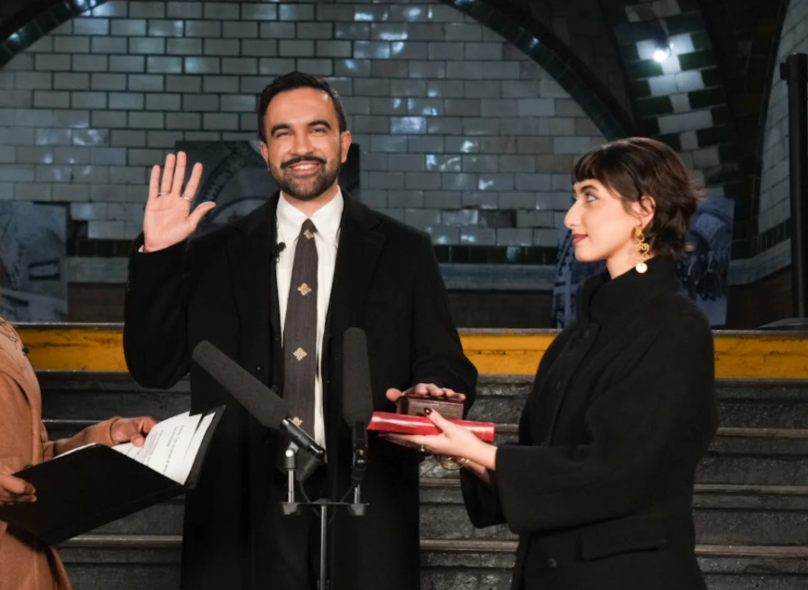
On January 1, 2026, the skyline of New York City, already defined by its iconic skyscrapers and ceaseless energy, gained a new symbol of transformation: Zohran Kwame Mamdani, sworn in as the 112th mayor of New York City. That night, beneath the heartbeat of the city in an old subway station, Mamdani took his oath of office on a Quran in a ceremony rich with cultural and historical resonance, symbolizing both his personal heritage and the city’s deep multicultural roots.
His ascent is remarkable not just for its policy agenda or political novelty, but for what it means in the broader story of American democracy. At 34, Mamdani is the youngest person to hold the office in more than a century. He also became the first Muslim mayor, the first South Asian mayor, and the first person born in Africa to lead New York City, a metropolis often described as the world in one city.
These “firsts” are not trivial biographical facts; they are profound markers of change in a nation that has long grappled with questions of identity, belonging, and power. For many New Yorkers, from immigrant families to communities historically underrepresented in government, Mamdani’s success feels like a long‑awaited affirmation that their stories, struggles, and aspirations matter in America’s civic life.
Journey Rooted in Multicultural Identity
Mamdani’s life story mirrors the complexity of New York itself. Born in Kampala, Uganda, in 1991, to parents of Indian origin, noted filmmaker Mira Nair and academic Mahmood Mamdani, his earliest years were shaped by a mix of cultures and contexts. His family moved to New York when he was a child, grounding him in the rhythms of a city where many people carry multiple identities at once.
As a student, Mamdani attended Bronx High School of Science, one of the city’s most competitive public schools, where he co-founded a cricket team, a nod to his international roots. He later earned a degree in Africana studies from Bowdoin College, where his activism took shape, including organizing for social justice causes that would later inform his political worldview.
Before entering elected office, Mamdani worked as a foreclosure‑prevention counselor in Queens, helping families on the brink of losing their homes. This experience gave him an intimate understanding of how economic pressures affect everyday life, a perspective that became central to his political message on affordability and justice.
Mamdani’s Journey to New York City Hall
When Mamdani announced his candidacy for mayor in late 2024, few in mainstream political circles took him seriously. He was a young state assemblyman with limited name recognition, running against seasoned political figures including former governor Andrew Cuomo. Yet his message quickly struck a chord with voters tired of rising rents, expensive childcare, unaffordable transit, and widening inequality. His campaign focused relentlessly on everyday economic struggles, not abstract ideals, and it resonated deeply, especially with younger and working‑class voters.
The outcome was historic. On November 4, 2025, Mamdani secured the mayoralty with 50.78% of the vote, topping both Cuomo and Republican Curtis Sliwa in a race marked by unusually high turnout, the most in a mayoral contest in decades. His victory upended expectations and sent ripples across national politics, signaling both the strength of grassroots organizing and the appetite for new directions in leadership.
Zohran Mamdani’s Policy Vision
Mamdani’s inauguration speech set the tone for what many see as a new era. In a city where the cost of living has pushed countless residents to the brink, he pledged to “govern expansively and audaciously,” putting forward ambitious plans like universal childcare, fare‑free buses, rent freezes, and city‑owned grocery stores. These proposals, while bold, speak directly to the lived realities of ordinary people.
For supporters, this is more than policy change, it is a transformative vision of government as an instrument of collective well‑being rather than a system that primarily serves the well‑connected. For critics, particularly those on the political right, Mamdani’s democratic socialist identity has been fodder for alarmist rhetoric, with opponents warning of economic disruption or impractical governance.
Regardless of perspective, Mamdani’s approach reflects a growing belief that urban leadership must evolve to meet 21st‑century challenges, not just by managing cities as economic engines, but by addressing inequality, access, and dignity.
Symbolism, Culture, and Representation
Beyond policy, Mamdani’s inaugural events were rich with cultural and symbolic resonance. Choosing to place his hand on a Quran during the oath of office was not only a personal affirmation of faith but also a historic first for a New York mayor’s ceremony, reflecting the city’s significant Muslim community and broader religious diversity.
Even seemingly small details drew attention and meaning. At his public inauguration, Mamdani wore an Assamese eri silk tie crafted by an Indian designer, a sartorial nod to his South Asian heritage that quickly became a talking point in both political and cultural conversations.
These gestures matter. They speak to a generation that views identity not as a political liability but as a source of strength and connection. For young people, immigrants, and communities that have often felt unseen, they see in Mamdani’s leadership a reflection of themselves.
Challenges and Possibilities
Mamdani’s mayorship represents both promise and pressure. He inherits a city grappling with budgetary gaps, rising costs, public safety concerns, and a political landscape that will test his ability to translate vision into sustainable action. Unifying a city as diverse as New York, politically, culturally, and economically, is no small task.
The fact that his election inspired millions of voters shows a significant shift in how people engage with politics. His victory is a reminder that democracy thrives not just through tradition but through innovation, participation, and the willingness to imagine new possibilities.
Ultimately, Zohran Mamdani’s tenure as mayor won’t be defined solely by policy wins or setbacks. It will be measured by how his leadership reshapes the narrative of what is possible in urban governance, for New York City and potentially for cities across the nation. In an era marked by deep polarization and quickly shifting demographics, his story is a testament to the enduring power of representation, aspiration, and community in the life of a city.