
Pakistani Dramas That Made 2025 Memorable
2025 marked a defining era for Pakistani dramas, with bold storytelling, powerful performances, and genre-breaking narratives dominating television and digital platforms. From thrillers and romance to socially relevant dramas, audiences chose compelling TV content over cinema. Here’s a curated list of must-watch Pakistani dramas that defined the year.
Jan 24, 2026
Whenever the year 2025 is mentioned in history, Pakistani dramas will be featured as a standalone chapter. Over the past 12 months, writers, directors, and actors worked hard to keep viewers glued to their seats—and they succeeded. Viewers preferred watching their favorite actors on TV or YouTube at their leisure rather than going to cinemas, where, in the absence of Bollywood films, Pakistan hasn’t produced any significant films.
If you haven’t had the chance to catch the prominent TV dramas of 2025, let us narrow down the list and explain why you shouldn’t give these dramas a miss.
Why 2025 Can Be Termed an Action-Packed Year
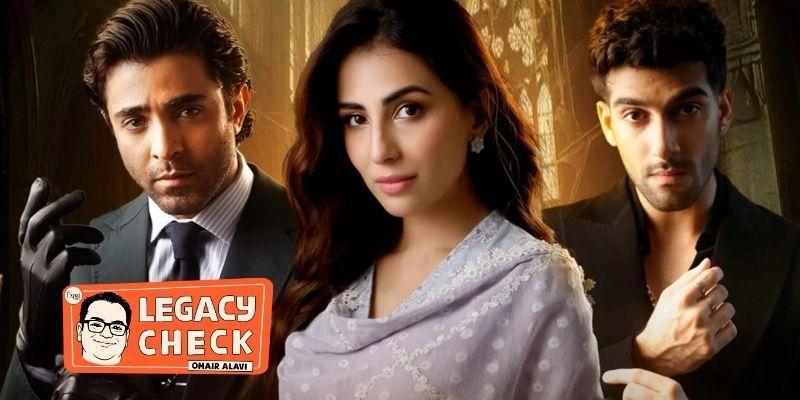
In a country where saas-bahu shenanigans used to dominate TV dramas, the year 2025 served as a breath of fresh air. Not only did writers and directors expand into the thriller/suspense genre, but they also broke the old mold. The first half of the year featured Green Entertainment’s Faraar and Duniyapur, which were action-packed TV shows where characters dominated the proceedings. While Mustafa Afridi’s Faraar featured a star cast of Ahmed Ali Akbar, Hamza Ali Abbasi, and Sohai Ali Abro, Raidan Shah’s Duniyapur had Khushhal Khan, Ramsha Khan, Sami Khan, and Nauman Ijaz in the lead roles. One must commend directors Wajahat Hussain and Musaddiq Malek (for Faraar) and Shahid Shafaat (for Duniyapur), who took a leap of faith so that others could follow.
Green Entertainment’s Behroopia also aired during the year and initially garnered praise for Faysal Quraishi’s portrayal of up to nine distinct personalities. Still, the show ended abruptly—one that was disowned by its writer, Rida Bilal. However, writer Shahzeb Khanzada and director Wajahat Hussain were in sync when it came to Geo Entertainment’s Case No. 9, which is still making waves because of the brilliant performances by Saba Qamar, Faysal Quraishi, Amina Sheikh, Junaid Khan, Noorul Hassan, and Naveen Waqar.
Director Qasim Ali Mureed’s Aye Ishq e Junoon was a welcome change for audiences, who were treated to international-level execution, thanks to the presence of Ushna Shah and Sheheryar Munawwar in the lead roles. Director Aabis Raza’s Naqsh maintained high standards due to Sami Khan and Hina Altaf’s performances. In contrast, Aehsun Talish’s Sher gave the Romeo and Juliet story a new twist, with a mature Danish Taimoor and Sarah Khan keeping the ship afloat.
Romance Is in the Air
The last 12 months weren’t just limited to thrillers and suspense dramas; there was also romance in the air thanks to the modern Meem Se Mohabbat, the period drama Shirin Farhad, and the young love story Parwarish. While Ahad Raza Mir and Dananeer Mobeen’s chemistry, as well as the supporting cast’s brilliant performances, were the reasons behind Meem Se Mohabbat’s success, Shirin Farhad became a hit because Kinza Hashmi and Farhan Saeed gave their 100 percent to the play.
Both dramas were poles apart in every way—one was a modern take on romance, while the other took the audience back to the golden era of Lollywood—yet audiences didn’t lose interest in either of them. Kudos to writer Farhat Ishtiaq and director Ali Hassan for keeping Meem Se Mohabbat relevant, and to writer Ali Moeen and director Asad Mumtaz for not losing the plot in Shirin Farhad.
Then there was the teen love story Parwarish, which taught the audience a great deal, including the importance of trusting your children. Directed by Meesam Naqvi and written by first-time writer Kiran Siddiqui, the play is a highlight of 2025, reteaming Aina Asif and Samar Jafri after Mayi Ri and casting Naumaan Ijaz in a role that fits him like a glove.
Comedy Was Back, Supernaturally
The year saw the return of romance and comedy with a supernatural touch through Syed Nabeel and Saife Hassan’s Jinn Ki Shaadi Unki Shaadi. Not only did the play raise the bar by using modern special effects to show jinns, but it also brought together Seher Khan and Wahaj Ali—a pairing that can be termed nothing short of magical. Add the comic perfection of Arsalan Naseer, the beauty of Sidra Niazi, the indomitable Syed Jibran, along with a brilliant supporting cast featuring Irfan Motiwala, Nadia Afgan, Tamkenat Mansoor, Arbaaz Khan, and Romaisa Khan, and you have a drama that would make Pakistanis proud worldwide.
Sharpasand, Jama Taqseem Raise the Bar
Drama is considered a safe bet on Pakistani TV, but making this genre enjoyable to younger viewers is a challenge writers and directors face whenever they take on a project. In 2025, most dramas on various channels addressed issues relevant to audiences, making them popular and relatable.
It was during the last 12 months that diverse topics such as living in a joint family system, living with a narcissistic husband, living as a single mother, standing against workplace harassment, and living with a dementia patient were tackled in Jama Taqseem, Pamaal, Dastak, Goonj, and Dil Dhoondta Hai Phir Wohi, respectively. That marked a significant shift from dramas in which scheming relatives were the norm and a crying woman was portrayed as the victor only in the final episode.
Writer Sarwat Nazir and director Ali Hassan led the way with Jama Taqseem, which told the story of a household that disintegrated after the arrival of a modern daughter-in-law. Javed Sheikh and Beo Raana Zafar played the heads of the family, which also featured Hassan Ahmed, Madiha Rizvi, Saad Azhar, Amna Malik, Amena Khan, and Adnan Qavi, alongside Talha Chahour and Mawra Hocane, who played the youngest couple. Themes of cousin marriages, harassment, and clashes of mindsets dominated the serial, which was praised for both its positive and negative portrayals of the joint family system.
Saba Qamar and Usman Mukhtar were at the top of their game in Pamaal, which was based on writer Zanjabeel Asim Shah’s story and was well executed by Khizer Idrees. Both actors, as well as the supporting cast of Adnan Jaffar, Salma Zafar, and Faiza Gillani, made viewers return to the drama every week with their believable acting, which reached its zenith as the story moved towards the end. The more you praise Saba Qamar, the less it feels sufficient, considering her character was based on a real person and was airing at the same time as Case No. 9, where she played a rape survivor.
Soha Ali Abro made a prominent return to lead roles this year with Dastak, in which she played a single mother struggling to survive in society. Komal Meer in Goonj and Zara Noor Abbas in Dil Dhoondta Hai Phir Wohi delivered such outstanding performances that they overshadowed many of their senior actors. Zara Noor Abbas complemented Zahid Ahmed’s brilliant portrayal of a successful man who descended into dementia and required love and care.
One must also mention Qarz e Jaan and Doosra Chehra, which premiered in 2025. While Qarz e Jaan highlighted the struggle of a young girl who grows up in a toxic environment only to confront it head-on later, Doosra Chehra showed the darker side of show business—one not visible beneath the glitz and glamour.
However, the last quarter brought one of the finest performances on TV in years: Naumaan Ijaz in Sharpasand. Not only did he play Farasat Ali, a relatable character who loved to meddle in everyone’s affairs, but he also cloaked him in the guise of a self-proclaimed holy man —one who prays, appears sinless, and corrupts others. The mannerisms he brought to the role showed his class and made you hate those who cheat, lie, and care about nothing but their own reputation.
Several dramas that aired in 2025 could be easily skipped. The list includes Green Entertainment’s Main Zameen Tu Aasmaan, as it didn’t offer anything new. ARY Digital misfired with Khalil Ur Rehman Qamar’s much-anticipated Main Manto Nahi Hoon, where even the magic of Humayun Saeed and Sajal Aly wasn’t enough for audiences. A lot was also expected from Zafar Mairaj's Biryani, but it fell short as the plot went haywire and the execution wasn’t up to the mark.
While on the one hand, Geo Entertainment produced Case No. 9, the same channel also made Mohra, a revenge saga in Ekta Kapoor's style, and Mann Mast Malang, which showcased romanticism in the worst possible way. While Danish Taimoor’s performance in Sher was praised, he was heavily criticized in MMM, which was seen as trying too hard to capitalize on his bad boy image. Two other plays from the same channel—Sanwal Yaar Piya and Daayan—seemed Bollywood-inspired despite featuring big-name casts. The same can be said for Paradise, which didn’t help Shuja Asad much, despite him riding high after the success of Aye Ishq e Junoon.