
Memorable Soundtracks – The Nisar Bazmi Edition
Before Pakistani music was known for its pop bands, rap culture, and qawwals, there was a filmi cult...
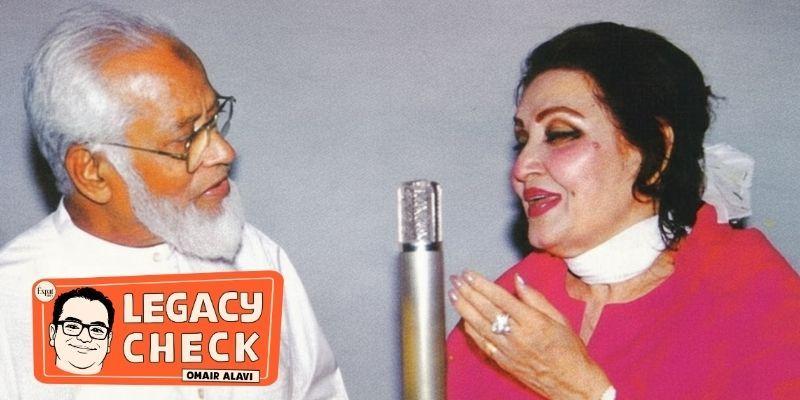
Before Pakistani music was known for its pop bands, rap culture, and qawwals, there was a filmi culture that dominated them all. Not only were Pakistani film soundtracks considered on par with Indian film songs, but some of them have also survived the test of time. In this piece, we discuss the songs composed by none other than music director Nisar Bazmi during his first five years in Pakistan.
Why Nisar Bazmi, you ask? Because he had a notable career in Bollywood as “Nisar Ahmed” before making Pakistan his home in 1965, he delivered some of his best songs during his first five years there. In fact, most of his films had more than five chartbusters, which is our selection criterion as well.
Aisa Bhi Hota Hai (1965)
Nisar Bazmi was on a supposedly short visit to Pakistan—for a relative’s wedding—when writer-poet-director Fazal Karim Fazli approached him to compose music for his upcoming film Aisa Bhi Hota Hai. The film starred Syed Kamal and Zeba Begum in the lead and was a romantic comedy in the vein of films of that era. Since Nisar Bazmi had time on his hands, he composed a soundtrack that delivered one chartbuster after another. He not only used the top playback singers in the country but also showed his class by writing the first-ever pop song in Pakistan—Hum Ko To Ishq Ne Budhoo Bana Diya.
However, the kind of popularity Noor Jahan’s Ho Tamanna Aur Kia achieved was phenomenal. Filmed on Zeba Begum, the soothing song helped Nisar Bazmi get noticed in Pakistan, prompting him to prolong his stay in the country—for good. The Ahmed Rushdi–Noor Jahan duet Mohabbat Mein Teray Sar Ki Qasam also became a huge hit and is considered one of the duo's better songs.
Songs like Tukra Ho Chand Ka further established Ahmed Rushdi as the premier playback singer in the country—one who could sing both happy and sad songs and evoke the desired emotion.
Aag (1968)
After establishing himself as one of the rising stars of the Pakistani film industry, Nisar Bazmi forged alliances with some of the best directors in the country, including S. Suleman. The youngest brother of film stars Santosh Kumar and Darpan, Suleman directed Mohammad Ali and Zeba in their first home production, Aag (1968). Even he must not have imagined that the songs would survive the test of time and remain popular more than 50 years later.
Like his other films, Nisar Bazmi used his frequent playback singers—Ahmed Rushdi, Noor Jahan, Mala, and Irene Parveen—in Aag. Whether it was Noor Jahan’s sad number Beetay Dino Ki Yaadon Ko or Ahmed Rushdi and Irene Parveen’s children’s song Kuchh Kuchh Mujh Say Milta Julta Bacho Eik Tha Raja, the mood remained thoroughly filmi.
Ahmed Rushdi’s qawwali Jaisay Jantay Nahin, Pehchantay Nahin was also part of the soundtrack, in which the master singer displayed his command of expression—a feat that actor Mohammad Ali matched to perfection.
Ahmed Rushdi and Mala then came up with the romantic song Mausam Haseen Hai Lekin, filmed in the Northern Areas and still fresh thanks to the Nisar Bazmi touch. Bazmi sahab was known for his command over his compositions, and unlike many of his contemporaries, he composed the entire score himself—something clearly reflected in the final product.
Finally, there was Yun Zindagi Ki Rah Mein, a Mehdi Hassan gem intended as a fun number but destined to become a classic for lovers of classical music. While Mohammad Ali pretends to be blind in the song, the lyrics suggest he has an ulterior motive.
Jaise Jantay Nahin (1969)
After the success of Aag, the same team returned with Jaise Jantay Nahin, a modern film even by 1960s standards. The story revolved around Mohammad Ali and Zeba (also producers), who are married, but the wife does not publicly acknowledge it. Her character becomes angry when he falls in love with another woman. The soundtrack had plenty to keep the narrative fast-paced and engaging, and Nisar Bazmi did not disappoint director S. Suleman or the producers.
Aisay Bhi Hain Meherban was not just a song from a 1960s film—it is an emotion that resonates even in the 2020s. Ahmed Rushdi used a distinct vocal style for this number, with minimal instrumentation, while Murree was chosen as the picturesque shooting location. The entire story unfolds within the song, and both the music director and singer deserve credit for creating something timeless.
Aisi Raat Allah Kisi Ko Na Dikhaye was the peppy number in the soundtrack, giving Mohammad Ali the chance to showcase his dancing skills while lip-syncing to one of the most happening songs of that era.
The next song, Mera Naam Tera Naam, became exceedingly popular due to its modern music and Mala Begum’s rendition. It was even parodied in Fifty Fifty years later by Ismail Tara and company. Listen closely, and you’ll realize it doesn’t sound very different from Bollywood songs of the time—something that makes one proud of local talent.
Teri Ankhon Say Meray Dil Nay Dharkana Seekha was composed along the lines of Mausam Haseen Hai Lekin and did not disappoint its predecessor. Used in a dream sequence, the song became a chartbuster and remains one of the best duets by Ahmed Rushdi and Mala Begum.
Tum Chaho Ya Na Chaho was another qawwali, much like Jaise Jantay Nahin from Aag, and has mesmerized listeners since its release. Ahmed Rushdi’s expressive delivery, complemented by Mohammad Ali’s on-screen performance, is nothing short of gold.
Andaleeb (1969)
If Nisar Bazmi was a force to reckon with in the black-and-white era, he was unstoppable in the color era, and his following two films were proof of that. Featuring Waheed Murad and Shabnam, Andaleeb was directed by Farid Ahmed, who teamed up with Bazmi and was not disappointed. In fact, Andaleeb remains one of the biggest films of both their careers, and the songs played a significant role in its success.
Whether it was the lively Ahmed Rushdi version of Kuch Log Rooth Kar Bhi or the sad Noor Jahan rendition, the song remains popular even today because of its singing and composition. Masroor Anwar, the lyrical genius behind it, had already outdone himself in Akele Na Jana from Armaan and repeated the magic here.
Both versions were remarkable by 1960s standards and continue to be sung by Indian and Pakistani artists alike. Nisar Bazmi used Runa Laila sparingly in this film with the fast-paced Tere Wadon Ne, which established her as an upcoming vocalist—though few would have believed at the time that Bazmi sahab would later prefer her over Noor Jahan.
Then there was Ahmed Rushdi’s Gaisuon Kay Anchal Mein Kya Rang Hai Sunehra, a classic example of an Eastern song done right. The orchestration was unheard of in Pakistan, as were the visuals of Shalimar Gardens featuring Waheed Murad and Shabnam.
Ahmed Rushdi and Noor Jahan’s Meray Dil Ki Mehfil is considered one of their finest duets, with Nisar Bazmi as its architect. Filmed in the mountains, the song gained popularity thanks to both the vocalists and the performers, who did justice to the music, lyrics, and emotions without overdoing it.
Sadness follows happiness, and the same happens in Andaleeb, where the joy gives way to Noor Jahan’s Pyar Kar Kay Hum Bohat Pachhtaye. In another film, it might have been a blockbuster, but in a soundtrack full of heavyweights, it ranks slightly lower. Even so, it has survived the test of time and remains popular as we enter 2026.
Anjuman (1970)
If you thought Andaleeb was peak Nisar Bazmi, think again—because he outdid himself with director Hassan Tariq’s Anjuman, a film revolving around a Nawab’s family and a courtesan. The plot may seem dated today, but the modern songs made it one of Bazmi’s finest works. Even now, whenever his name is mentioned, the songs from this soundtrack are sure to follow.
Bazmi sahab used Runa Laila as the primary voice for Rani Begum’s youthful character, who is forced to lure wealthy men to fulfill the wishes of her caretakers. It is said that Madam Noor Jahan was not too happy about this, though she did sing the climactic song Izhar Bhi Mushkil Hai and arguably had the last laugh.
Runa Laila’s fans would argue that the songs were more modern, sexier, and better suited to the situations—and they wouldn’t be entirely wrong. Her Aap Dil Ki Anjuman Mein remains hugely popular for sounding more Bollywood than Lollywood and helped her become one of Pakistan’s top playback singers.
Dil Dharke Main Tum Se was not far behind, with Waheed Murad’s grace complementing Rani Begum’s dance and Runa Laila’s vocals in every imaginable way. The composition was far superior to most songs of the era and helped Pakistan enter the 1970s on a high.
In the Noor Jahan versus Runa Laila battle, Ahmed Rushdi did not lag, delivering chartbusters that are now ranked among his best. During a birthday party sequence, he sang the happy version of Bhabhi Meri Bhabhi, with Waheed Murad dancing with abandon.
This was followed by the sad version of the same song, where, in a completely different setting, Waheed Murad plays the piano to Ahmed Rushdi’s brilliant rendition.
Besides this tandem song, Ahmed Rushdi also had two more solo numbers, one of which was Yaadash Bakhair Bachpan Mein, reminiscent of Gaisuon Kay Anchal Mein Kya Rang Hai Sunehra from Andaleeb.
Meanwhile, Lag Rahi Hai Mujhe set the tone for the melancholy songs that became staples of the 1970s and beyond. Here, Ahmed Rushdi shines through his delivery, sounding heartbroken, drunk, and confused all at once.
Thanks to Waheed Murad’s picturization, the song performed well and is still considered modern, like many film songs that followed.