Margot Robbie's Nur Jahan Necklace: The Red Carpet Story Sparking Global Buzz
Margot Robbie made headlines at the Wuthering Heights premiere wearing the legendary Nur Jahan necklace. Originally a 17th-century Mughal treasure gifted to Empress Nur Jahan in Lahore, the $8.8 million diamond has sparked a massive social media buzz, reigniting global conversations about fashion, heritage, and the diamond's royal Pakistani roots.
Feb 1, 2026
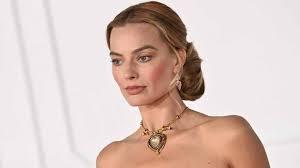
The red carpet just got a massive dose of royal history, and honestly, the internet is struggling to keep up. At the world premiere of Wuthering Heights in Los Angeles, Margot Robbie didn’t just show up in a stunning gown. She arrived wearing a piece of jewelry that has effectively created a massive buzz on social media over the last 24 hours. While her fashion choices are always a major talking point, this specific look has everyone hitting the "share" button because of the heart-shaped diamond resting at her neck.
It is a piece known to history as the "Taj Mahal" diamond, but the real story belongs to a Mughal queen. If you are a jewelry enthusiast, you probably recognize it as one of the crown jewels of Elizabeth Taylor’s legendary collection. However, as the photos started circulating on X and Instagram, the conversation shifted from Hollywood glamour to something much older and far more regal. This isn't just a vintage accessory. It is a portal to the 17th century.
Mughal Origins and the Lahore Legacy of Empress Nur Jahan
The story of the Margot Robbie Nur Jahan necklace doesn't start in a Beverly Hills boutique. It starts in the heart of the Mughal Empire. If you look closely at the diamond, you can see delicate Persian inscriptions etched right into the flat surface of the stone. These markings tell us that the diamond originally belonged to Empress Nur Jahan.
Empress Nur Jahan was the daughter of a Persian noble from Lahore, and her life was deeply intertwined with the city. She lived in Lahore and, alongside her husband, Emperor Jahangir, ruled the Mughal Empire from the majestic Lahore Fort. Their reign was a golden era of art and architecture, much of which still stands in Pakistan today.
It is incredibly rare to see a piece of history this significant being worn in such a modern setting. While the Western world often calls it the "Elizabeth Taylor diamond," social media users have been quick to remind everyone that its true soul belongs to the Mughals.
Both Nur Jahan and Jahangir are laid to rest at their magnificent tombs in Shahdara, near Lahore in present-day Pakistan. This makes the necklace more than just a piece of jewelry; it is a literal piece of Pakistani heritage.
Elizabeth Taylor’s Legacy and the Global Heritage Debate
The moment Margot stepped out, the digital world lit up. On Instagram, fashionistas and history buffs alike have been sharing reels and side-by-side comparisons of the diamond’s journey from the Mughal courts to the bright lights of LA. It is one of those rare moments where pop culture and deep history collide in a way that feels fresh and exciting.
People are fascinated by how this stone traveled through time. After the Mughal era, it surfaced in the 20th century and was eventually purchased by Richard Burton as a 40th birthday gift for Elizabeth Taylor. He famously joked that he wanted to buy her the actual Taj Mahal, but it was too big to move, so he settled for the diamond.
However, the buzz on social media isn't just about the romance; it’s about the roots. Many are pointing out that since the necklace bears Nur Jahan's name and represents the history of the region, there is a strong argument that it belongs in its homeland. The conversation online has been a mix of pure awe and a growing call for recognition of where these treasures truly come from.
Price and Value of the Taj Mahal Diamond Heritage
Of course, when a piece this famous appears, everyone wants to know the "worth." Your editor mentioned being careful with the currency, and for good reason—the numbers are staggering. When the Elizabeth Taylor collection was auctioned at Christie’s, this necklace sold for approximately $8.8 million.
To put that into perspective for our readers in the UAE, that is roughly AED 32.3 million. In other regions, you’ll see it quoted as nearly 74 crore. It remains one of the most expensive and sought-after pieces of Indian-origin jewelry in the world.
The diamond itself is framed by jade and suspended from a lavish gold and ruby chain designed by Cartier. This setting was created to replace the original silk cord that the Mughal royals would have used, giving it a look that is both vintage and timelessly cool. It’s heavy. It’s bright. It’s undeniably royal.
Why We Are Obsessed With This Fashion History
This viral moment is more than just a red carpet fashion win. It is a celebration of craftsmanship that has survived for nearly four centuries. In a world of fast fashion and fleeting trends, there is something deeply satisfying about seeing a piece of the Mughal legacy still shining bright.
Margot Robbie’s choice to wear the necklace has sparked a new interest in historical gems. It has sent thousands of people down a research hole to learn about the incredible artistry of the Mughal era and the powerful woman who once ruled from Lahore. It’s proof that the right accessory doesn’t just finish an outfit. It starts a global conversation. As the photos continue to trend, one thing is certain: the legacy of Nur Jahan is just as powerful today as it was in the 1600s.