
Most Beautiful Mosques in the World: 6 That Will Leave You in Awe
From a mosque built on the ocean to a Mughal masterpiece that survived empires, these are the most breathtaking mosques in the world.
Feb 23, 2026
Every Ramadan, the mosques feel livelier than usual. The night prayers, the crowds, the lights. There is something about this month that makes you look at these buildings differently, not just as places of worship but as monuments to centuries of devotion, craftsmanship, and history. Some of them took decades to build. Some survived empires.
Some will stop you in your tracks the first time you see them. Here are the most beautiful mosques in the world that will leave you in awe of their picturesque architecture.
Istanbul's Blue Mosque
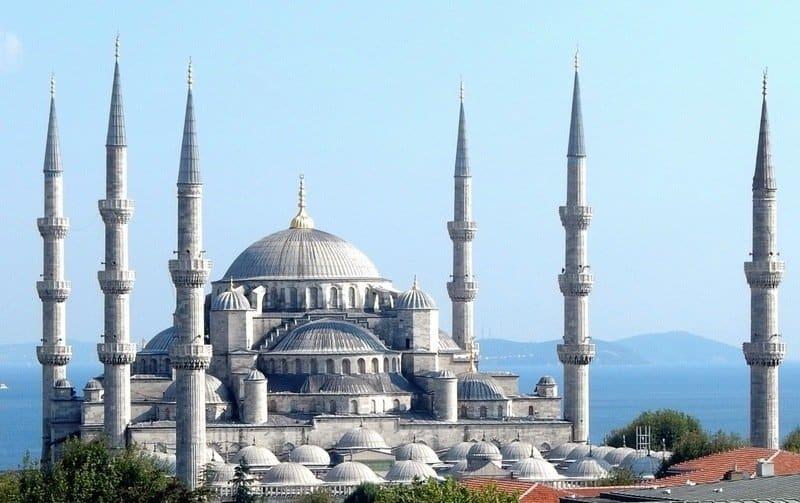
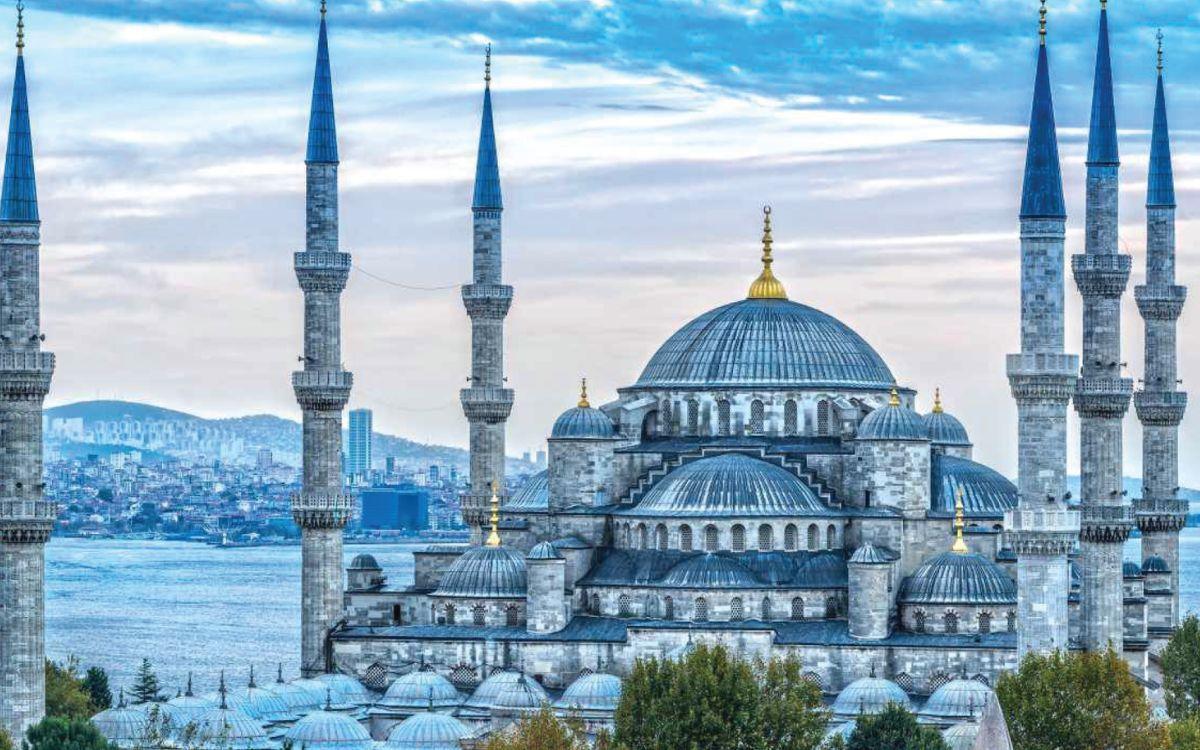
Built between 1609 and 1616 on the orders of Sultan Ahmed I, the Sultan Ahmed Mosque, better known as the Blue Mosque, was designed to surpass the grandeur of the Hagia Sophia standing right across from it. Architect Sedefkar Mehmed Aga, a student of the legendary Mimar Sinan, pulled it off. The mosque's interior is lined with over 20,000 hand-painted Iznik tiles in more than 50 different designs, all in deep shades of blue and turquoise, which is exactly where the name comes from. More than 200 stained glass windows let the light in, and when it hits those tiles, the entire hall glows. Six minarets frame the exterior, which caused considerable controversy at the time since only Mecca had that many. To settle the matter, Sultan Ahmed I funded the addition of a seventh minaret to the Grand Mosque in Mecca. The Blue Mosque was added to UNESCO's World Heritage list in 1985 and still holds daily prayers.
Sheikh Zayed Grand Mosque - Abu Dhabi
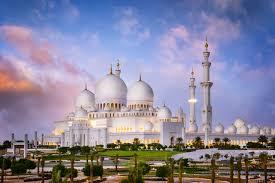
Built entirely of white marble and semi-precious stones, Abu Dhabi's Sheikh Zayed Grand Mosque looks almost unreal at night. Construction began in 1994 and the mosque opened its doors on Eid Al Adha 2007. The white marble alone came from North Macedonia, with artisans and materials sourced from over 35 countries including Italy, Germany, India, Iran, and Pakistan. The result is a structure that feels like it belongs to the whole Islamic world at once. Its courtyard, spanning 17,000 square meters, holds the title of the world's largest marble mosaic. Inside the main prayer hall hangs one of the largest chandeliers in the world, made with millions of Swarovski crystals. The carpet underfoot, hand-knotted by 1,300 female artisans, holds the Guinness World Record for the largest hand-knotted carpet on earth. At night, the lighting system shifts according to the phases of the moon, with the entire facade reflecting across still pools of water.
Hassan II Mosque - Casablanca
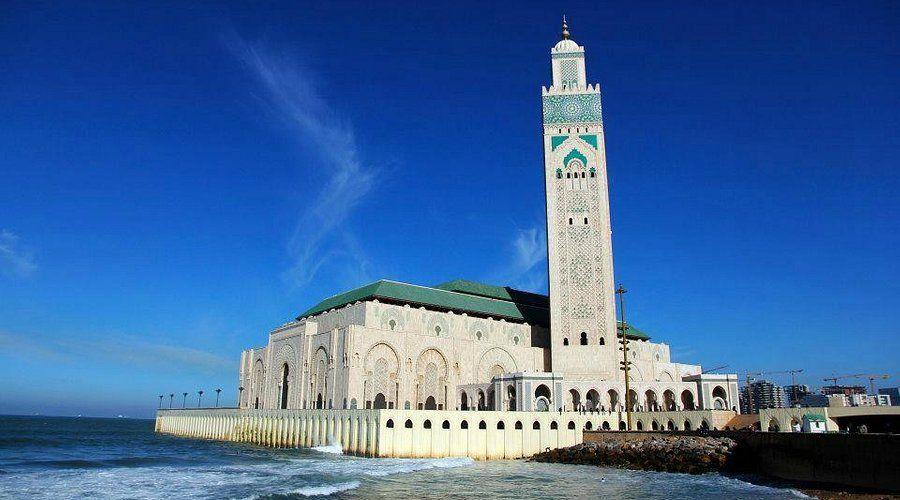
Right on the Atlantic Ocean, Casablanca's Hassan II Mosque has the sea visible beneath its glass floor. Completed in 1993, it was built on a promontory overlooking the ocean, inspired by the Quranic verse that reads "the throne of God was upon the water." French architect Michel Pinseau designed the structure, but every detail inside was crafted by Moroccan artisans. The minaret rises 210 meters, making it the tallest religious building in the world, topped with a laser that projects a beam toward Mecca visible from 30 kilometers away. The mosque can hold 25,000 worshippers inside and another 80,000 in its courtyard. At high tide, water appears beneath the glass floor of the prayer hall, creating one of the most striking visual effects in any mosque anywhere.
Badshahi Mosque - Lahore
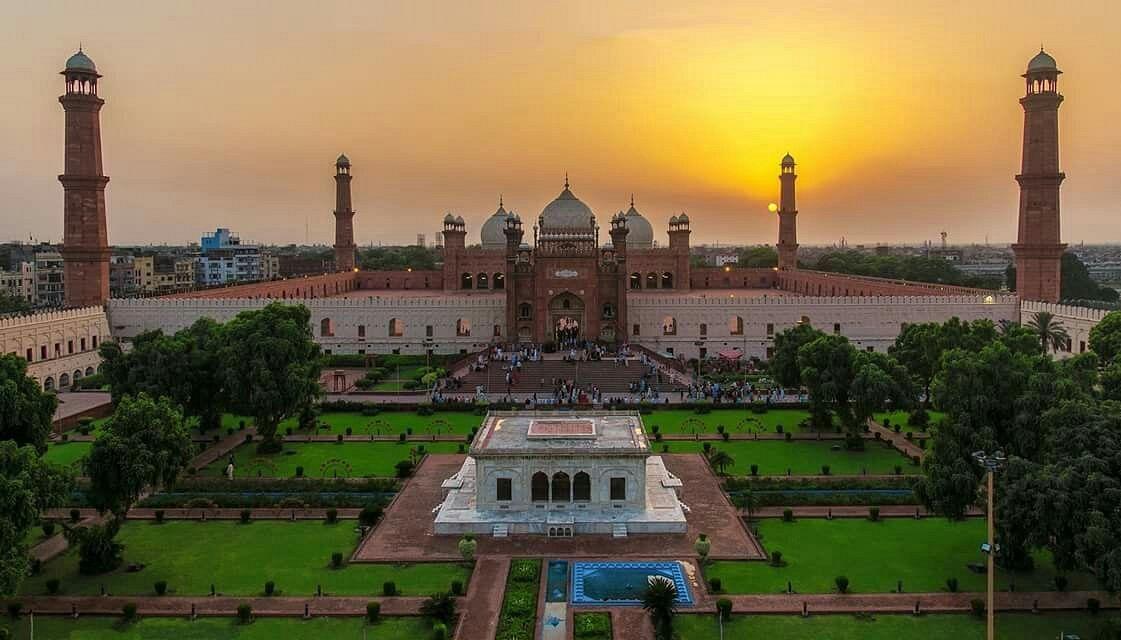
A frozen Mughal tale in time, Lahore's Badshahi Mosque has been standing since 1673. Commissioned by Emperor Aurangzeb, the sixth Mughal emperor, it was the largest mosque in the world for over 300 years. The exterior is red sandstone with white marble inlay, a signature Mughal combination also seen in the Jama Masjid in Delhi. Four octagonal minarets, each 60 meters tall and capped with marble canopies, anchor the corners of the complex. The carvings inside are considered among the finest and most unsurpassed works of Mughal architecture. In 1974, 39 heads of Muslim states prayed Friday prayers here together, including Zulfiqar Ali Bhutto, King Faisal of Saudi Arabia, and Yasser Arafat. The mosque was added to UNESCO's tentative World Heritage list in 1993.
Faisal Mosque - Islamabad
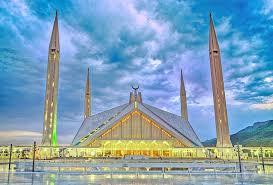
No dome, no arches, just a bold tent-like structure cradled by the Margalla Hills. That is Islamabad's Faisal Mosque, and it is one of the most striking pieces of architecture in the entire Muslim world. Designed by Turkish architect Vedat Dalokay and completed in 1986, it was funded by Saudi King Faisal bin Abdul Aziz, after whom it is named. The design draws from a Bedouin desert tent, with eight triangular shell sections rising sharply into the sky. Four minarets, each 90 meters tall, flank the structure. At the time of its completion it was the largest mosque in the world, with a capacity of 300,000 worshippers across its courtyard and surrounding grounds. Nothing else looks quite like it.
Sultan Omar Ali Saifuddien Mosque - Brunei
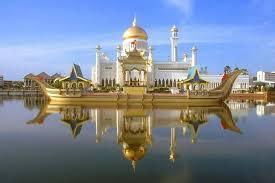
Rising straight from a lagoon, Brunei's Sultan Omar Ali Saifuddien Mosque has a gold dome reflected in still water. Built between 1954 and 1958 and named after the 28th Sultan of Brunei, the mosque combines Mughal and Italian architectural styles, with marble imported from Italy, granite from Shanghai, and chandeliers from England. Sitting in an artificial lagoon on the banks of the Brunei River, the mosque also features a replica of a 16th-century royal barge moored in the water, used historically for Quran-reading competitions. The gold dome dominates the skyline of Bandar Seri Begawan, and no building in the capital is permitted to exceed the height of its 52-meter minaret.
Which one is on your list?