

The two sides held their 10th round of counterterrorism talks in Islamabad and agreed to coordinate more closely on the global stage.
Pakistan and the European Union have agreed to work more closely at the United Nations and other international forums to build a more coherent global approach to counterterrorism.
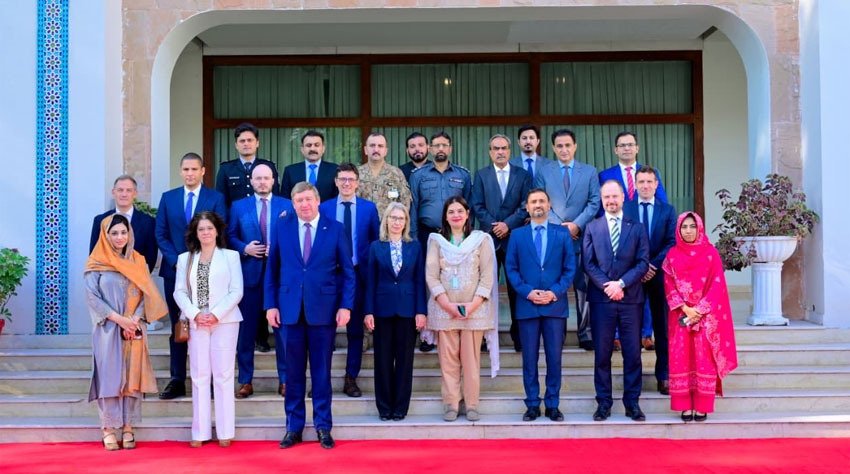
The decision came during the 10th round of the Pakistan-EU Bilateral Counterterrorism Dialogue, held in Islamabad on Thursday, October 22, Pakistan’s Foreign Office said in a statement.
The Pakistani delegation was led by Dr. Fareha Bugti, the Foreign Office’s Director General for Counterterrorism. The EU side was headed by its Special Envoy for Counterterrorism at the European External Action Service, the bloc’s diplomatic service.
Both sides strongly condemned terrorism in all its forms and acknowledged each other’s role in global counterterrorism efforts.
What Pakistan and the EU Discussed in Islamabad
The talks covered a wide range of security concerns. The two sides discussed how terrorist groups exploit cyberspace, information and energy resources, and exchanged best practices on preventing violent extremism and cutting off terrorist financing.
They also looked at ways to tackle radicalization, with particular attention to how extremist groups use online platforms to spread their messages and recruit.
The EU condemned recent terrorist attacks in Pakistan, expressed solidarity with those affected, and recognized Islamabad’s counterterrorism efforts.
Pakistan and the EU also expressed concern about the security implications of the situation in Afghanistan.
Both sides agreed to coordinate their positions at multilateral forums, including the UN. “Effective multilateralism remains essential to building lasting international consensus on terrorism,” the Foreign Office said.
Pakistan currently holds a seat on the UN Security Council as a non-permanent member for the 2025 to 2026 term. During its term, Pakistan has taken part in the council’s discussions on counterterrorism, sanctions and regional security.
The delegations identified priority areas for future cooperation and reaffirmed their commitment to regular, institutionalized engagement. The next round of the dialogue will be held in Brussels next year, on a date to be agreed by both sides.
Pakistan and EU Relations Beyond Security
The counterterrorism dialogue is one of several channels the two sides use to manage their relationship, alongside regular talks on trade, migration, human rights and development.
Their wider partnership is guided by the Pakistan-EU Strategic Engagement Plan, signed in June 2019, which covers cooperation on political and security issues, trade, migration, development, climate change and education.
The plan replaced an earlier five-year engagement plan and set out a broader framework for ties. The highest-level platform under it is the Pakistan-EU Strategic Dialogue, whose seventh session was co-chaired by Deputy Prime Minister and Foreign Minister Ishaq Dar in Brussels in November 2025.
Trade is a central part of the relationship. Pakistan has benefited from the EU’s GSP+ trade scheme since January 2014, which gives eligible exports duty-free or reduced-tariff access to the European market. In return, beneficiary countries commit to implementing 27 international conventions, including those on human rights, labor rights, the environment and good governance. The EU monitors how beneficiaries are meeting these commitments and publishes regular progress reports.
The EU takes the largest share of Pakistan’s global exports, according to the EU’s delegation in Pakistan, and more than 300 European companies operate in the country, Arab News reported.
The European Investment Bank has also supported major projects in Pakistan in areas such as water, sanitation and energy.