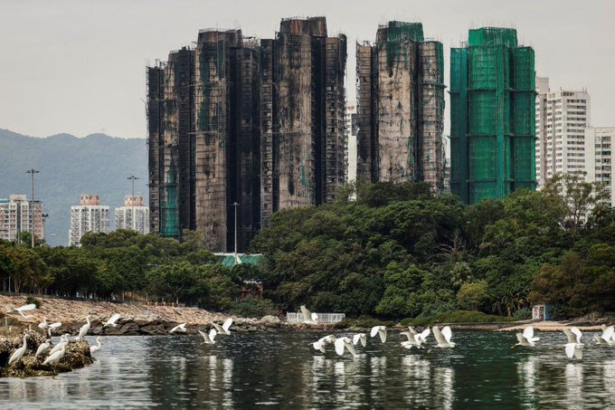
Heatwaves, wildfires and emissions pushed ozone pollution to extreme levels for billions of people this year.
That thick haze hanging over cities this summer was not just a weather quirk. A new European Union report says a third of everyone on Earth breathed dangerously polluted air at some point this year, driven by a mix of scorching heat, raging wildfires and human-made emissions.
The findings come from the Copernicus Atmosphere Monitoring Service, or CAMS, which tracks air pollution and wildfires using satellite data and computer models. Its first Atmosphere Watch review covers the period from January 1 to September 15, 2026.
Over that time, 34 percent of the world’s population was exposed to “extremely poor” air quality, meaning ozone levels were well above the World Health Organization’s guideline of 100 micrograms per cubic meter averaged over eight hours. Another 17 percent breathed “very poor” air. Only 5 percent of people lived with “good” ozone levels.
Asia Hit Hardest as Ozone Pollution Spreads Across Continents
No region was spared, but Asia fared worst. More than half of the continent’s population, 53 percent, was exposed to “extremely poor” air, with a further 22 percent breathing “very poor” air.
New Delhi in India, Dhaka in Bangladesh, Chongqing in China and Lahore in Pakistan were among the cities that recorded “extremely poor” ozone levels. Rapid industrial growth, heavy traffic and the burning of crop waste all added to emissions across the region.
Europe and North America also suffered. Two thirds of people in North America and 45 percent in Europe were exposed to “poor” or “very poor” air. Record-breaking heatwaves and wildfires swept across both continents, and smoke drifted far beyond national borders. During the record heatwave in June, harmful ozone levels may have reached two thirds of all EU residents. France, which recorded its hottest summer on record this year, was among the countries caught in the heat.
In Africa, 8 percent of the population faced “extremely poor” air quality, and another 19 percent faced “poor” or “very poor” conditions. Southeast Asia is also under pressure. Indonesia saw major wildfires this year, and the El Niño weather pattern that began in June could fuel more fires across the region as it peaks in the coming months.
How Climate Change Is Fueling Ozone Pollution
Unlike the ozone layer high in the atmosphere that shields Earth from the sun’s rays, ground-level ozone is a harmful pollutant. It is not released directly. Instead, it forms when sunlight and heat trigger chemical reactions between gases such as nitrogen oxides and volatile organic compounds, which come from vehicle exhaust, factories, power plants and burning fuel.
That is where climate change comes in. Hotter days and stronger sunlight speed up the reactions that create ozone, so heatwaves act like an accelerator. Heatwaves also tend to bring still, stagnant air, which traps pollution close to the ground instead of letting it disperse.
Wildfires add to the problem. Burning forests release large amounts of the same gases that form ozone, and the smoke can travel thousands of miles, spreading pollution to places far from the fire itself. As warming makes heatwaves longer and wildfire seasons more intense, both of these drivers are becoming more common.
This makes ozone unusually difficult to tackle. The report noted that EU regulations have succeeded in cutting most air pollutants over the years, but ozone remains the exception, because even as emissions fall, rising temperatures keep pushing levels back up. Scientists have long warned of this effect, sometimes called the “climate penalty,” and research has suggested that ozone-related deaths in parts of central and southern Europe could rise by mid-century if warming continues unchecked.
The health stakes are high. Ground-level ozone irritates the airways, triggers coughing and chest tightness, and can worsen asthma and other lung conditions. Children, older adults, outdoor workers and people with existing breathing problems are most at risk. In Europe alone, ozone pollution is linked to about 60,000 premature deaths every year, Ian Marnane of the European Environment Agency told a media briefing.
Ozone and Smog in Pakistan: Lahore Among the Worst-Hit Cities
Lahore’s place on the list of cities with “extremely poor” ozone levels adds to a long-running air quality crisis in Pakistan. In summer, intense heat and sunlight drive up ozone. In winter, the city faces a different problem, a thick smog made largely of fine particulate matter from crop burning, vehicle exhaust, brick kilns and industry, which is trapped close to the ground by cooler, still air. Punjab’s smog season typically runs from late October through January.
The human cost is significant. Air pollution kills an estimated 128,000 people in Pakistan every year, according to Fair Finance Pakistan.
With the smog season approaching, Punjab has already stepped up its response. On September 30, after Lahore’s Air Quality Index reached 158, the provincial government intensified anti-smog operations on the directives of Chief Minister Maryam Nawaz Sharif. Drone teams, night squads and field units have been deployed to track pollution sources, while barbecue and commercial cooking points, construction sites and road dust are being targeted.
Crop residue burning is a major focus. The government says more than 215,000 farmers have been contacted and over 431,000 trained on alternatives to stubble burning, with machinery such as balers being used to clear residue from fields. Punjab has also installed around 100 AI-powered air quality monitoring stations and uses satellite data to detect crop burning in real time.
Other measures are being rolled out across the province. Schools have been told to follow a Pre-Smog Action Plan, and authorities in the Faisalabad division set a September 30 deadline for industrial units to install pollution controls or face closure. The province says its efforts are paying off, reporting that daily peaks of fine particulate pollution in Lahore dropped by 56 percent last November compared with previous years, with no days recorded at hazardous levels.
Global Efforts to Tackle Air Pollution
Countries and organizations around the world are taking steps to clean up the air, with mixed results. The World Health Organization tightened its air quality guidelines in 2021, setting stricter recommended limits for pollutants including ozone, and the United Nations now marks the International Day of Clean Air for Blue Skies every September 7 to raise awareness.
The EU revised its air quality rules in 2024, setting tougher limits for 2030 that bring the bloc closer to WHO recommendations. India launched its National Clean Air Programme in 2019 to reduce particulate pollution in more than 100 cities, while China’s air pollution action plan, first introduced in 2013, has been credited with sharp falls in particulate levels in major cities. Here in the UAE, the National Air Quality Agenda 2031 sets out a framework for monitoring and improving air quality across the country.
Many of these programs have focused on particulate matter, which has proven easier to reduce. Ozone is harder, because cutting it requires lowering emissions of the gases that form it while also slowing the rise in temperatures that drives it. That is why the CAMS findings link the future of clean air so closely to action on climate change.
How to Protect Yourself on High Ozone Days
Ozone levels usually peak in the afternoon on hot, sunny days. A few simple steps can help reduce exposure:
- Use a local air quality app or website before making outdoor plans.
- Ozone is typically lower in the morning, so schedule runs, walks and outdoor workouts before midday.
- On high ozone days, move workouts indoors or choose lighter activity.
- This helps keep polluted air out of your home in the afternoon.
- Children, older adults and people with asthma or lung conditions should take extra care.
- People with asthma should carry their inhalers and follow their doctor’s advice on bad air days.