

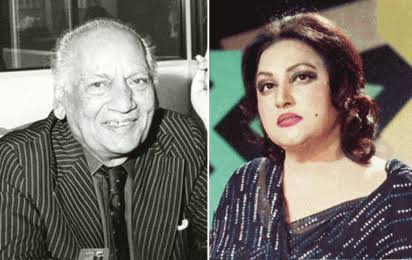
Few Urdu poems have travelled across generations as powerfully as “Mujh Se Pehli Si Mohabbat Mere Mehboob Na Maang” by Faiz Ahmed Faiz. Most people know it through the unforgettable voice of Noor Jehan, but the story behind the poem — and the singer’s own memories of the man who wrote it — adds a whole new layer to its enduring legacy.
What began as an intimate love poem eventually grew into something much larger: a quiet manifesto of social conscience. And it was Noor Jehan’s rendition that carried it out of literary circles and into the hearts of millions across South Asia.
A Love Poem That Refused to Stay a Love Poem
Faiz wrote the poem in the early 1940s, and it appeared in his very first poetry collection, Naqsh-e-Faryadi, published in 1943 — placing the nazm at the earliest phase of his career, before prison, exile, and political upheaval had fully shaped his voice. On the surface, it opens exactly like the ghazals that came before it — a lover addressing his beloved, confessing a devotion that once felt boundless:
“Mujh se pehli si mohabbat mere mehboob na maang…” “My beloved, do not ask of me the love I once gave you.”
Then, almost without warning, the poem turns. The lover admits that his heart, once entirely hers, has been pulled elsewhere — toward the suffering he cannot unsee. Poverty, exploitation, hunger, and injustice enter the verse, and the beloved slowly becomes something larger than herself: a symbol, a mirror for a world in pain. Personal romance doesn’t disappear from the poem so much as it widens into something closer to compassion for all of humanity. Faiz himself later described this nazm as the dividing line between his early romantic work and the more socially conscious poetry that would define his mature years. This fusion — tenderness braided with revolutionary conscience — became one of Faiz’s most recognisable literary signatures, and it’s part of why his poetry still feels urgent generations after it was written.
A Song Composed on the Spot
A poem this layered could easily have remained the property of literature students and poetry circles. Instead, it found its way to Noor Jehan — and the story of how is one of the most retold anecdotes in Urdu literary history.
Accounts vary on exactly how the collaboration began, but Noor Jehan is widely credited with being the voice that first carried the nazm beyond the page and into public consciousness, well before it reached its best-known form on film.
Her rendition didn’t just set the words to melody — it seemed to understand the poem’s architecture instinctively, holding onto its tenderness in the opening lines before letting the sorrow and moral weight of the later verses surface note by note. The song was later re-recorded for the 1962 Pakistani film Qaidi, with music direction credited to Rashid Attre, carrying it to an even wider audience. For many listeners, the poem and Noor Jehan’s voice have become inseparable. Decades on, her version is still the one played on radio, sung at literary gatherings, and passed down as the definitive interpretation across both Pakistan and India.
“It’s Not My Song Anymore”
Among everything said about this collaboration, one line from Faiz has outlived almost all of it. Asked repeatedly to recite the poem himself at literary gatherings once Noor Jehan had made it famous, he would often decline — and is widely quoted as saying, in effect, that the song was no longer his; it belonged to Noor Jehan now. He had only written it, he said. She had interpreted it with her soul. It was an extraordinary concession from one of the twentieth century’s greatest poets — and it says as much about Faiz’s humility as it does about the power of Noor Jehan’s voice.
Noor Jehan on the Man Behind the Poetry
In television interviews given later in her life, Noor Jehan spoke warmly about the times she met Faiz Ahmed Faiz in person, and her recollections paint a picture quite different from the towering, almost mythic figure most people imagine when they think of Pakistan’s greatest poet.
She described him as gentle, humble, and soft-spoken — someone who carried his stature lightly. Despite his immense literary reputation, she recalled never sensing a trace of arrogance in him. She also spoke of how honoured she felt to lend her voice to his words, while Faiz, in turn, admired the emotional depth she brought to every verse she sang. In one emotional interview, she admitted that marriage, motherhood, and an increasingly busy recording schedule had left little time to spend in his company over the years — a regret she said stayed with her, adding that she still wept whenever she listened to his poetry. It was, by her account, a relationship built on quiet mutual respect — a reminder of how closely poetry and music are woven together in Pakistani culture, where a gifted singer can carry great literature to audiences who might never otherwise open a book of verse.
Why the Poem Still Speaks to Us
More than eighty years after it was written, “Mujh Se Pehli Si Mohabbat” hasn’t faded — if anything, it feels more relevant with each passing decade. It holds two truths in the same breath: that love is real and worth cherishing, and that no love, however deep, excuses looking away from a suffering world. It’s a poem that asks its reader to hold both tenderness and responsibility at once, without letting either one cancel out the other.
Noor Jehan’s voice made sure that message didn’t stay locked inside literary journals. It moved into homes, into memory, into the soundtrack of everyday life across generations. Together, Faiz Ahmed Faiz and Noor Jehan didn’t just produce a celebrated poem or a beautiful song — they created a cultural landmark, a rare instance where poetry, music, and social conscience fused into something that still moves listeners across South Asia and beyond.