


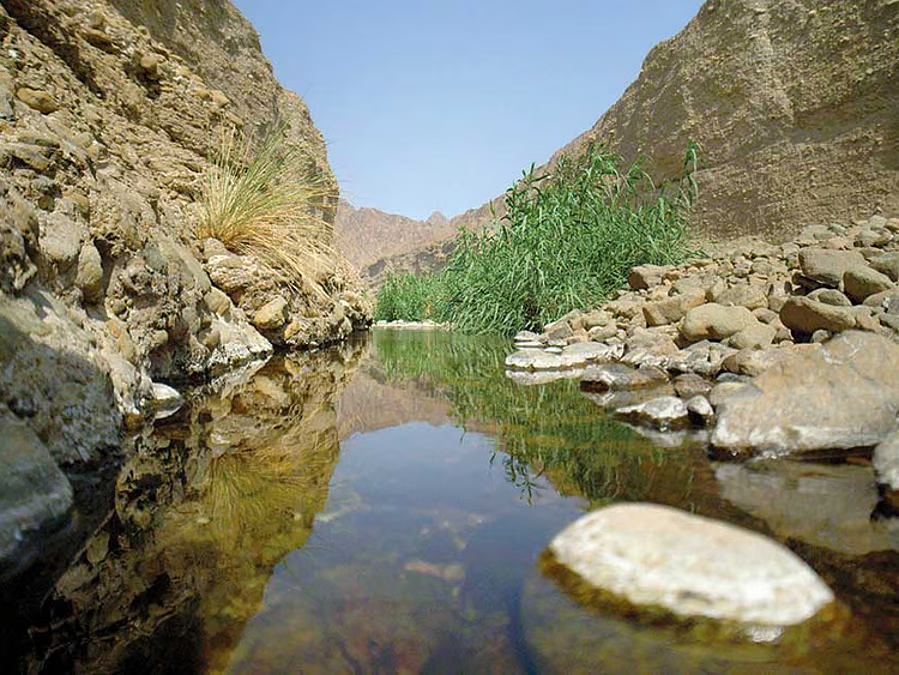
Fujairah’s Wadi Wurayah, home to the country’s only permanent natural waterfall, is now a UNESCO World Heritage Site and open for guided tours.
Hidden deep in Fujairah’s Hajar Mountains, clear water slips through rocky channels and a natural waterfall keeps flowing even through the fiercest months of the UAE summer. It is the only permanent, year-round waterfall in the country, and according to geologists cited by the Fujairah Environment Authority, it may have been flowing continuously for at least 10,000 years.
For years, Wadi Wurayah was largely beyond the public’s reach. Its trails, freshwater pools and rugged valleys were left undisturbed while scientists studied its wildlife and authorities worked to restore its fragile habitats. The park was closed to tourists in 2013 to help the ecosystem recover, though researchers and students continued their work throughout.
This year brought two milestones. The reserve reopened to the public through controlled group tours in January 2026, and on July 25 it was inscribed on the UNESCO World Heritage List at the committee’s 48th session in Busan, South Korea. It is the UAE’s third World Heritage site and the first recognised for its outstanding natural value.
Why Wadi Wurayah Earned UNESCO World Heritage Status
The recognition rewards a landscape unlike anywhere else in the country. Spanning about 220 square kilometres roughly 45 kilometres from Fujairah city, the reserve is fed by more than 300 springs and 60 streams, sustaining a water system that is extremely rare in the UAE’s dry mountains.
Researchers have now recorded 1,099 species inside the reserve, including 216 plants, 114 birds and 20 mammals. Among them are rare and endangered animals such as the Arabian tahr, Blanford’s fox and the caracal, along with a wild orchid described by authorities as the only one of its kind in the UAE. A fish known locally as the Garai lives in the pool beneath the waterfall and has adapted to survive the flash floods that periodically sweep through the valley.
The reserve’s geology adds to its uniqueness. The mountains contain ophiolite, sections of ancient oceanic crust pushed up onto land, and their reaction with the freshwater helps form the lasting surface-water system the site is known for. The name Wadi Wurayah itself comes from a local plant, Wara’a, whose leaves were once used to build summer shelters.
How to Visit Wadi Wurayah
Access remains deliberately limited to protect the environment. Visitors must register for an organised tour run by the reserve’s operational partner, Fujairah Holidays, under a package titled Explore Wadi Wurayah, with prices starting from 300 dirhams per person.
The tours are offered only during the hiking season, from early to mid-October, and run on Saturdays with limited spaces. Anyone hoping to go should book well ahead rather than attempting to reach the protected zones alone.
For those planning a trip, the reward is a stretch of the country few residents ever see: a waterfall that has run for thousands of years, pools of clear mountain water, and wildlife found almost nowhere else in the Emirates.
More UAE Natural Sites Worth the Trip
Wadi Wurayah is one of several natural escapes within reach of the country’s cities. Whether you are after mountain air, birdlife or a desert view, the UAE has more to offer than its skylines suggest.
Hatta, Dubai
A mountain retreat about 90 minutes from the city, Hatta is known for its turquoise dam waters and adventure trails. Visitors can kayak on the reservoir, cycle the mountain tracks or hike the surrounding valleys, with the Hatta Wadi Hub offering activities for families.
Jebel Jais, Ras Al Khaimah
At 1,934 metres, Jebel Jais is the UAE’s highest peak and home to the world’s longest zipline. Temperatures at the top run around 10 degrees cooler than the lowlands, making it a popular escape from the summer heat.
Al Wathba Wetland Reserve, Abu Dhabi
A 45-minute drive from the capital, this protected sanctuary shelters more than 250 bird species. In winter, thousands of flamingos turn the salt flats pink, and two self-guided trails make it an easy outing with children.
Jebel Hafeet and Green Mubazzarah, Al Ain
The winding road up Jebel Hafeet leads to panoramic views over the desert, while the grassland and warm natural springs of Green Mubazzarah sit at the base. Neolithic tombs in the surrounding desert park add a layer of history to the trip.
Mleiha, Sharjah
Mleiha is an archaeological landscape of Bronze and Iron Age tombs, anchored by a first-rate visitor centre. It is also one of the best spots in the country for desert stargazing and dune walks.
Al Aqah Beach, Fujairah
On the east coast, Al Aqah is a quieter stretch of sand and clear water. It is a favourite for snorkelling and diving, with Snoopy Island just offshore drawing marine life close to the surface.
For a country best known for its cities, the UAE holds a surprising amount of wild beauty, and Wadi Wurayah’s new status is a reminder of just how much there is to explore beyond the skyline.