


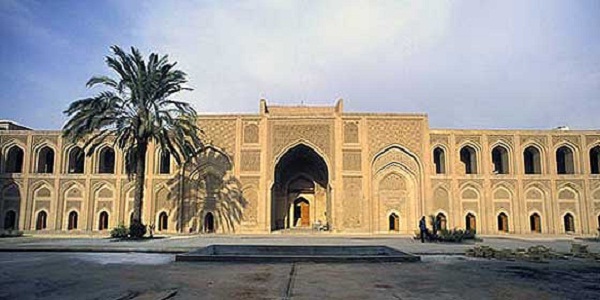
Where Knowledge Became a Global Legacy
Long before Europe’s great universities emerged, the Islamic world was home to one of history’s greatest centres of learning: the House of Wisdom. Established in Baghdad during the Abbasid Caliphate, this remarkable institution became a beacon of scholarship, preserving ancient knowledge while producing discoveries that shaped science, medicine, mathematics and philosophy for centuries.
Founded in the early 9th century, most historians associate the House of Wisdom (Bayt al-Hikma) with Caliph Harun al-Rashid and its major expansion under his son, Caliph al-Ma’mun. It was far more than a library. It served as a research academy, translation centre, observatory and meeting place for scholars from across the Islamic world and beyond.
A Centre for the World’s Knowledge
The House of Wisdom became famous for its unprecedented translation movement. Scholars translated thousands of manuscripts from Greek, Persian, Sanskrit and Syriac into Arabic, ensuring that many classical works survived at a time when they might otherwise have been lost.
Rather than merely preserving these texts, Muslim scholars critically examined, expanded and improved them. This transformed Baghdad into the intellectual capital of the medieval world, attracting mathematicians, physicians, astronomers, engineers and philosophers from diverse backgrounds.
The institution reflected the Abbasid commitment to learning regardless of a scholar’s ethnic or religious background. Muslims, Christians, Jews and others worked together in pursuit of knowledge, creating one of history’s most vibrant academic communities.
Discoveries That Shaped Civilization
Many of the world’s most influential scholars were associated with the House of Wisdom. Among them was Al-Khwarizmi, whose pioneering work in mathematics laid the foundations of algebra. His writings also introduced systematic methods of calculation that eventually gave rise to the word “algorithm.”
Astronomers refined observations of the heavens, physicians compiled influential medical texts, and geographers produced increasingly accurate maps of the known world. Advances made in Baghdad later travelled through Spain, Sicily and the Mediterranean, helping fuel Europe’s intellectual revival and eventually contributing to the Renaissance.
The House of Wisdom demonstrated that scientific progress flourishes when ideas are exchanged freely across cultures.
A Legacy Beyond Its Walls
The institution suffered a devastating blow during the Mongol sack of Baghdad in 1258, when much of its priceless collection was destroyed. Yet its intellectual legacy survived through the countless manuscripts, translations and scientific works that had already spread across Asia, North Africa and Europe.
Today, the House of Wisdom stands as one of history’s greatest symbols of learning. It reminds us that the Islamic Golden Age was not only an era of preserving ancient knowledge but also one of innovation, discovery and collaboration that transformed human civilisation. The influence of its scholars continues to shape modern mathematics, science, medicine and philosophy, making the House of Wisdom one of the most important libraries the world has ever known.