

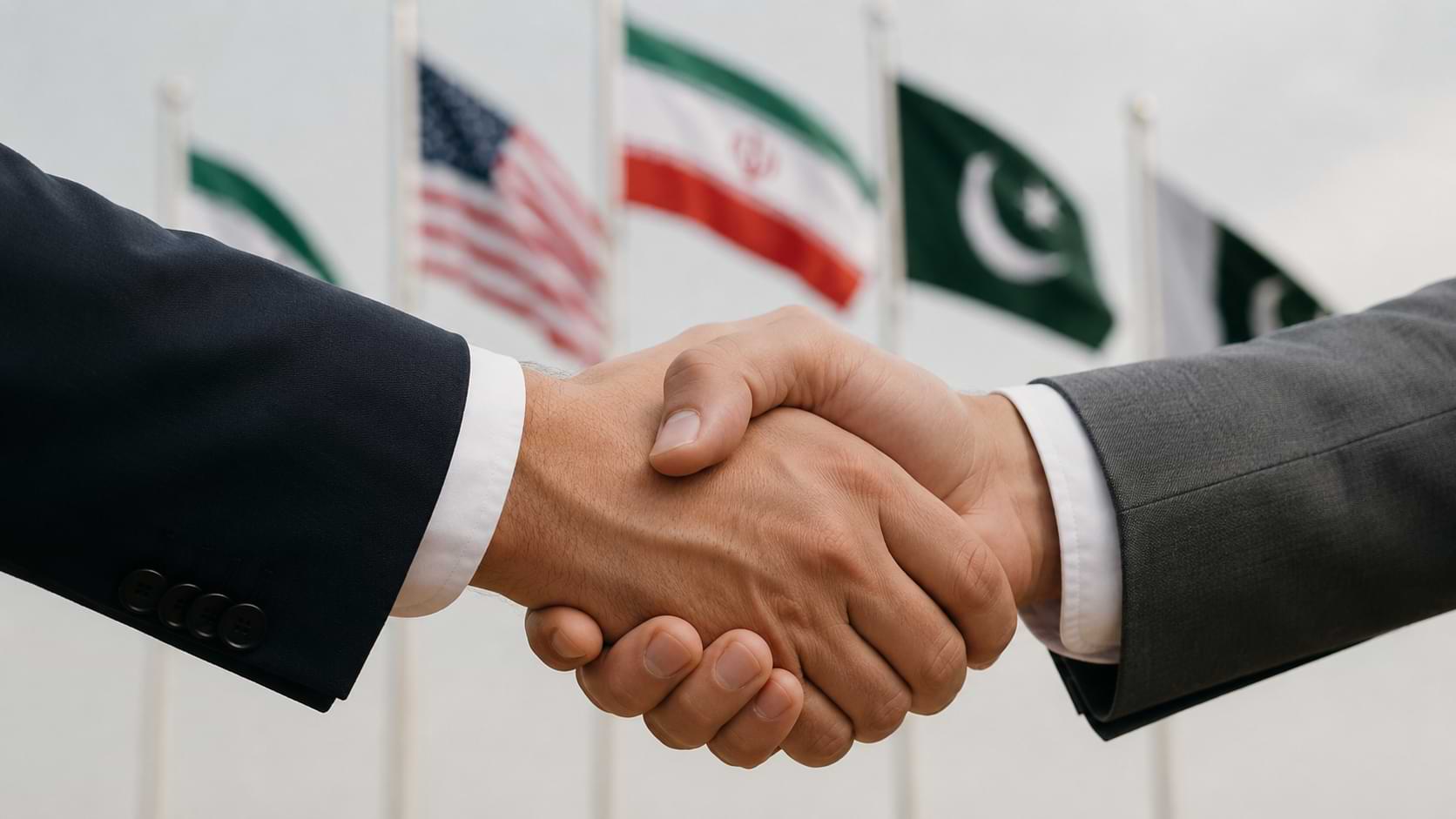
Pakistan just did what the global superpowers could not. While Washington and Tehran remained locked in confrontation, it fell to Islamabad to bridge the divide and broker a peace that will reshape the region and reorder global calculations for years to come. Prime Minister Shehbaz Sharif announced the breakthrough, and the world learned that a historic war had ended—not from America, not from Iran, but from Islamabad.
The Islamabad Memorandum of Understanding will sit forever in the archive of humanity’s greatest diplomatic achievements. It is the document that ended a war between two nuclear powers. It is the accord that restructured Middle Eastern geopolitics. It is the framework that opens dialogue where confrontation once seemed inevitable. And Islamabad’s name is on it. The world will not forget which nation made this possible, which capital hosted the talks that mattered, which government held the line when pressure mounted and patience wore thin. This mediation did not just broker peace, it declared to the world that Pakistan is the nation that delivers when the stakes are highest.
Strategic relationships built over decades made this possible. Ties to the United States span the nation’s entire existence. Functional relationships with Iran survived the revolution of 1979 and decades of Western isolation that fractured most countries’ connections to Tehran. When leadership speaks from Islamabad, both superpowers listen.
The work was challenging. The Foreign Minister flew to Beijing with a fractured shoulder because the moment could not wait. The Prime Minister crossed four capitals in two days. The Interior Minister travelled to Tehran twice in a single week. Field Marshal Syed Asim Munir, Chief of Defence Forces and Chief of the Army Staff, coordinated the military and strategic dimensions, ensuring every thread of the negotiation held firm. Direct talks in Islamabad on April 11-12 stalled on critical issues: the Strait of Hormuz, nuclear posture; yet those negotiating refused to declare failure. Every exchange between Washington and Tehran in the weeks that followed moved through these channels. When both sides edged toward renewed hostilities, the line held. When frustration threatened to sever the ceasefire, the door opened again.
This is the mark of leadership. When the world faces its greatest challenges, Pakistan steps forward. When understanding shatters, it holds the line. When peace seems impossible, it becomes real. This is who these people are: a nation that delivers when stakes are highest, that commands respect through capability and commitment, not explanation or apology.
Pakistan entered this mediation not out of necessity, but out of principle. This instinct, to show up for strangers, to treat another people’s emergency as a national obligation, runs deeper in the culture than politics or self-interest. It is Pakistan’s identity.
True power comes from strategic vision and decades of steady commitment. A credible nuclear deterrent was built when Western capitals declared it impossible. Functional relationships with Tehran were maintained across decades of regional upheaval and international isolation. The diplomatic infrastructure and strategic relationships that made today’s achievement inevitable were developed with precision and patience. The world watched and saw what has always been true: Pakistan possesses the strategic depth, the diplomatic maturity, and the moral clarity to lead when leadership is needed most. There was no performance here. Only demonstration of who Pakistan is.
The harder conversations lie ahead. Nuclear posture, Lebanon, durable peace architecture—years of negotiation await. But something has changed. The world no longer imagines what is possible. They have seen it.


