

Pakistan and the UAE have a long history of military cooperation. Most people are aware of the diplomatic ties. Fewer know the details of how deep that cooperation actually ran, and how early it started.
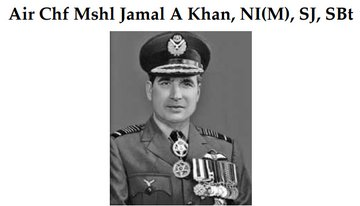
One of the clearest examples is Air Chief Marshal Jamal Ahmad Khan Afridi, a Pakistani officer who commanded the United Arab Emirates Air Force from 1977 to 1980, then went on to serve as Chief of Air Staff of the Pakistan Air Force from 1985 to 1988. He remains the only person in history to have held the top command of both air forces.
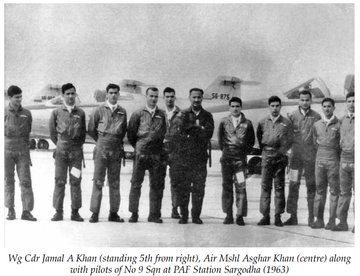
Jamal A. Khan was born on April 15, 1934, and commissioned as a fighter pilot in the Pakistan Air Force in 1953. He trained at the PAF Academy in Risalpur and later commanded No. 9 Squadron, flying the Lockheed F-104 Starfighter.
On the night of September 21, 1965, during the Indo-Pakistani War, he was flying an air defense mission when he was vectored toward an intruding Indian Canberra bomber. At high altitude and in darkness, he launched a Sidewinder missile that brought the aircraft down. He flew thirty operational missions during that war and was awarded the Sitara-e-Jurat for his performance.
The Pakistani Officer Sheikh Zayed Trusted to Lead the UAE Air Force
In 1977, Jamal A. Khan was seconded to the UAE and appointed Commander of the UAE Air Force, a position he held for three years. The UAE had been founded six years earlier and its military was still developing. Pakistani officers had been involved from the start. According to Wikipedia’s entry on the UAE Armed Forces, the first five Chiefs of Air Staff of the UAE Air Force were all Pakistani officers, appointed by Sheikh Zayed. During the 1970s and 1980s, more than half of UAE Air Force pilots were Pakistani nationals, and PAF instructors trained UAE pilots on the Dassault Mirage 5. Pakistani officers also helped set up the UAE Army’s armour training school and trained its commando units.
How Jamal A. Khan Became Chief of Air Staff of Pakistan and Won the Nishan-e-Imtiaz
After returning from the UAE in 1980, he held several senior appointments within the PAF before being promoted to Air Marshal in March 1984. He became Vice Chief of the Air Staff in April that year and succeeded Air Chief Marshal Anwar Shamim as Chief of Air Staff in March 1985, serving until 1988. He was the first Vice Chief in PAF history to subsequently be appointed its chief.
During his tenure he authored the Air Force Manual, established the Junior Commissioned Officers Academy, and placed the PAF on full alert during India’s Exercise Brass Tacks deployments in 1986 and 1987. He was also the first Pakistani pilot to fly the F-16 Fighting Falcon.
He was awarded the Nishan-e-Imtiaz, Pakistan’s highest state honor, for his service.
The Pakistani military presence in the UAE during its formative years extended across the army, air force, and navy. It was a significant and sustained contribution that shaped the UAE’s defense institutions during a critical period. Jamal A. Khan, now 91, sits at the center of that history as the only officer to have led both forces.