


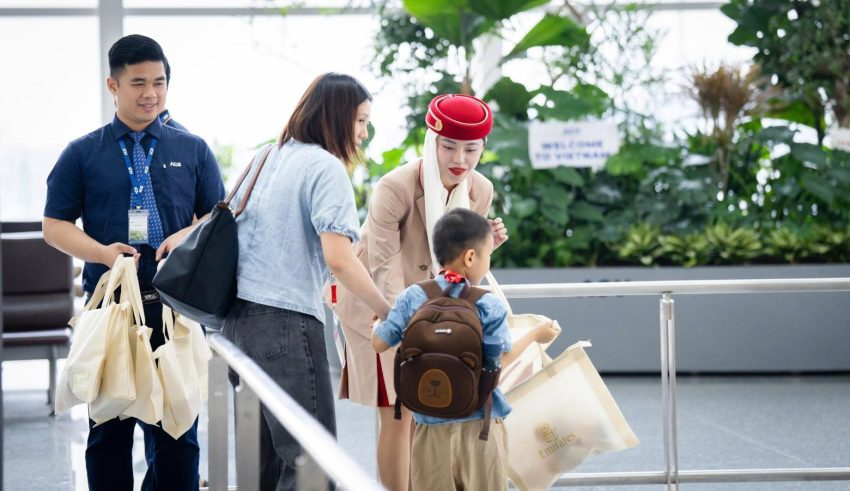
Emirates Airline has introduced and expanded a program known as “Travel Rehearsals,” designed to support children and young people with autism by helping them prepare for air travel. The initiative focuses on reducing anxiety associated with flying by allowing participants to experience the airport journey in a controlled, guided environment before undertaking an actual trip.
What the Travel Rehearsals Program Involves
The program provides a structured simulation of the full airport process. Participants are taken through each stage of travel, including check-in, baggage drop, security screening, immigration procedures where applicable, boarding, and in some cases, seating inside an aircraft. These rehearsals are conducted with the support of trained Emirates staff as well as airport personnel. The goal is to familiarize participants with the sequence of events and sensory experiences they will encounter during real travel.
Challenges of Air Travel for Individuals with Autism
Air travel can present specific challenges for individuals with autism. Airports are often busy and noisy environments, with multiple unfamiliar procedures and long waiting times. These factors can contribute to heightened stress or sensory overload. By offering a preview of these conditions in a more controlled setting, the Travel Rehearsals program aims to make the experience more predictable and manageable for participants.
Global Reach and Participation
According to Emirates, the program has supported more than 250 families across six continents. This indicates that the initiative has been implemented internationally rather than being limited to a single region. The rehearsals are typically conducted in collaboration with local airports and partner organizations, such as autism support groups, therapy centers, or educational institutions. These partnerships help identify participants and ensure that the program is adapted to local needs and facilities.
Role of Trained Staff and Partners
The sessions are guided by trained teams who understand how to support individuals with autism. This includes providing clear instructions, allowing extra time for each step, and creating an environment that minimizes unnecessary stress. The involvement of airport partners is essential, as it allows access to real facilities and procedures rather than simulated or classroom-based training alone.
The Travel Rehearsals initiative forms part of a broader effort by Emirates to improve accessibility in air travel. The airline has publicly stated its intention to make flying more inclusive for passengers with different needs. As part of this effort, Emirates has worked toward achieving autism certification standards, which involve training staff and adapting services to better support neurodiverse travelers.
It is important to note that these rehearsal sessions are not standard commercial offerings available for individual booking like a flight ticket. Instead, they are organized events, often conducted periodically and in coordination with partner organizations. Participation is typically arranged through these partners rather than through direct public enrollment.
The concept behind travel rehearsal programs is not entirely unique to Emirates, but the airline’s initiative is notable for its scale and international reach. By extending the program to multiple continents and working with a wide network of airports and organizations, Emirates has increased access to this type of preparation for families in different regions.
Measurable Impact and Limitations
The measurable impact cited by the airline, supporting hundreds of families, reflects participation levels but does not necessarily quantify long-term outcomes such as reduced anxiety during actual flights. However, the structure of the program aligns with established approaches used in autism support, where gradual exposure and familiarization are commonly used to build confidence in challenging environments.
Emirates’ Travel Rehearsals program is a structured, guided initiative aimed at helping children and young people with autism become more comfortable with air travel. By simulating the airport journey and providing support from trained staff, the program addresses common sources of stress associated with flying. Its implementation across multiple continents and its collaboration with local partners demonstrate a broad effort to improve accessibility and inclusivity in the aviation sector.